


Minister of Industry and Trade urges closer alignment of training, research with sector development
On October 2, the Ministry of Industry and Trade (MoIT) held a working session between Minister of Industry and Trade Le Manh Hung and research institutes, universities and colleges under the Ministry to review their recent operations and identify solutions to better harness the potential, advantages and collective strengths of the Ministry’s education and research institutions. Minister of Industry and Trade Le Manh Hung chaired the meeting.
The meeting was attended by Deputy Minister Phan Thi Thang, Deputy Minister Nguyen Viet Son, leaders of units under the Ministry, and representatives of universities, colleges and research institutes under MoIT.
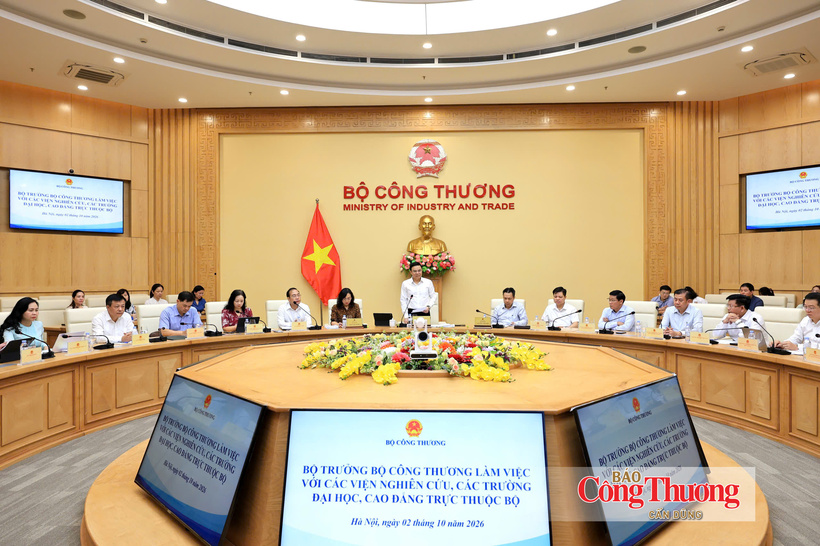
An overview of the meeting
Harnessing resources from MoIT’s research and education system
Addressing the meeting, Minister of Industry and Trade Le Manh Hung stressed that, to realise the country’s development goals in the new period, science, technology and innovation must become one of the key drivers of growth. In this process, linkages among the State, educational institutions, research organisations and enterprises play a particularly important role.
According to Minister Le Manh Hung, MoIT has a system of universities, colleges and research institutes, together with resources capable of contributing to the country’s science, technology and innovation development goals. However, education, scientific research and innovation need to be more strongly oriented towards improving labour productivity, creating new products and services, and enhancing participation in value chains, while being more closely and systematically aligned with the development of Viet Nam’s industrial sectors.
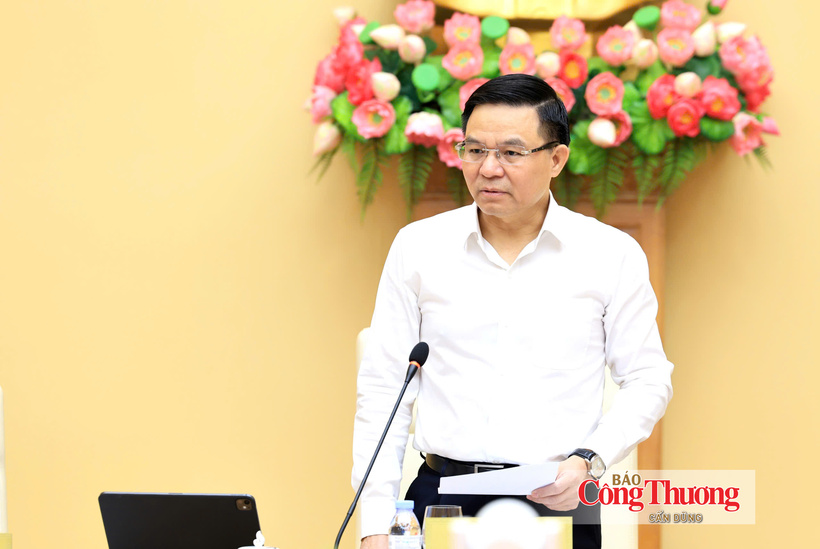
Minister of Industry and Trade Le Manh Hung delivers remarks at the meeting
Against this backdrop, the working session between MoIT leaders and its universities, colleges and research institutes provided an opportunity for the units to discuss and assess difficulties and obstacles encountered in recent years, while identifying solutions to better harness the potential, advantages and collective strengths of the Ministry’s education and research institutions.
Reporting at the meeting, Tran Quang Huy, Director of the Department of Organization and Personnel, said MoIT currently has 26 education institutions and is in the process of reorganising and restructuring the system. Its universities, colleges and research institutes are located across various regions and localities nationwide, providing education from elementary vocational training to doctoral level to meet workforce demand in the industrial, trade and energy sectors, with particular attention paid to key fields such as mechanical engineering, manufacturing, electronics, energy and nuclear power.
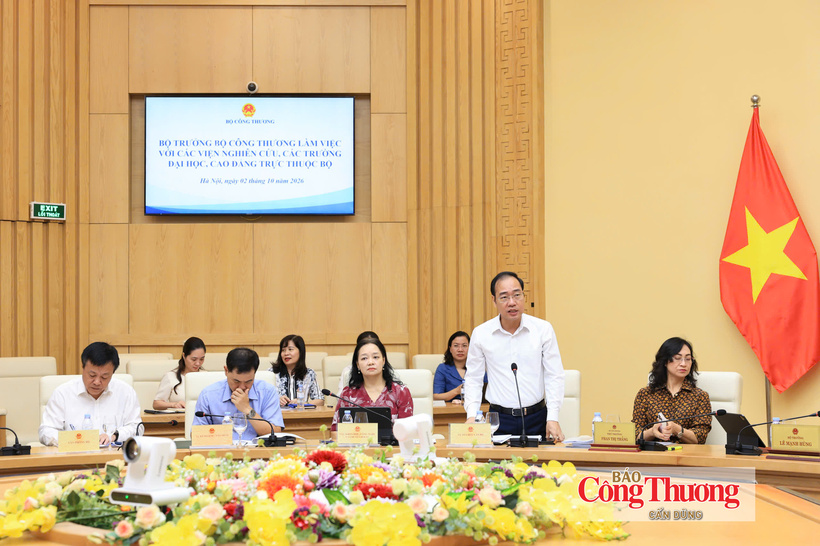
Tran Quang Huy, Director of the Department of Organization and Personnel, delivers a report at the meeting
In 2026, the system had 279,635 learners, with university students accounting for 69%. The institutions have also strengthened links between education and practical requirements through cooperation with approximately 5,295 enterprises and associations, while 47,600 students and trainees participated in internships at enterprises. Through these efforts, MoIT’s education institutions are contributing to the supply of human resources for key areas of the Industry and Trade sector while gradually strengthening the connection between education and the practical needs of enterprises.
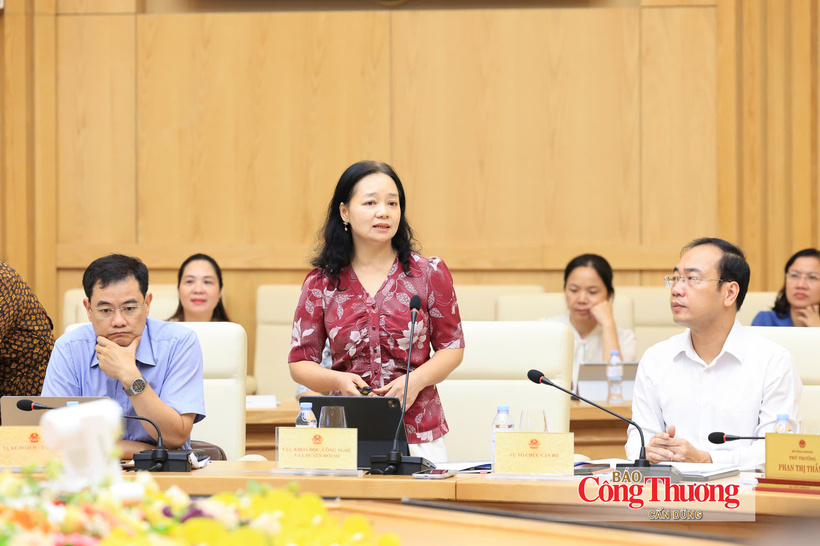
Nguyen Thi Lam Giang, Director of the Department for Science Technology and Digital Transformation
Providing further information at the meeting, Nguyen Thi Lam Giang, Director of the Department for Science Technology and Digital Transformation, said science and technology activities at institutes and educational institutions had achieved a number of results in recent years, but limitations remained in terms of resources, facilities, the scale of research tasks, and linkages and transfer of research outcomes. In the coming period, resources should therefore be concentrated on areas in which institutes and educational institutions have strengths, while linkages among research institutes, educational institutions and enterprises should be strengthened, with science and technology tasks geared towards final products and their potential for practical application and commercialisation.
“Enterprises will be at the centre of innovation activities. Therefore, when conducting research, institutes and educational institutions must regard enterprises as the centre they serve, based on the sector’s development orientations,” Director Nguyen Thi Lam Giang stressed.
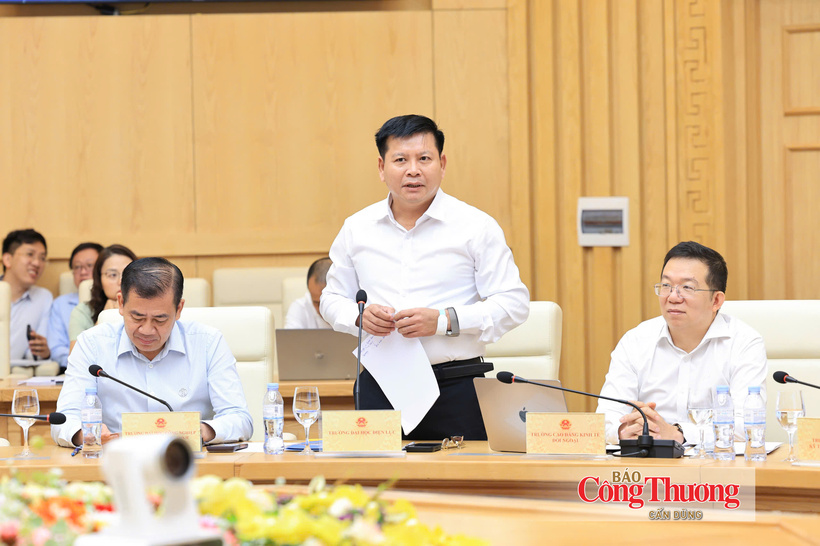
Dinh Van Chau, Rector of Electric Power University
At the meeting, representatives of universities under MoIT discussed education, scientific research, innovation and technology transfer. The universities are focusing on reforming university governance models, accelerating digital transformation and applying artificial intelligence to management and education, while developing areas in which they have strengths to meet the Industry and Trade sector’s human resource needs.
Alongside efforts to improve education quality, the universities are strengthening linkages with enterprises, industrial parks and industries, aligning education and research with practical requirements, and promoting the transfer of research outcomes into production and business activities.
Representatives of the universities also proposed greater attention to the consideration, approval and implementation of science and technology tasks, as well as support for investment in facilities and laboratories for research, thereby strengthening their capacity for education, research and technology transfer.
Sharing the objective of aligning research with the sector’s practical requirements, representatives of research institutes under MoIT focused their discussions on scientific research, consultancy, technology transfer and participation in developing mechanisms and policies in specialised fields.
The institutes also highlighted difficulties related to high-quality human resources, mechanisms for implementing research tasks and the practical application of research outcomes. They proposed strengthening mechanisms for commissioning and coordinating large-scale science and technology tasks, while promoting cooperation among research institutes, educational institutions and specialised units to pool resources for addressing major challenges facing the Industry and Trade sector.
Aligning education and scientific research with major challenges facing the Industry and Trade sector
Concluding the meeting, Minister Le Manh Hung acknowledged and highly appreciated the efforts and achievements of education, training and scientific research institutions under MoIT in recent years, which have made important contributions to the development of the Industry and Trade sector.
To fully harness the potential, advantages and driving force of the Ministry’s education and research system, Minister Le Manh Hung asked units, educational institutions and research institutes under MoIT to focus on several key groups of tasks.
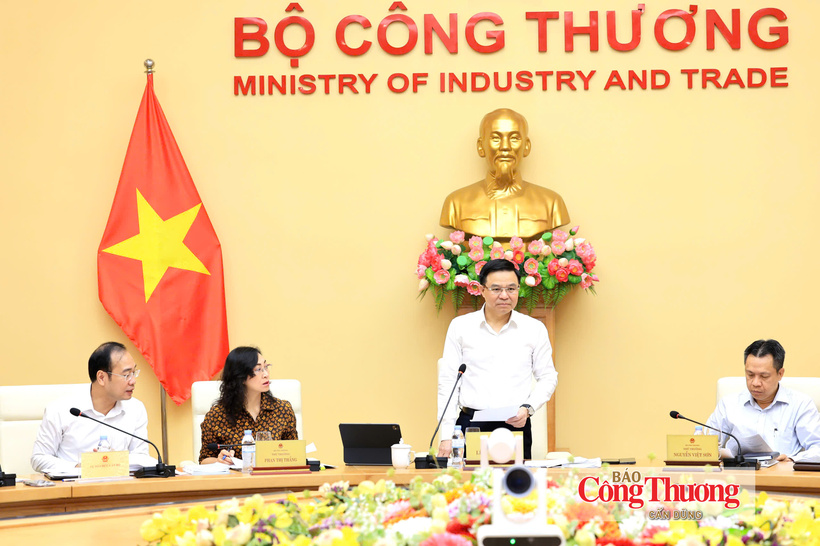
Minister of Industry and Trade Le Manh Hung
First, the Minister emphasised the need to recognise the particularly important position and role of education and scientific research. Accordingly, education, scientific and technological research, and innovation must serve as a key and foremost driver for implementing the Industry and Trade sector’s development strategy.
Based on the Ministry’s system of regulations and internal coordination and management mechanisms, Minister Le Manh Hung asked the Department of Organization and Personnel and the Department for Science Technology and Digital Transformation to coordinate with relevant units and seek opinions from research institutes and educational institutions in order to soon issue internal regulations for the Industry and Trade sector on the use of resources.
At the same time, the Ministry must urgently consolidate its Industry and Trade education institutions and clearly define the development orientations and strategies of education institutions following the restructuring process. For education institutions transferred to local authorities in accordance with Government requirements, the Minister asked them to proactively coordinate with localities to provide maximum support for state management in areas under the Industry and Trade sector, while continuing to leverage their roles and strengths and orient their training towards developing human resources that meet local socio-economic development requirements.
Regarding the consolidation of leadership and management personnel and the effective use of high-quality human resources, the Minister instructed the Department of Organization and Personnel to review and fill vacant positions and make appropriate personnel arrangements. The Department was also asked to coordinate with the Department for Science Technology and Digital Transformation to complete databases on experts and lecturers.

