


Viet Nam's import-export turnover surpasses USD 1 trillion in 10 months of 2026
The Agency of Foreign Trade under the Ministry of Industry and Trade (MoIT) estimates that Viet Nam's total merchandise import-export turnover reached USD 1,010.6 billion in the first 10 months of 2026, up 32.3% year-on-year, officially surpassing the USD 1 trillion mark. In October alone, import-export turnover was estimated at USD 122.2 billion, representing a 47.6% increase compared with the same period last year.
According to estimates, Viet Nam's total merchandise import-export turnover reached USD 1,010.6 billion in the first 10 months of 2026, up 32.3% year-on-year, officially exceeding USD 1 trillion. October alone saw estimated import-export turnover of USD 122.2 billion, up 47.6% from a year earlier.
Notably, exports continued to post strong growth, with turnover estimated at USD 499 billion over the 10-month period, up 27.4%. This has provided positive momentum for Viet Nam to achieve and surpass its full-year export growth target of 15-16% in 2026.
Export growth was recorded in both the domestic economic sector and the foreign-invested sector (FDI), with manufactured and processed industrial products continuing to play a leading role, accounting for 87.4% of total export turnover. Exports also registered positive growth across major markets, including China, the US, the EU, the Republic of Korea and ASEAN.
Regarding the trade balance, Viet Nam is estimated to have recorded a trade surplus of USD 6.8 billion in October, marking the second consecutive month of surplus and bringing the cumulative trade deficit for the first 10 months down to approximately USD 12.7 billion. These results indicate that import-export activities have maintained positive growth momentum, underscoring the important role of merchandise trade in economic growth.
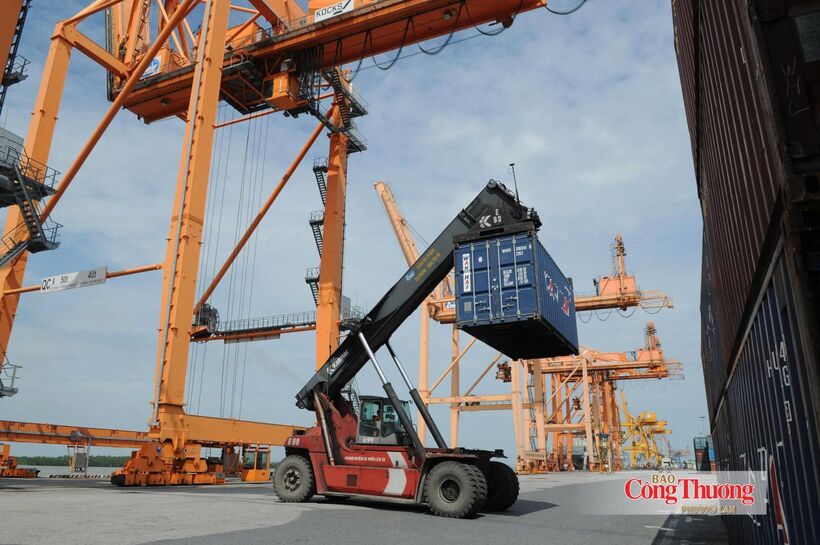
Import-export activities record strong performance in the first 10 months of 2026
MoIT is currently drafting the Import-Export Strategy for Goods to 2030, with a vision to 2045. Under the draft strategy, the target is to achieve average annual export growth of 15-16% during the 2026-2030 period, while imports are projected to grow by an average of 12-13% annually. The trade balance is expected to move toward a sustainable surplus, with the average trade surplus accounting for 3-6% of total export turnover during this period. By 2045, Viet Nam aims to rank among the world's 10 largest countries in terms of both export and import turnover, with the trade surplus accounting for 7-10%.
One of the key objectives is to strengthen the role of domestic enterprises and increase the processing and technological content of exported goods. Accordingly, the share of exports contributed by domestic enterprises is targeted to reach approximately 28-30% of the country's total export turnover by 2030, rising to 38-40% by 2045. Processed or refined products are expected to account for 89-90% of total export turnover by 2030 and more than 92% by 2045. Meanwhile, high-tech products are targeted to account for approximately 50% of the total export value of processed and manufactured goods by 2030, increasing to more than 55% by 2045.
In terms of trade scale, the draft strategy outlines several growth scenarios through 2030. Under the medium-growth scenario, export turnover is projected to reach USD 953.7 billion by 2030, while the high-growth scenario sets a target of USD 1,041.1 billion. Under the low-growth scenario, exports are projected to reach USD 765 billion. These scenarios highlight the need to expand export scale in tandem with strengthening domestic production capacity, developing the processing and manufacturing industries, and enhancing the competitiveness of Vietnamese goods.
In the fourth quarter, MoIT has identified export promotion, market diversification and stronger compliance capacity as key priorities. These efforts will focus on effectively capitalizing on signed free trade agreements (FTAs) and expanding into new markets, while strengthening early-warning capabilities regarding trade remedy cases, tariff barriers, green standards, traceability requirements and rules of origin.

