


Ministry of Industry and Trade presents appointment decision to new Institute of Energy director
On the afternoon of October 26, Deputy Minister of Industry and Trade Truong Thanh Hoai held a working session with the Institute of Energy to discuss power sector development tasks and announce the appointment of the Institute's new director.
The meeting was chaired by Deputy Minister Truong Thanh Hoai, with representatives of the leadership of units under the Ministry of Industry and Trade (MoIT), along with the Institute's leadership and staff, in attendance.
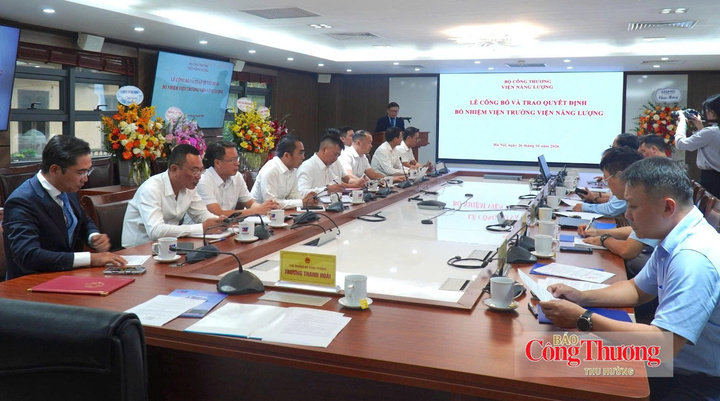
An overview of the working session on October 26.
In implementing a resolution of the Standing Board of the MoIT Party Committee on personnel affairs, the Minister of Industry and Trade signed a decision to transfer and appoint Pham Quang Huy, former Minister-Counsellor and Deputy Permanent Representative at Viet Nam's Permanent Mission to the United Nations, the World Trade Organization (WTO) and other international organizations in Geneva, Switzerland, as Director of the Institute of Energy.
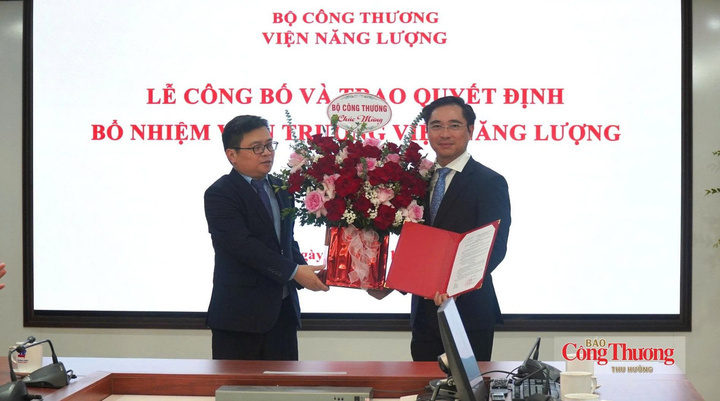
Deputy Minister Truong Thanh Hoai presents the decision appointing Pham Quang Huy as Director of the Institute of Energy.
At the appointment announcement ceremony, Deputy Minister Truong Thanh Hoai acknowledged and commended the Institute of Energy for its contributions to strategic consultancy, national energy planning, the implementation of major science and technology projects, and pioneering research into new technologies in support of the energy transition.
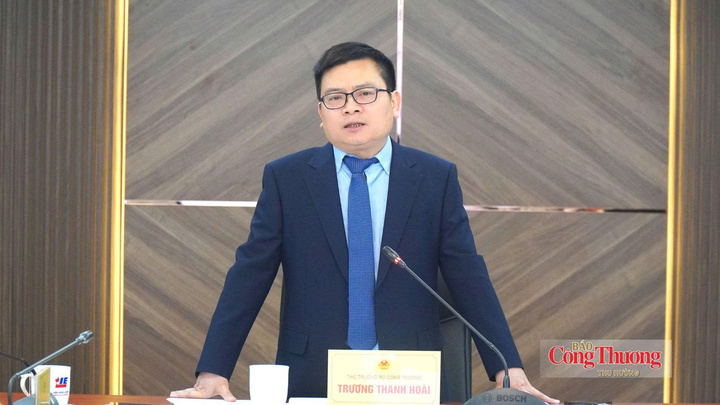
Deputy Minister of Industry and Trade Truong Thanh Hoai delivers remarks at the ceremony.
The Deputy Minister emphasized that the MoIT leadership expected Pham Quang Huy to quickly familiarize himself with his new responsibilities and fully leverage his leadership qualities, management experience and international integration mindset. He was also expected to maintain close engagement with practical operations and take decisive action alongside the Institute's leadership to further strengthen its development, while maintaining its position as the leading strategic advisory body for the MoIT and the Government in the energy and electricity sectors.
In response to the Deputy Minister's directions, newly appointed Director Pham Quang Huy pledged to work closely with the Institute's leadership and staff to concentrate their efforts on the key tasks assigned by the Ministry's leadership, with immediate priorities including energy planning and safeguarding national energy security. He also committed to building on the Institute's traditions, maintaining internal solidarity and unity, and promoting substantial innovation in research approaches, working methods and institutional governance.
"I pledge to work with the highest sense of responsibility, an open-minded, impartial and transparent approach, and the courage to think boldly, take action and assume responsibility for the common good. I hope to receive the cooperation and support of the Institute's leadership, officials and employees," Pham Quang Huy emphasized.
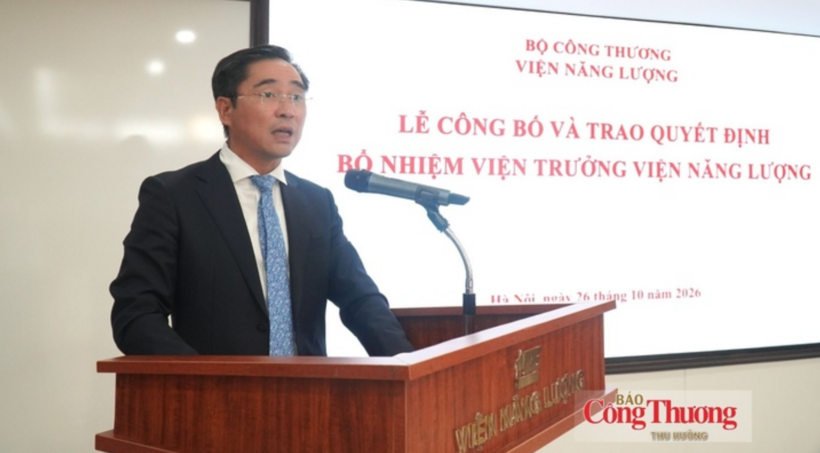
Pham Quang Huy delivers remarks at the appointment ceremony.
Immediately following the ceremony, Deputy Minister Truong Thanh Hoai and representatives of relevant MoIT units held a working session with the Institute's leadership to discuss the implementation of upcoming tasks.
Reporting at the meeting, Director Pham Quang Huy highlighted the Institute's achievements in recent years and proposed coordination mechanisms with relevant units under the Ministry to further strengthen its role and performance of its responsibilities in the new context.
During the working session, representatives of the leadership of MoIT units presented reports, exchanged views and held detailed discussions on outstanding difficulties and challenges facing the electricity sector. They also proposed solutions to address these issues and improve the sector's operational efficiency in the coming period.
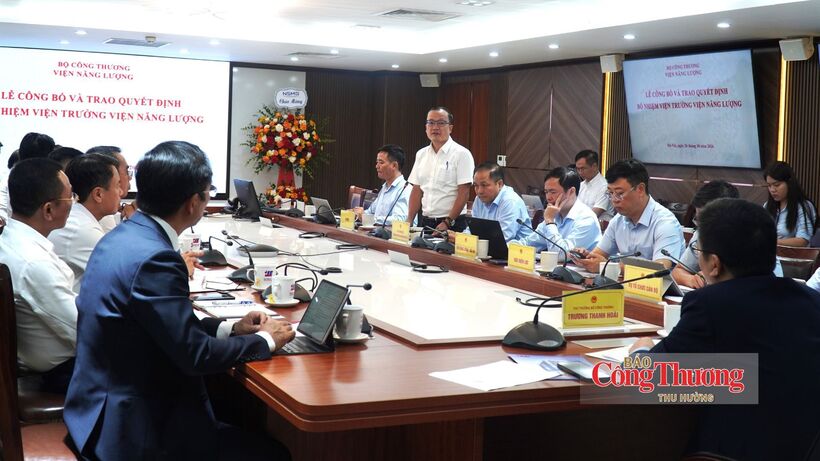
Nguyen Duc Ninh, General Director of the National Power System and Market Operator Company (NSMO), delivers remarks at the working session.
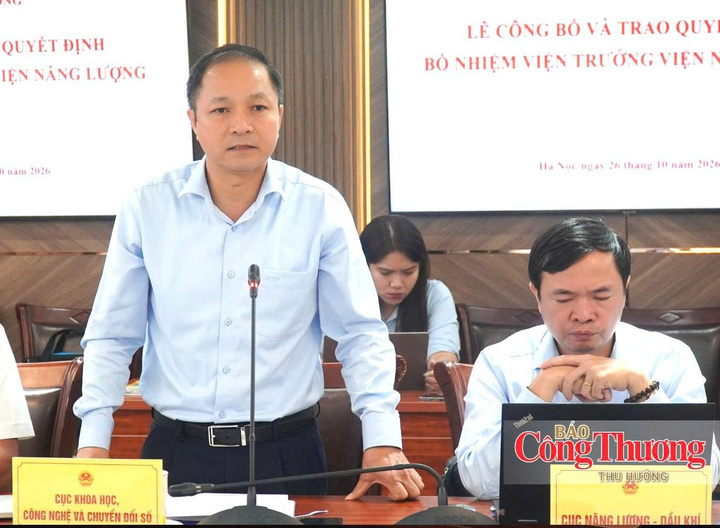
Dao Duy Anh, Deputy Director of the Department for Science Technology and Digital Transformation, delivers remarks at the working session.
In his concluding remarks, Deputy Minister Truong Thanh Hoai commended the efforts and achievements of the Institute's officials and employees in recent years. At the same time, he identified key challenges facing the electricity sector that require focused attention and timely solutions, particularly the lack of technical regulations and standards governing renewable energy, electricity storage, substations and transmission line infrastructure.
The Deputy Minister also called for renewed approaches to research and improvements in the quality of policy advice on electricity pricing and operational mechanisms, with a view to proactively addressing pressing technical and economic challenges and ensuring national energy security.
Furthermore, he stressed that the Institute of Energy should prioritize the development of specialized technical regulations and standards. In particular, he tasked the Institute's environmental research unit with developing waste management solutions for solar panels, energy storage batteries and other energy equipment at the end of their service lives. He also called on the Institute to work closely with the Electricity Authority of Viet Nam and NSMO to establish mechanisms for data connectivity, with the ultimate goal of developing a shared data center for the MoIT.
"At present, operational data from energy systems can be transmitted to equipment manufacturers' control centers. This creates a need to establish a data center to manage, monitor and connect data from renewable energy systems," the Deputy Minister emphasized. He also urged the Institute's leadership to closely align its work with the MoIT's functions and responsibilities, while assessing the Institute's capabilities to identify issues that need to be addressed for the Ministry, the sector and the common good.
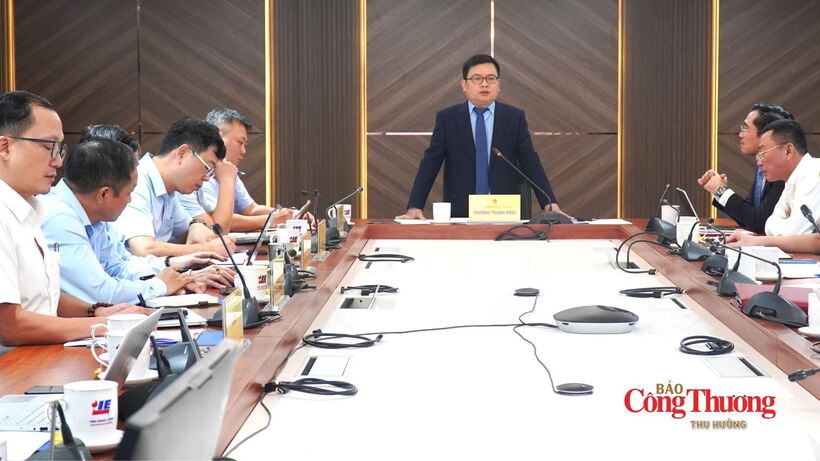
Deputy Minister Truong Thanh Hoai delivers his concluding remarks at the working session.
The consolidation of the Institute's senior leadership is expected to help it further enhance its professional capabilities, strengthen internal solidarity and successfully fulfill its assigned political and scientific research tasks. At the same time, proactively addressing obstacles related to regulatory mechanisms, technical standards and electricity pricing policies will provide an important foundation for firmly safeguarding national energy security.

