


Deputy Minister Nguyen Viet Son: Amendments to Electricity Law to facilitate power generation and grid development
Continuing the programme of the sixth session on September 21, under the chairmanship of National Assembly Chairman Tran Thanh Man and the direction of Deputy Chairman of the National Assembly Nguyen Hong Dien, the Standing Committee of the National Assembly gave its opinions on the draft Law amending and supplementing a number of articles of the Electricity Law. Deputy Prime Minister Nguyen Van Thang, along with representatives of ministries, sectors, agencies and relevant enterprises, attended the session.
Creating favourable conditions for power generation and grid development
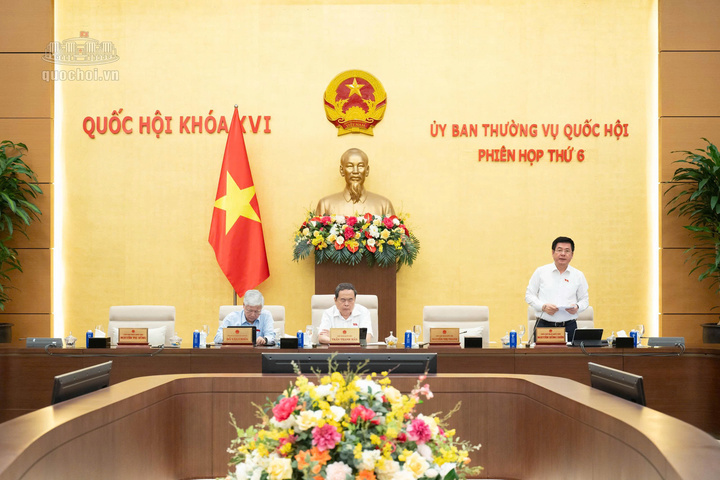
Under the chairmanship of National Assembly Chairman Tran Thanh Man and the direction of Deputy Chairman of the National Assembly Nguyen Hong Dien, the Standing Committee of the National Assembly gave its opinions on the draft Law amending and supplementing a number of articles of the Electricity Law. Photo: Vu Hieu
Under the chairmanship of National Assembly Chairman Tran Thanh Man and the direction of Deputy Chairman of the National Assembly Nguyen Hong Dien, the Standing Committee of the National Assembly gave its opinions on the draft Law amending and supplementing a number of articles of the Electricity Law. Photo: Vu Hieu
Presenting a brief report on the submission concerning the draft Law, Deputy Minister of Industry and Trade Nguyen Viet Son said the Ministry of Industry and Trade had been assigned by the Government to take the lead in drafting and developing the draft Law amending and supplementing a number of articles of the Electricity Law, with three major areas of content.
First, the necessity of promulgating the draft Law. Deputy Minister Nguyen Viet Son said the draft Law aims to institutionalise the Party's guidelines and policies on electricity development, ensure consistency and continue to improve the mechanisms and policies under the Electricity Law No. 61/2024/QH15 of the National Assembly and Resolution No. 253/2025/QH15 on mechanisms and policies for national energy development in the 2026-2030 period.
Second, the objectives and viewpoints guiding the development of the draft Law. According to the Deputy Minister of Industry and Trade, the development of the draft Law must institutionalise the Party's guidelines and policies on the basis of inheriting and promoting provisions of the Electricity Law No. 61/2024/QH15 that remain appropriate, while addressing shortcomings in current legislation and strengthening state management capacity.
The draft Law aims to accelerate decentralisation and delegation of powers while ensuring power control; prevent and combat corruption, negative practices, group interests and sectional interests; create conditions for the development of power generation sources and grids; firmly ensure national energy security; and contribute to the successful implementation of the socio-economic development strategy, as well as national defence and security.
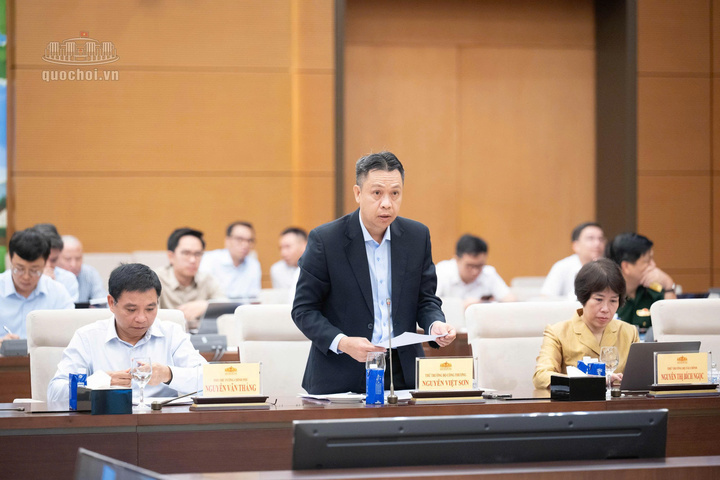
Deputy Minister of Industry and Trade Nguyen Viet Son presents a brief report on the draft Law. Photo: Vu Hieu
Third, the process of developing the draft Law. Implementing Resolution No. 119/2026/UBTVQH15 of the Standing Committee of the National Assembly on adjustments to the 2026 legislative programme, the draft Law has been developed by the Ministry of Industry and Trade, the drafting agency, following consultations with experts, scientists, enterprises, ministries, ministerial-level agencies and relevant organisations and agencies. The Ministry of Justice has appraised the draft in accordance with the law on the promulgation of legal normative documents.
Cutting and simplifying a number of administrative procedures
According to Deputy Minister Nguyen Viet Son, the draft Law consists of three articles, mainly amending and supplementing 23 articles and abolishing three articles; adding, replacing and abolishing a number of words and phrases and several provisions to ensure consistency and eliminate different interpretations of existing regulations. The key amendments and supplements include:
First, investment in the construction of power projects: From Clauses 4 to 9 of Article 1 of the draft Law, a number of provisions on power development planning; the orientation for developing the power supply network and implementing power development planning; and the selection of investors for power projects are amended and supplemented towards removing the investment policy requirement and applying winning electricity prices. Provisions on project contracts under the public-private partnership (PPP) model are also adjusted, while a case involving investment in power transmission grid projects under the PPP model is added to attract social resources.
Second, development of renewable and new energy power: From Clauses 10 to 12 of Article 1 of the draft Law, provisions on the development of renewable and new energy, including offshore wind power and electricity storage systems, are amended and supplemented to strengthen supervision of the efficient exploitation and use of resources.
The draft Law assigns the Government to provide detailed regulations on a number of contents to ensure feasibility in practice and suitability to each development period.
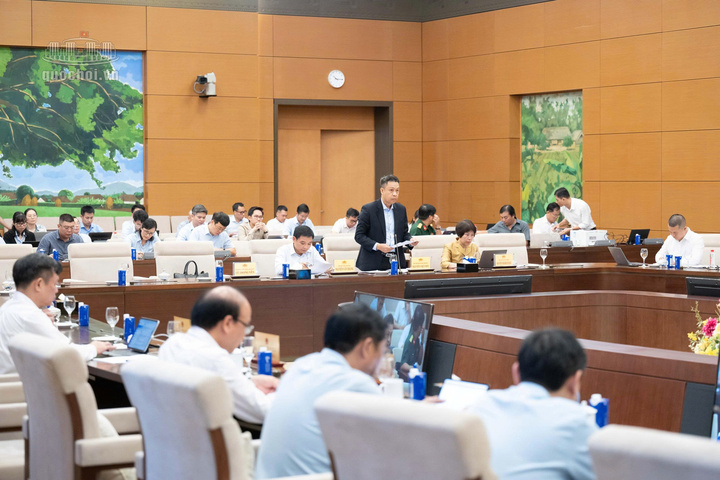
Deputy Minister Nguyen Viet Son said the draft Law consists of three articles, mainly amending and supplementing 23 articles and abolishing three articles. Photo: Vu Hieu
Third, electricity operation licences: From Clauses 13 to 15 of Article 1 of the draft Law, a number of provisions on conditions for electricity operation licences, cases exempt from electricity operation licences, and the abolition of a number of regulations are amended and supplemented to simplify administrative procedures.
Fourth, the electricity market, electricity trading and power system operation: From Clauses 16 to 20 of Article 1 of the draft Law, a number of provisions are amended and supplemented to ensure the implementation of different levels of development and the design of a competitive electricity market in line with the Party's guidelines and policies and practical requirements.
At the same time, the draft Law expands the subjects eligible to participate in the direct power purchase mechanism, adds provisions on cases of suspension or reduction of electricity supply in accordance with other relevant laws, adjusts a number of provisions on payments and responsibilities for ensuring power quality, and assigns the Government to issue regulations in line with practical requirements.
Fifth, electricity prices and electricity service prices: From Clauses 21 to 22 of Article 1 of the draft Law, the provisions mainly adjust the roadmap for eliminating cross-subsidies in electricity prices among customer groups, clarify electricity purchase and sale contract prices for a number of types of power generation and the electricity support pricing mechanism, and encourage investment appropriate to renewable and new energy power projects, electricity storage systems and other forms of power generation in response to socio-economic development requirements in each period.
Regarding administrative procedures and decentralisation and delegation of powers, Deputy Minister of Industry and Trade Nguyen Viet Son stressed that the draft Law abolishes three administrative procedures and introduces one new administrative procedure. At the same time, it amends and supplements 19 existing administrative procedures to implement the policy of administrative procedure simplification and separates complex administrative procedures into individual procedures appropriate to the actual operations of enterprises. This is intended to simplify procedures, ensure transparency and reduce compliance costs for enterprises engaged in electricity activities.
Notably, Deputy Minister of Industry and Trade Nguyen Viet Son said the draft Law has been developed to clearly delineate the responsibilities of central and local state management agencies in policy development and the performance of their functions and duties, thereby improving the effectiveness of state management.
The draft Law is compatible with the treaties and international commitments to which Viet Nam is a party; ensures requirements concerning national defence and security, gender equality and ethnic policies; and implements the Party's regulations on the prevention and combat of corruption, group interests and sectional interests. The draft Law is developed on the principles of ensuring openness and transparency, avoiding the creation of mechanisms based on seeking official approval, and preventing an environment conducive to abuse of power or other violations of law.
Amend only issues that are truly necessary
Presenting a preliminary appraisal report on the draft Law amending and supplementing a number of articles of the Electricity Law, Nguyen Thanh Hai, Chairman of the National Assembly's Committee for Science, Technology and Environment, said the Standing Committee of the Committee basically agreed on the necessity and scope of amending and supplementing a number of articles of the Electricity Law to focus on institutionalising the Party's new guidelines; remove difficulties and obstacles arising in practice; ensure consistency with relevant legislation; and strongly implement the policy of decentralisation and delegation of powers, while cutting administrative procedures and business conditions and facilitating electricity activities. The dossier for the draft Law basically meets the requirements for submission to the Standing Committee of the National Assembly for consideration and comment.
However, Chairman Nguyen Thanh Hai asked the Government to continue reviewing the draft and amend only issues that are truly necessary, sufficiently clear and have an adequate political, legal and practical basis. New policies with major impacts must be fully assessed before being incorporated into the law. Issues beyond the authority of the National Assembly must be reported and submitted to the competent authorities for consideration. He also called for strict adherence to requirements on power control and the prevention and combat of corruption, negative practices, group interests and sectional interests in lawmaking.
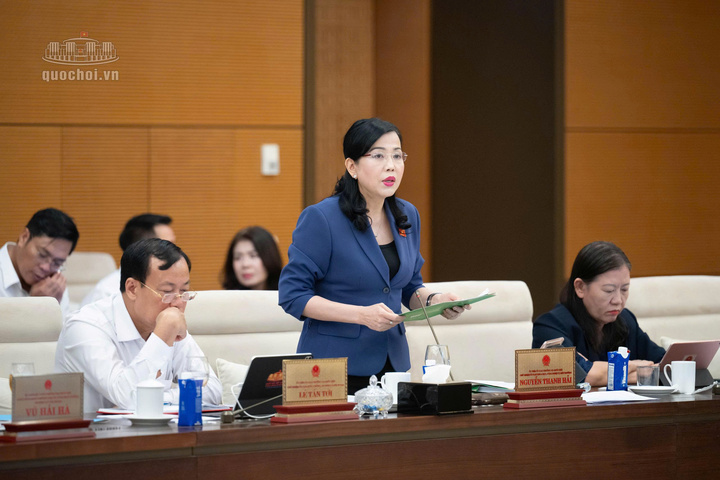
Chairman of the National Assembly's Committee for Science, Technology and Environment Nguyen Thanh Hai presents a preliminary appraisal report on the draft Law amending and supplementing a number of articles of the Electricity Law. Photo: Vu Hieu
Giving opinions on electricity pricing mechanisms, electricity service prices and risk allocation, the Standing Committee of the Committee basically agreed with the principle that electricity prices should reflect reasonable and legitimate costs, create conditions for mobilising investment resources, gradually eliminate cross-subsidies and develop a competitive electricity market.
However, the wording in the draft Law stipulating that electricity purchase and sale contract prices must "ensure full recovery" of costs, investment capital and reasonable profits could be understood as meaning that the State guarantees financial outcomes for investors. Therefore, the drafting agency was asked to make clear that electricity prices are formed on the basis of reasonable and legitimate costs, investment efficiency, the level of risk and market conditions, and that investment and business risks should not be transferred entirely to the State, electricity purchasers or electricity users.
Regarding the policy of eliminating cross-subsidies and providing electricity support, the Standing Committee of the Committee proposed clarifying the scope, beneficiaries and implementation roadmap, while clearly distinguishing the elimination of cross-subsidies in electricity prices from direct support policies for poor households, policy beneficiaries and people living in areas facing particularly difficult socio-economic conditions.
"Support should have clear criteria, resources and implementation responsibilities, and should be open and transparent, so that the marketisation of electricity prices does not affect access to electricity for groups requiring State support," Chairman of the National Assembly's Committee for Science, Technology and Environment Nguyen Thanh Hai noted.
In addition, the Standing Committee of the Committee proposed that the Government and the drafting agency continue to complete detailed regulatory documents, databases, human resources and organisational conditions for implementation, ensuring that new mechanisms concerning investment in power projects, offshore wind power, electricity storage, direct power purchase agreements (DPPA), electricity prices and licensing can be implemented as soon as the Law takes effect, without creating legal gaps or a situation in which the Law takes effect but implementation must wait for guiding documents.
| The draft Law is consistent with the Constitution, the Party's guidelines and policies and the State's laws, and does not serve group interests or sectional interests. It institutionalises provisions on the application and promotion of the development of science and technology, innovation and digital transformation, and ensures national energy security under Resolution No. 57-NQ/TW on breakthroughs in the development of science and technology, innovation and national digital transformation and Resolution No. 70-NQ/TW on ensuring national energy security through 2030, with a vision to 2045. |

