


Reading culture plays a vital role in safeguarding the Party's ideological foundation
Promoting a culture of reading plays an important role in safeguarding the Party's ideological foundation, strengthening public confidence, and reinforcing the political steadfastness of Party members and officials in the new context.
Cultivating critical thinking and character
Reading is far more than a learning habit. It is a means of expanding knowledge, sharpening critical thinking, cultivating character and enriching cultural depth. For officials and Party members, reading is also a process of continuous self-learning and self-improvement, helping strengthen political conviction while enhancing the capacity to address emerging issues in practice.
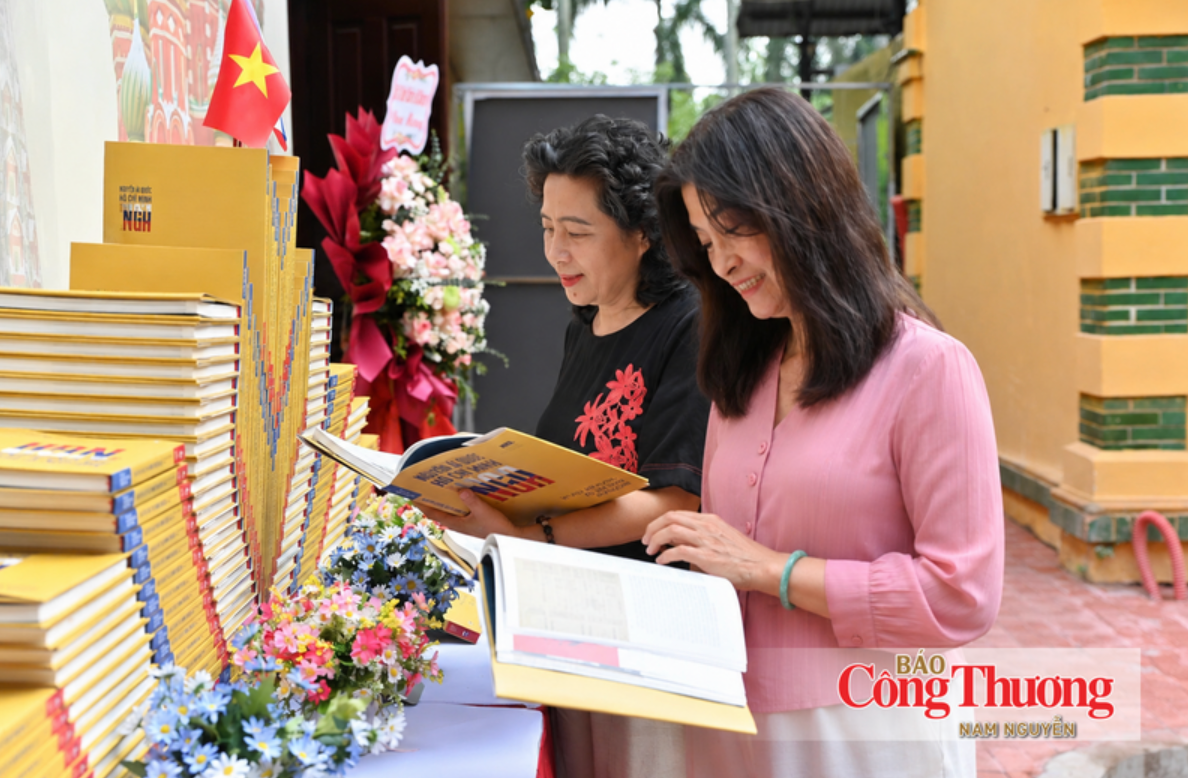
A strong reading culture is no longer solely about improving professional competence. It is increasingly becoming the foundation for building a cadre of officials with modern thinking, a strong sense of responsibility and firm political resolve.
The spirit of lifelong learning remains as relevant as ever, particularly at a time when the Fourth Industrial Revolution is rapidly transforming the way people access information and knowledge. Today, a smartphone enables anyone to reach an enormous volume of information within seconds. Yet the same environment has also become fertile ground for misinformation, distorted narratives and unverified content that increasingly permeate society and directly influence the perceptions of officials, Party members and the public.
Experience shows that people who are reluctant to read, unwilling to learn or lacking a solid knowledge base are more susceptible to sensational or one-sided information and may even be influenced by misleading or extremist views circulating online. By contrast, those who cultivate the habit of reading, possess a solid theoretical foundation and think independently are better equipped to analyse complex issues, distinguish fact from falsehood and remain steadfast in their convictions.
For this reason, fostering a culture of reading today is not merely about preserving a positive cultural value. It is also an important task that contributes to safeguarding the Party's ideological foundation, protecting public confidence and reinforcing the political resilience of officials and Party members in the new context.
From office bookshelves to a positive learning environment
Recognising this importance, and in response to Vietnam Book and Reading Culture Day 2026 (April 21), the Agency for Innovation, Green Transition and Industrial Promotion (IGIP Agency), under the direction of the MoIT Party Committee, has implemented a range of practical initiatives to promote reading among its officials, civil servants, public employees and workers.
Rather than treating the campaign as a symbolic or short-term activity, the Agency's leadership identified from the outset that cultivating a reading culture should be closely linked to improving human resource quality and developing a workforce equipped with knowledge, innovative thinking and strong political conviction.
For an agency entrusted with strategic responsibilities in innovation, green transition, digital transformation, energy efficiency, the circular economy and international integration, knowledge is not simply a professional requirement, it is the foundation that enables every official to adapt to the rapidly evolving realities of today's world.
In a modern working environment, officials who fail to pursue continuous learning and regularly update their knowledge risk falling behind. A green transition policy introduced today may be revised within months, while a new technology can quickly become outdated if not continuously monitored. Reading, researching and maintaining a lifelong learning mindset have therefore become essential responsibilities for every official.
Based on this understanding, the IGIP Agency has actively disseminated and promoted the Party's major policies on cultural development and publishing activities, particularly Politburo Resolution No. 80-NQ/TW on developing Vietnamese culture and Secretariat Directive No. 04-CT/TW on strengthening the Party's leadership over publishing activities in the new situation.
Through thematic sessions, internal communication and the dissemination of reference materials, officials, civil servants, public employees and workers throughout the Agency have gained a deeper appreciation of the role that books and reading play in human development, intellectual growth and the establishment of a sustainable knowledge base.
Keeping the reading culture alive
In today's context, safeguarding the Party's ideological foundation is no longer a task confined to conferences or the fields of journalism and public communication. It has become an ongoing responsibility shared by every official and Party member across all areas of work.
Hostile forces have become increasingly sophisticated in their activities, particularly in cyberspace. Misleading information is often disguised as analytical commentary, policy critique, current affairs discussion or seemingly harmless stories from everyday life, gradually sowing doubt, encouraging extremism and eroding public confidence.
In reality, officials who lack a solid intellectual foundation and critical thinking skills are more vulnerable to such influences. One of the most effective ways to build ideological resilience is therefore to sustain a strong reading culture, nurture a commitment to lifelong learning and encourage independent research.
This is precisely why the IGIP Agency has promoted reading in a flexible, modern manner that is closely aligned with practical work requirements. Its affiliated units have introduced diverse approaches, including specialised reading programmes, book-sharing initiatives, e-books, digital libraries and online library platforms, all tailored to the needs of officials and the nature of their work.
Reading materials have also been diversified. Alongside political theory, Party-building publications and works on Ho Chi Minh Thought, officials actively study materials related to innovation, digital transformation, green energy, sustainable development, modern governance, artificial intelligence, the circular economy and international integration.
One particularly encouraging development is the emergence of a culture of internal knowledge sharing across many units within the Agency. After reading professional publications or valuable books, officials proactively exchange ideas and recommend useful materials to colleagues. Conversations about books, governance thinking, international experience and green transition models have become an increasingly familiar feature of the Agency's working environment.
These practices have helped foster a positive learning culture, encouraging self-directed study and strengthening the spirit of research throughout the organisation. In particular, initiatives such as office book collections and digital bookshelves have made it easier for officials to access resources that support both their professional responsibilities and personal development.
Reading enables people to pause amid the pace of modern life. It encourages deeper, more systematic thinking and helps officials avoid intuitive or one-dimensional approaches to decision-making based solely on personal experience. In fields such as innovation and green transition, which evolve almost daily, keeping knowledge up to date is more important than ever.
Many young civil servants, public employees and workers at the IGIP Agency have already developed the habit of reading every day, using both printed books and digital publications. Alongside professional materials, they actively read books on critical thinking, management and personal development. This spirit of proactive learning is helping shape a workforce that is dynamic, open-minded and deeply committed to contributing to the country's development.
| Ultimately, the reading culture being cultivated at the IGIP Agency is not only enhancing professional capacity but is also gradually becoming the foundation for building a corps of officials with modern thinking, a strong sense of responsibility and unwavering political conviction. Safeguarding the Party's ideological foundation is, in the end, not merely reflected in broad slogans or abstract principles. It begins with each official taking the initiative to learn, broaden their understanding and preserve their political resilience in the face of increasingly complex information challenges. |

