


37th APEC Foreign and Economic Ministers' Meeting (AMM 37)
Within the framework of the Asia-Pacific Economic Cooperation (APEC) forum, the 37th APEC Foreign and Economic Ministers' Meeting (AMM 37) took place virtually on November 3, 2026.
The meeting was co-chaired by Wang Yi, member of the Political Bureau of the Communist Party of China Central Committee and Minister of Foreign Affairs of China, and Wang Wentao, Minister of Commerce of China. It brought together foreign ministers, economic and trade ministers and heads of delegation from the 21 APEC member economies.
Also in attendance were the Chair of the APEC Business Advisory Council (ABAC), the Pacific Economic Cooperation Council (PECC) and the APEC Secretariat. The Vietnamese delegation was co-led by Political Bureau member and Minister of Foreign Affairs Le Hoai Trung and Deputy Minister of Industry and Trade Luong Hoang Thai.
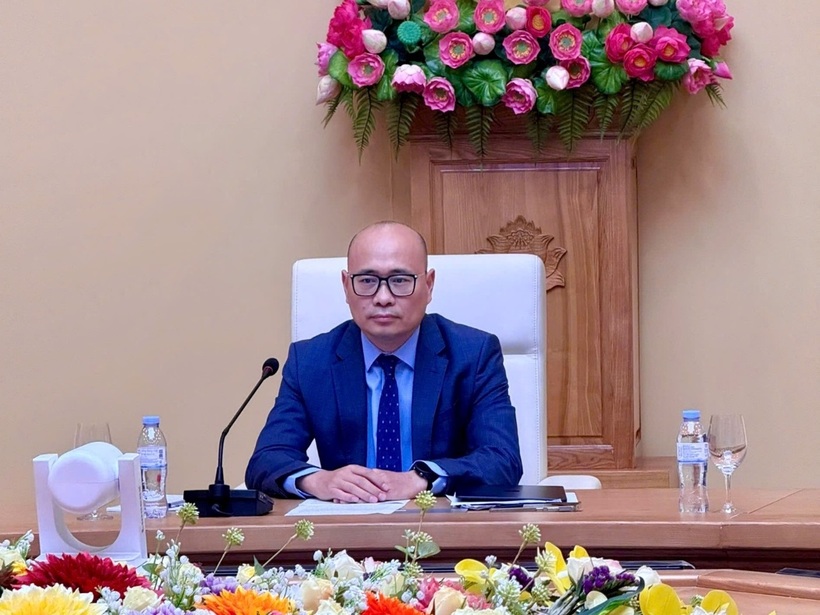
Deputy Minister of Industry and Trade Luong Hoang Thai, co-head of the Vietnamese delegation to the meeting
Discussions focused on two main themes. The first was building an Asia-Pacific community of connectivity, inclusiveness, resilience and shared prosperity, in which economies work together to address common challenges, narrow development gaps, promote sustainable growth and ensure that the benefits of integration are widely shared among people and businesses. The second was advancing new drivers of regional economic integration by harnessing new sources of growth, including digital technology, innovation, the application of artificial intelligence (AI), the green transition and stronger supply chain connectivity, in order to deepen economic linkages, enhance competitiveness and ensure sustainable and inclusive growth in the Asia-Pacific region.
Ministers heard reports from the Chair of the APEC Senior Officials' Meeting (SOM), the APEC Secretariat and the ABAC Chair. They reaffirmed their commitment to realising the Putrajaya Vision 2040, towards an open, dynamic, resilient and peaceful Asia-Pacific community. They also stressed the pivotal role of innovation, the green transition, digital transformation and the responsible development and application of AI in achieving sustainable, inclusive economic growth and enhancing prosperity across the region.
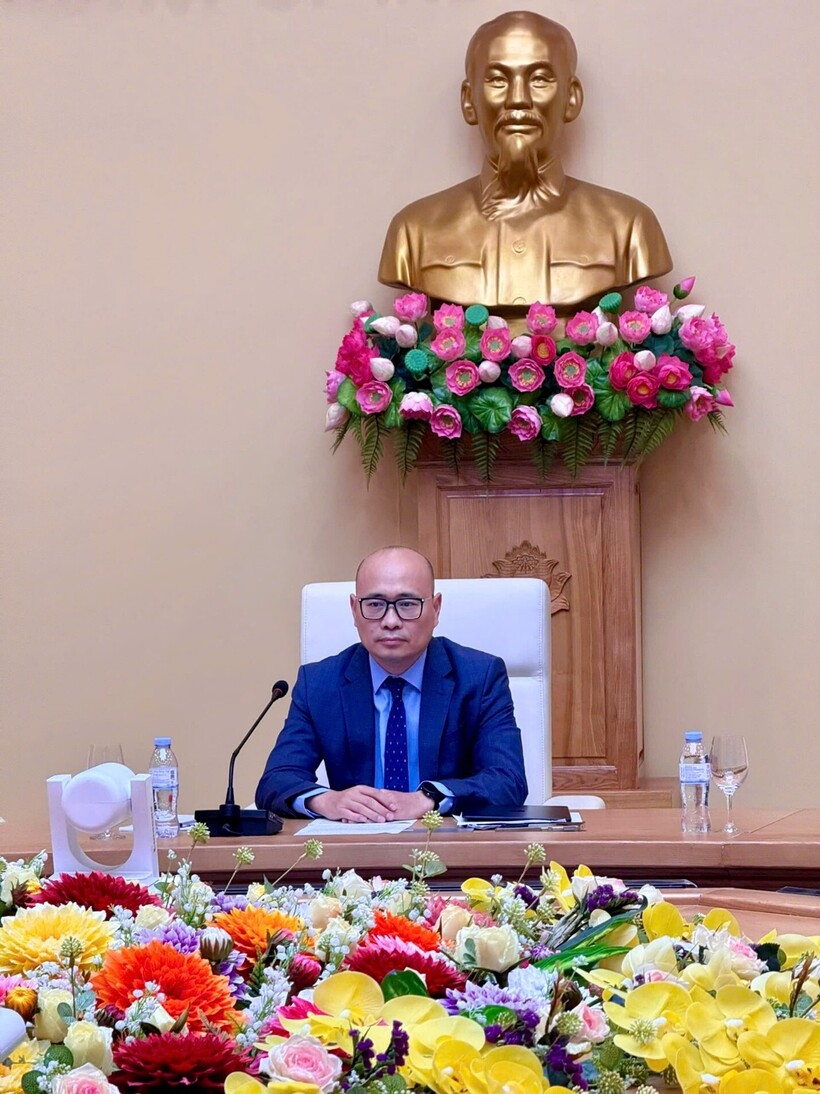
The 37th APEC Foreign and Economic Ministers' Meeting (AMM 37)
Ministers underlined APEC's central position in promoting regional economic cooperation, particularly amid emerging technology trends and development models. As a platform for advancing innovative ideas and initiatives, APEC will continue to help economies harness technological achievements, strengthen supply chain adaptability, promote open trade and investment, and contribute to consolidating the rules-based multilateral trading system with the World Trade Organization (WTO) at its core.
On multilateral trade, many ministers said the WTO continues to play a key role in building and maintaining a rules-based trading system, and that its commitments and rules form an indispensable foundation for international trade. On that basis, ministers welcomed efforts to promote dialogue and strengthen discussions within the WTO on emerging trade issues and the challenges facing global trade today.
Deputy Minister Thai affirmed that regional economic integration is an important pillar for realising the Putrajaya Vision 2040. He commended APEC's efforts to promote economic linkages, particularly through the process towards a Free Trade Area of the Asia-Pacific (FTAAP), trade and investment facilitation, enhanced services competitiveness and an improved business environment. He also shared with APEC members a number of areas that Viet Nam will focus on in the coming period to ensure free, open, sustainable and inclusive trade and investment in the Asia-Pacific region.
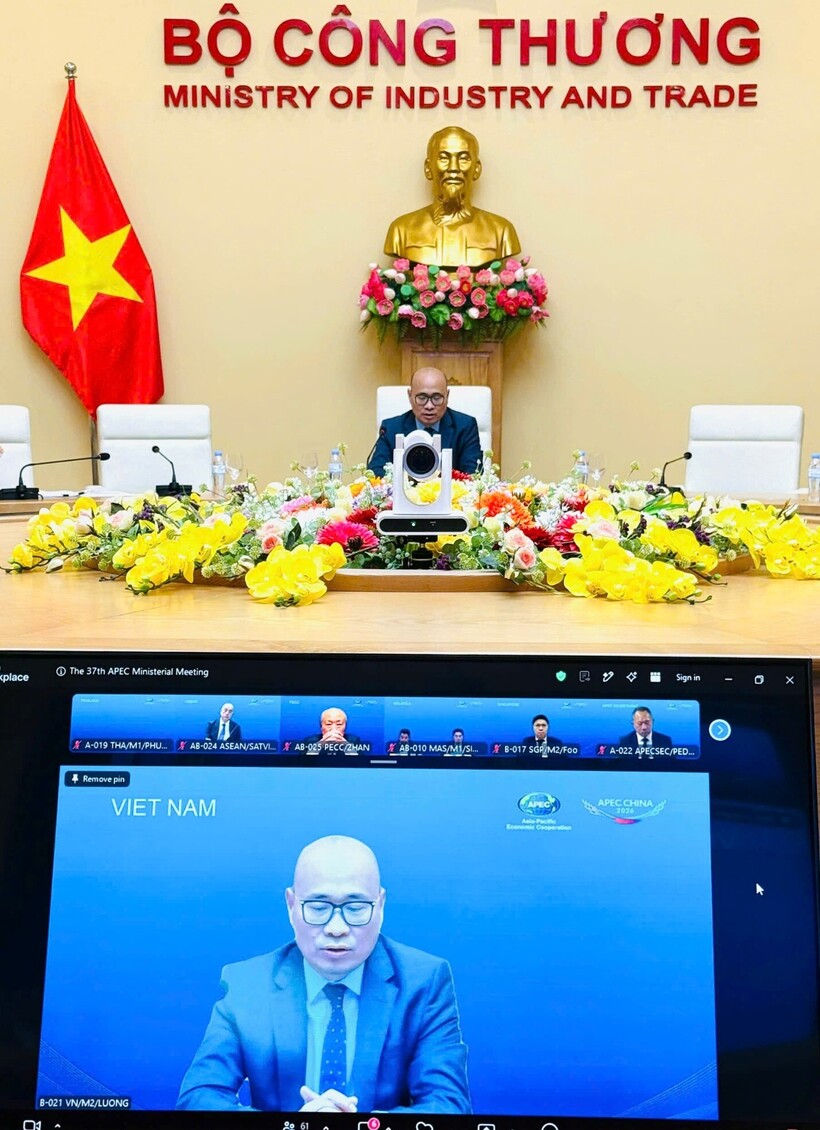
Deputy Minister Luong Hoang Thai delivers remarks at the meeting
First, Viet Nam will develop strategic technologies. The country prioritises the development and application of strategic and emerging technologies such as AI, semiconductors and other advanced technologies to raise productivity, innovation capacity and economic competitiveness. Viet Nam aims to train 50,000 semiconductor engineers by 2030, and the Deputy Minister stressed the role of regional cooperation in technology, innovation and human resource development to ensure that all APEC economies can participate in and benefit from technological progress.
Second, Viet Nam will promote the digital economy and an innovative start-up ecosystem. It will accelerate digital transformation, develop the digital economy and build a dynamic start-up ecosystem. The country attaches importance to promoting digital trade, strengthening digital connectivity and enabling micro, small and medium-sized enterprises to participate more effectively in value chains and in regional and global markets.
Third, Viet Nam will step up the green transition by promoting green investment, developing clean technology, using resources more efficiently and encouraging sustainable production and consumption. The green transition is not only an environmental commitment for Viet Nam but also a new growth driver, tied to the goal of net-zero emissions by 2050. The country also encourages businesses to apply environmental, social and governance (ESG) standards and hopes to strengthen APEC cooperation in promoting trade and investment in environmental goods and services, developing green finance and supporting businesses, especially small and medium-sized enterprises, in their green transition.

