


Agency for Foreign Trade Director discusses record USD 1 trillion trade milestone
In an interview with Newspaper of Industry and Trade, Nguyen Anh Son, Director of the Agency for Foreign Trade under the Ministry of Industry and Trade (MoIT), emphasized that total merchandise trade turnover exceeding USD 1 trillion reflects the growing scale and deeper integration of Viet Nam's economy into international trade.
Multiple drivers contribute to the USD 1 trillion milestone
- According to estimates, Viet Nam's total merchandise trade turnover surpassed the USD 1 trillion mark in the first 10 months of 2026, reaching an estimated USD 1,010.55 billion, up 32.3% year on year. This is a milestone of particular significance to the economy. In your view, what factors have driven such strong growth in import-export activities amid continued volatility in global trade?
Nguyen Anh Son: It can be affirmed that total merchandise trade turnover surpassing USD 1 trillion is an important milestone, reflecting the growing scale and deeper integration of Viet Nam's economy into international trade.
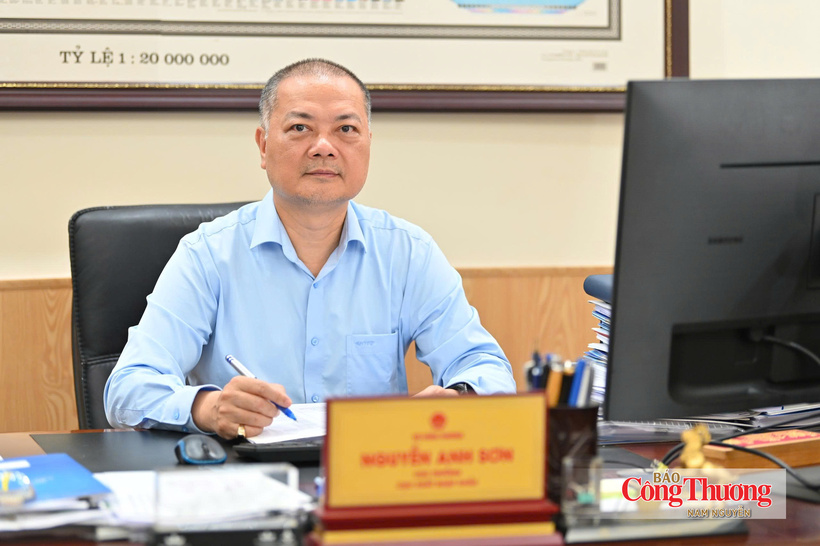
Nguyen Anh Son, Director of the Agency for Foreign Trade under the Ministry of Industry and Trade
This achievement is the result of a combination of various factors. First and foremost is the recovery and sustained growth of domestic production, particularly in the processing and manufacturing industries, which play a leading role in Viet Nam's export activities. As production capacity expands and businesses make effective use of opportunities arising from international market demand, export turnover has continued to maintain positive growth.
Second, foreign-invested enterprises continue to play an important role in key export sectors such as electronics, machinery and equipment, textiles and garments, and footwear, helping sustain export growth and enabling Viet Nam to participate more deeply in global supply chains.
Third, the effective utilization of free trade agreements (FTAs), together with efforts to expand and diversify export markets, has created additional room for Vietnamese businesses to access major markets. Alongside traditional markets, businesses are increasingly paying attention to emerging markets with considerable potential in the Middle East, South Asia, Africa and Latin America.
In addition, the proactive and flexible response of the business community to fluctuations in global trade cannot be overlooked. These include changes in market demand, technical standards, the green transition and adjustments to the trade policies of other countries.
However, alongside these positive results, the expansion of trade turnover beyond USD 1 trillion also brings new requirements for sustainable development. The priority is not merely to increase the scale of trade, but also to improve the quality of growth, increase domestic value added, reduce dependence on external sources of supply and strengthen the position of Vietnamese businesses in global value chains.
MoIT accompanies businesses and expands market opportunities
- Achieving import-export turnover of more than USD 1 trillion has required not only the efforts of the business community but also the management, support and market-creation role of the Government and ministries and sectors, particularly MoIT. Could you share the key solutions and initiatives that MoIT has implemented to promote exports, develop markets, capitalize on FTAs, address business difficulties and support import-export activities in recent years?
Nguyen Anh Son: The current import-export achievements are attributable not only to the efforts of the business community but also to the coordinated implementation of various solutions by the Government and ministries and sectors. MoIT has played an important role in market development, business support and improving the competitiveness of Vietnamese goods.
In recent years, MoIT has focused on implementing several key groups of solutions. Accordingly, the Ministry has continued to support businesses in making effective use of the free trade agreements signed by Viet Nam. With an increasingly extensive network of FTAs, MoIT has stepped up the dissemination of commitments and provided guidance to businesses on capitalizing on tariff preferences, rules of origin and market access opportunities.
At the same time, the Ministry has intensified efforts to develop export markets, maintaining traditional markets while expanding into regions with considerable untapped potential. Trade promotion activities, business matchmaking and support for enterprises seeking access to international distribution networks have continued to be implemented in a more targeted manner, tailored to specific industries and markets.
MoIT has also regularly monitored production and import-export activities, promptly identifying difficulties and obstacles facing businesses and coordinating with relevant agencies to address them, particularly issues concerning markets, technical standards, trade remedies and new requirements imposed by importing markets.
In the coming period, MoIT will continue to focus on several major orientations. These include further diversifying export markets and products, reducing dependence on certain traditional markets and making better use of emerging markets. The Ministry will also improve the effectiveness of FTA utilization, shifting from merely capitalizing on tariff preferences to making comprehensive use of opportunities in investment, supply chains and economic cooperation.
Furthermore, businesses will be supported in improving their competitiveness and meeting increasingly stringent international market requirements concerning quality, technical standards, sustainable development and the green transition. Efforts will also be made to promote domestic production and supporting industries and increase localization rates to raise the domestic value added generated by import-export activities.
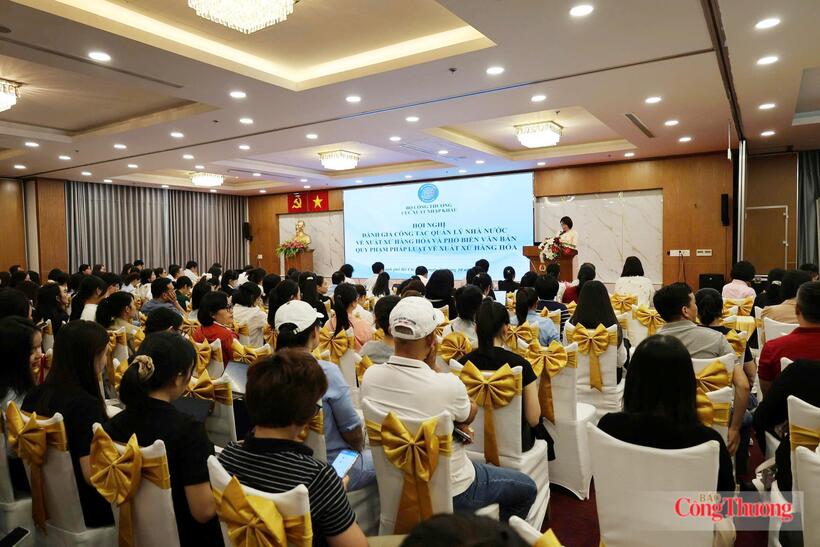
MoIT provides businesses with guidance on making use of tariff preferences and rules of origin
Addressing localization bottlenecks to strengthen Vietnamese businesses' position
- Despite impressive growth, the current export structure still reflects the dominant role of processing and manufacturing products, while domestic enterprises continue to face considerable challenges in production capacity and participation in supply chains. In your view, what are the biggest bottlenecks that need to be addressed to increase value added, raise localization rates and enhance the substantive contribution of Vietnamese businesses to export turnover?
Nguyen Anh Son: In recent years, Viet Nam's export structure has undergone positive changes, with a rising share of processing and manufacturing products and gradually reduced dependence on exports based heavily on natural resources and low-skilled labor. This is the result of efforts to attract investment, develop production and participate more deeply in global supply chains.
However, alongside these achievements, Viet Nam's export activities still face several limitations that need to be addressed. One of the key issues is that domestic value added remains disproportionate to the scale of export turnover, particularly in several major export sectors such as electronics, machinery and equipment, textiles and garments, and footwear.
The main reason is that domestic enterprises, particularly small and medium-sized enterprises, still have limited capacity to participate in global supply chains. Many have yet to fully meet requirements regarding production scale, technical standards, quality management, technological innovation and supply stability.
In addition, linkages between domestic enterprises and foreign-invested enterprises have yet to meet expectations. In some export-oriented manufacturing industries, production remains considerably dependent on imported raw materials and components, limiting the spillover effects of export activities on the domestic business sector.
To address these issues, I believe several groups of solutions should be prioritized.
First, further develop supporting industries, particularly in sectors with significant potential to generate high value added, such as electronics, semiconductors, precision engineering, electrical equipment and processing industries.
Second, strengthen the capabilities of Vietnamese businesses through support for technological innovation, improved corporate governance, compliance with international standards and deeper participation in supply chains.
Third, promote linkages between FDI enterprises and domestic businesses, creating conditions for Vietnamese enterprises to gradually become suppliers in global production networks rather than remaining confined to low-value-added stages.
Fourth, in attracting foreign investment, greater priority should continue to be given to projects with high technological content, commitments to developing domestic supplier ecosystems and the potential to generate positive spillover effects across the economy.
In the long term, the objective is not merely to maintain export growth, but, more importantly, to increase the Vietnamese value content of every exported product, thereby strengthening the competitiveness and position of Vietnamese businesses in international trade.
Double-digit growth requires new breakthroughs in import-export activities
- As Viet Nam sets its sights on double-digit economic growth, import-export activities have been identified as one of the key growth drivers. In your view, what breakthrough solutions should be prioritized in the coming period to sustain import-export growth, diversify markets, secure proactive sources of raw materials and improve the competitiveness of Vietnamese goods?
Nguyen Anh Son: As the global economy continues to face considerable volatility, the import-export growth target for the coming period must be approached with higher requirements: achieving rapid but sustainable development, expanding trade in scale while simultaneously improving its quality and efficiency.
In my view, several key groups of solutions should be prioritized.
First, further intensify export market diversification. Viet Nam needs to make better use of traditional markets while expanding into regions with considerable potential, such as the Middle East, South Asia, Africa and Latin America. Market diversification will help businesses mitigate risks when international markets experience fluctuations.
Second, improve the effectiveness of free trade agreement utilization. Following the expansion of Viet Nam's FTA network, the current requirement is to move towards deeper utilization, enabling businesses not only to benefit from tariff preferences but also to gain better access to supply chains, investment flows and business cooperation opportunities in partner markets.
Third, strengthen domestic production capacity, particularly by developing supporting industries and securing proactive sources of input materials. This is an important factor in reducing import dependence, improving the economy's resilience to external shocks and increasing domestic value added in exported goods.
Fourth, support businesses in adapting to new requirements in international trade. Markets are increasingly focusing on quality standards, sustainable development, the green transition, traceability and supply chain responsibility. Vietnamese businesses need to proactively strengthen their capabilities to meet these requirements rather than competing solely on the basis of costs.
- Thank you very much!
Nguyen Anh Son affirmed that, in the coming period, MoIT will continue to coordinate with ministries, sectors, localities and the business community in implementing comprehensive solutions to develop export markets, support businesses in capitalizing on opportunities arising from international integration, enhance competitiveness and promote a sustainable restructuring of import-export activities. The ultimate objective is not merely to sustain growth in import-export turnover, but to build a trading sector that is better equipped to adapt to global fluctuations, with Vietnamese businesses playing an increasingly prominent role and a growing proportion of value being generated domestically. |

