


Ministry of Industry and Trade orders proactive measures against heavy rain, flash floods and landslides in northern provinces
In response to widespread heavy rainfall across northern Vietnam’s midland and mountainous regions, the Civil Defense Command of the Ministry of Industry and Trade (MOIT) has issued Official Dispatch No. 4431/CĐ-PCTT dated June 16, 2026, directing agencies and units across the sector to proactively implement response measures to ensure the safety of industrial and energy infrastructure, as well as the lives and property of local residents.
Comprehensive deployment of disaster response measures
According to the National Center for Hydro-Meteorological Forecasting, under the influence of a monsoon trough, a widespread spell of heavy rain is expected to affect the northern midland and mountainous areas from the night of June 15 through the morning of June 18.
Rainfall in Quang Ninh, Lang Son, Bac Ninh, Cao Bang, Tuyen Quang and Thai Nguyen provinces is forecast to range from 100 mm to 200 mm, with some areas receiving more than 300 mm. Meanwhile, Lao Cai, Phu Tho, Son La, Dien Bien and Lai Chau provinces are expected to record rainfall of 70 mm to 150 mm, with some locations exceeding 250 mm.
To proactively respond to heavy rain, flash floods and landslides, the Civil Defense Command of the Ministry of Industry and Trade has instructed relevant units to closely monitor developments, promptly implement response measures in accordance with the “four-on-the-spot” principle, and review their 2026 disaster prevention and control plans to ensure readiness for any emergency situation.
Units have also been directed to inspect facilities and vulnerable areas in order to promptly address deficiencies and ensure operational and production safety.
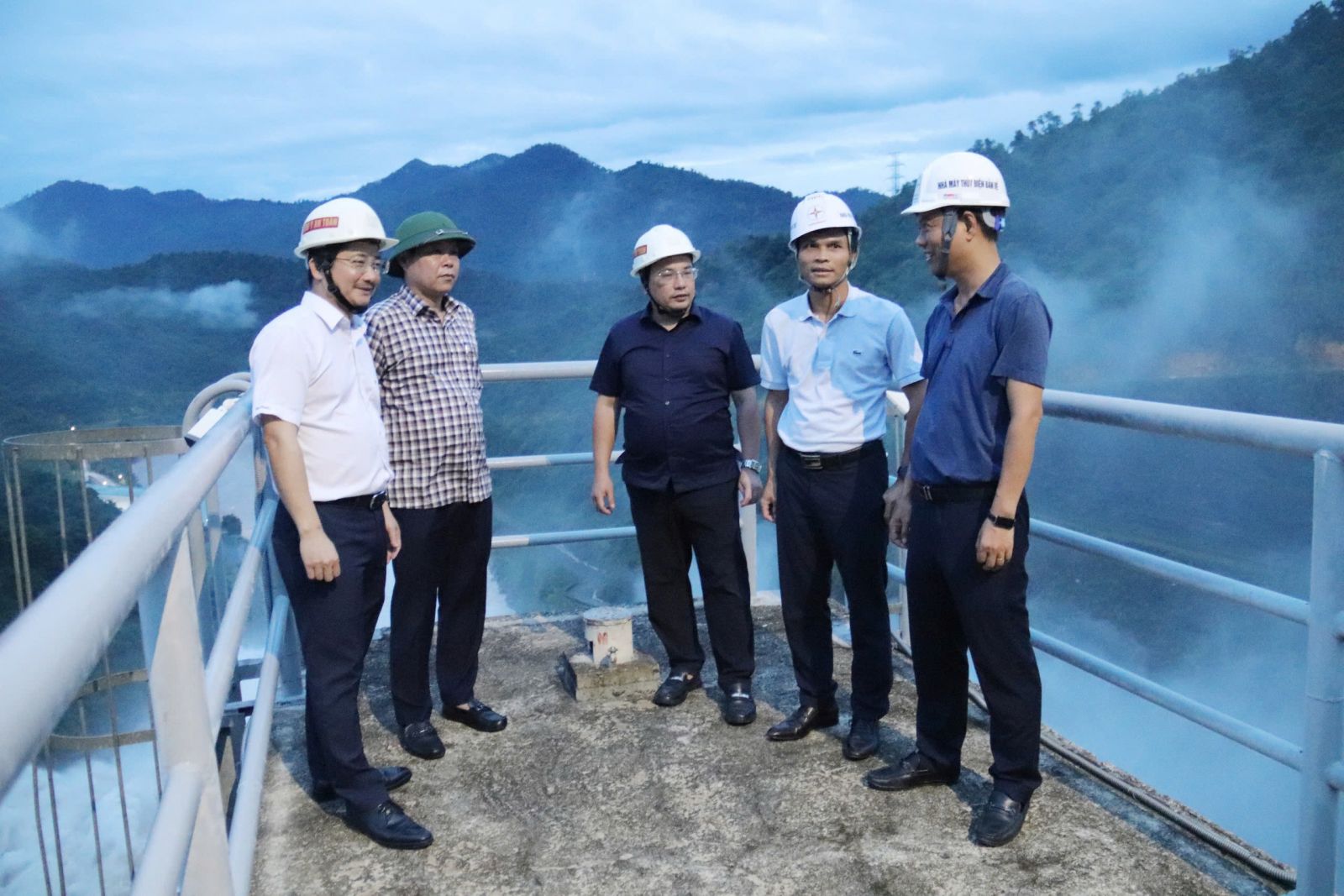
MoIT leaders inspect the safety of the Ban Ve Hydropower Reservoir as part of emergency preparedness efforts for natural disasters.
For provincial and municipal Departments of Industry and Trade, the Ministry has requested strict supervision of hydropower dam operators to ensure full compliance with approved single-reservoir and inter-reservoir operating procedures. Reservoir operations must be conducted scientifically and safely while maximizing water resources for electricity generation during peak summer demand periods.
The Departments are also required to strengthen inspections of safety measures relating to mineral exploration and mining activities, power transmission and distribution systems, dams and hydropower reservoirs under their jurisdiction. Particular attention must be paid to vulnerable reservoirs, small hydropower projects and facilities under construction or undergoing repairs.
At the same time, local authorities must promptly identify areas at risk of landslides, install warning signs and coordinate with relevant agencies to ensure public safety, especially in situations involving emergency flood discharge operations.
For industrial, hydropower and mining projects under construction in areas vulnerable to flash floods and landslides, local Departments are required to advise provincial People’s Committees on directing investors to suspend construction activities when necessary. Contingency plans must be developed to relocate workers, machinery, materials and equipment to safe locations while maintaining uninterrupted communications for disaster response and search-and-rescue operations.
The Ministry has also called for an urgent review of areas at risk of isolation due to flooding or landslides in order to formulate plans for stockpiling essential goods. Authorities must ensure adequate supplies of food, drinking water and daily necessities for local residents and prevent shortages under any circumstances.
Ensuring the safe operation of the power system and hydropower reservoirs
For Vietnam Electricity (EVN), the Official Dispatch requires the corporation to direct its power units to implement disaster response plans and ensure the safe and stable supply of electricity, particularly for critical loads. Measures must also be taken to safeguard residents, equipment and power infrastructure.
Power units are required to remain prepared for the rapid restoration of electricity services in the event of disruptions and to coordinate with local authorities in raising public awareness of electrical safety during the rainy and storm season.
EVN has been tasked with reviewing locations facing elevated safety risks and areas where trees may threaten transmission corridors in order to undertake vegetation clearance and ensure compliance with safety distance regulations.
The corporation is also required to instruct hydropower operators under its management to inspect communication systems, flood-discharge warning systems and coordinate with competent authorities in implementing appropriate response measures.
For the National Power System and Market Operation Company Limited, the Ministry has requested the development of a reasonable national power system operating plan and the optimal dispatch of generation resources to ensure the safe, continuous operation of the power system while meeting socio-economic development needs and residential electricity demand.
Hydropower dam operators have been instructed to maintain strict duty rosters, closely monitor weather developments and strengthen warning activities to ensure the safety of residents and river-based activities downstream before regulating reservoirs or increasing water discharge.
They are also required to proactively conduct hydro-meteorological monitoring across reservoir catchments, forecast inflows, provide information in accordance with regulations, and promptly complete dam and reservoir safety inspections and assessments before the onset of the rainy season.
For mining and mineral processing enterprises, the Ministry has directed operators to inspect waste dumps, mining sites, storage facilities, tailings dams and tailings ponds to promptly identify and address safety risks.
Enterprises are required to regularly reinforce drainage systems and dredge tailings ponds to reduce the risk of mud overflows and dam failures during periods of heavy rainfall.
In addition, mining companies must develop contingency plans to relocate machinery, equipment and housing facilities located in areas vulnerable to landslides or mudflows. They are also required to thoroughly assess surrounding slopes near industrial facilities, offices and operational areas in order to detect potential landslide risks and implement timely mitigation measures.
| The Civil Defense Command of the Ministry of Industry and Trade has requested all units across the sector to strictly implement the requirements set out in the Official Dispatch; ensure adequate personnel, equipment, vehicles and supplies are prepared for disaster response; maintain 24/7 duty rosters; and regularly report developments to the Standing Office of the Ministry’s Civil Defense Command. |

