


Legal framework on power infrastructure protection and electrical safety set for refinement
A draft decree amending Decree No. 62/2025/ND-CP seeks to address practical implementation issues, clarify regulatory authority, and strengthen the management of electrical safety and the protection of power infrastructure.
Refining the legal framework to address practical challenges
The draft decree amending and supplementing a number of provisions of Government Decree No. 62/2025/ND-CP, dated March 4, 2025, detailing the implementation of the Electricity Law on the protection of power infrastructure and safety in the electricity sector, has been developed to further improve the legal framework, ensure consistency and coherence in state management, and promptly address issues arising during implementation.
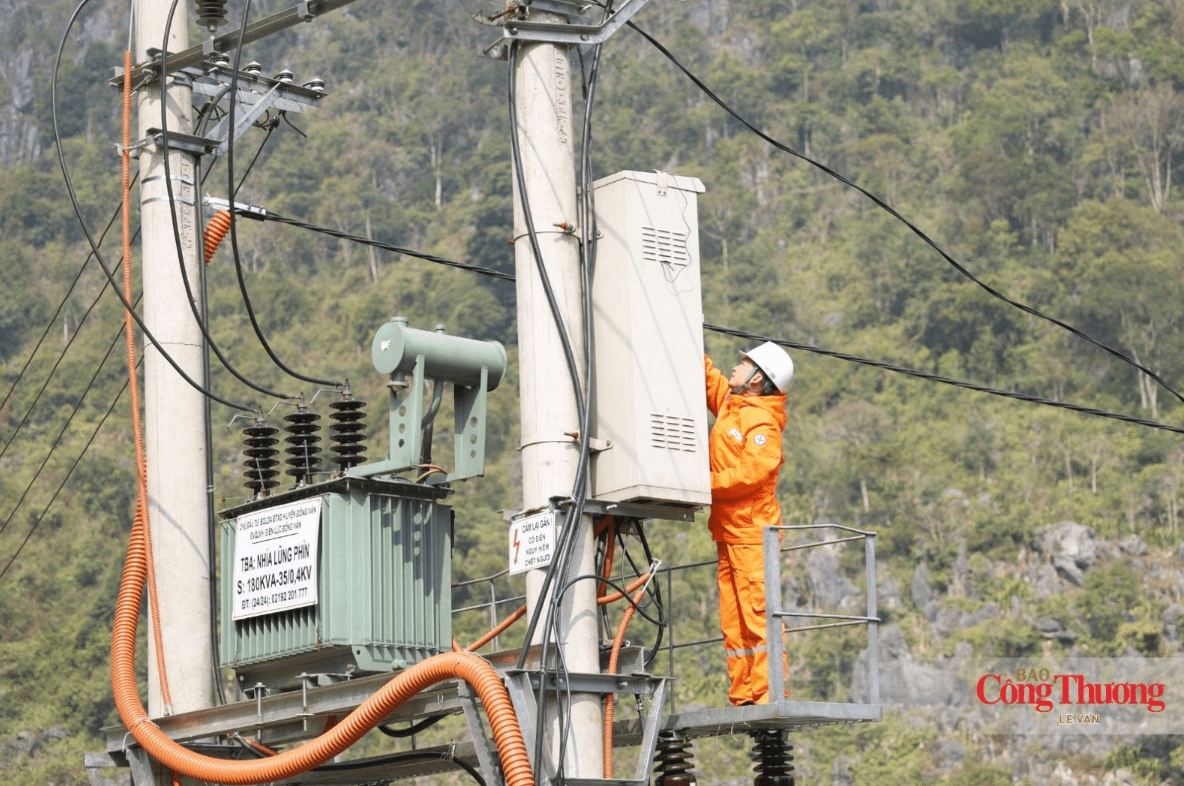
The proposed amendments to Decree No. 62/2025/ND-CP aim to strengthen regulations governing the protection of power infrastructure and safety in the electricity sector.
Resolution No. 27-NQ/TW, adopted by the 13th Party Central Committee at its Sixth Plenum on November 9, 2022, on continuing to build and improve the socialist rule-of-law state in the new period, set out the task of further refining the legal system and ensuring strict and effective law enforcement mechanisms to meet the country's rapid and sustainable development goals.
This direction was reinforced by Resolution No. 66-NQ/TW, issued by the Politburo on April 30, 2025, on reforming lawmaking and law enforcement to support national development in a new era. The resolution emphasizes that legislation must be firmly grounded in Vietnam’s realities, ensure consistency across the legal system, unlock development resources, and establish institutions and laws as a solid foundation and a powerful driver of growth.
In parallel, the Party and the State have introduced a range of policies to improve the institutional framework, promote decentralisation and delegation of authority, and enhance the autonomy and accountability of local governments. The 15th National Assembly adopted Resolution No. 190/2025/QH15, which took effect on February 19, 2025, to address issues related to the restructuring of the state apparatus.
On June 12, 2025, the Government issued Decree No. 146/2025/ND-CP on decentralisation and delegation of authority in the industry and trade sector, effective from July 1, 2025. Under the decree, the Government and the Prime Minister delegated a number of responsibilities related to power infrastructure protection and electrical safety to the Minister of Industry and Trade. As a result, several provisions of Decree No. 62/2025/ND-CP require revision to align with the new governance framework.
Beyond institutional requirements, the implementation of Decree No. 62/2025/ND-CP has also revealed a number of issues requiring further clarification.
Decree No. 146/2025/ND-CP transferred the authority to approve protection plans for hydropower dams and reservoirs spanning two or more provinces from the Ministry of Industry and Trade to provincial People's Committees. However, it does not specify which province has the authority to grant such approval.
Additional clarification is also needed regarding responsibilities for trimming trees within electricity safety corridors, handling electrical incidents and accidents, approving adjustments to hydropower reservoir operating procedures, approving emergency response plans, and approving protection plans for hydropower dams and reservoirs located across two or more provinces.
In addition, regulations governing the annual inspection and safety assessment of hydropower dams and reservoirs before the flood season need to be more clearly defined.
Clarifying authority and strengthening electrical safety management
The draft decree consists of three articles and one additional appendix. Article 1 introduces amendments and supplements to Decree No. 62/2025/ND-CP; Article 2 sets out transitional provisions; and Article 3 stipulates the decree’s effective date.
Under the draft, 17 of the decree’s 54 articles would be amended or supplemented. Certain terms and phrases throughout the decree would also be revised, while several provisions would be repealed because their contents have either been consolidated into other articles or assigned to the Minister of Industry and Trade for detailed regulation.
The transitional provisions address procedures relating to the approval of hydropower reservoir operating procedures, dam and reservoir protection plans, and emergency response plans. The draft proposes that the decree take effect 45 days after its signing.
The proposal also seeks to repeal several provisions of Decree No. 114/2018/ND-CP on dam and reservoir safety management to ensure consistency in legal validity, scope and regulatory coverage with the Electricity Law and the 2024 Law amending and supplementing a number of articles of the Electricity Law. In addition, the draft introduces an appendix providing a standard reporting template on the safety status of hydropower dams and reservoirs within each province.
Another proposed amendment concerns the protection of underground power cables. Specifically, Clause 3 of Article 5 would remove the requirement to provide notification at least 10 days in advance.
Article 12, governing safety protection corridors for power infrastructure, would be comprehensively revised by consolidating the provisions currently contained in Articles 9, 10 and 11 into a single article. Technical requirements would instead be referenced under National Technical Regulation QCVN 27:2025/BCT on Electrical Engineering - Power Grid Systems.
Regarding trees located within or near electricity safety corridors, Article 15 would be amended by removing detailed requirements on electrical flashover clearance distances, as these have already been stipulated in QCVN 27:2025/BCT. The draft also more clearly defines the circumstances under which electricity utilities may participate in tree trimming within overhead transmission line safety corridors.
Article 20, concerning electrical incidents and accidents, would be revised by consolidating the provisions currently contained in Article 19 and authorising the Minister of Industry and Trade to issue detailed implementing regulations. Likewise, Articles 23 through 29, covering electrical safety training, examinations and the issuance of electrical safety certificates, would be merged into a single Article 23.
In the hydropower sector, Article 30 would be amended to further clarify the classification of hydropower facilities in line with the decentralisation framework. Articles 33, 34 and 35, which govern dossiers, procedures and appraisal processes for approving operational procedures and protection plans, would also be revised, including adjustments to the authorities responsible for receiving applications in accordance with the new local government framework.
The draft further revises Article 41 to more clearly define requirements for hydropower dam and reservoir safety inspections, as well as the responsibilities for approving inspection frameworks and results. Article 43 would specify the scope of annual dam and reservoir safety inspections, while Article 45 would remove provisions related to district-level authorities. Article 47 would be amended to authorise the Minister of Industry and Trade to issue detailed implementation guidance.
Several new provisions are also proposed to address gaps in the current regulatory framework. These include additional provisions clarifying the authority to approve amendments to hydropower reservoir operating procedures, emergency response plans, and dam and reservoir protection plans.
The draft also introduces detailed regulations on the installation of boundary markers for power infrastructure protection corridors. Aligning hydropower reservoir protection boundaries with water resource protection zones established under water resources legislation is expected to reduce administrative procedures and eliminate the need for separate approval processes covering the same protected areas.
Regarding decentralisation, the draft further specifies the provisions of Article 26 of Decree No. 146/2025/ND-CP. Under the proposal, the Prime Minister delegates authority to the Minister of Industry and Trade to promulgate the list of particularly important hydropower projects and hydropower facilities located across two or more provincial-level administrative units.
| The Minister of Industry and Trade, in turn, delegates authority to provincial People's Committees to approve protection plans for particularly important hydropower dams and reservoirs, as well as hydropower facilities spanning two or more provincial-level administrative units. |

