


Minister Nguyen Hong Dien reports to the National Assembly on mechanisms and policies for national energy development in the 2026-2030 period
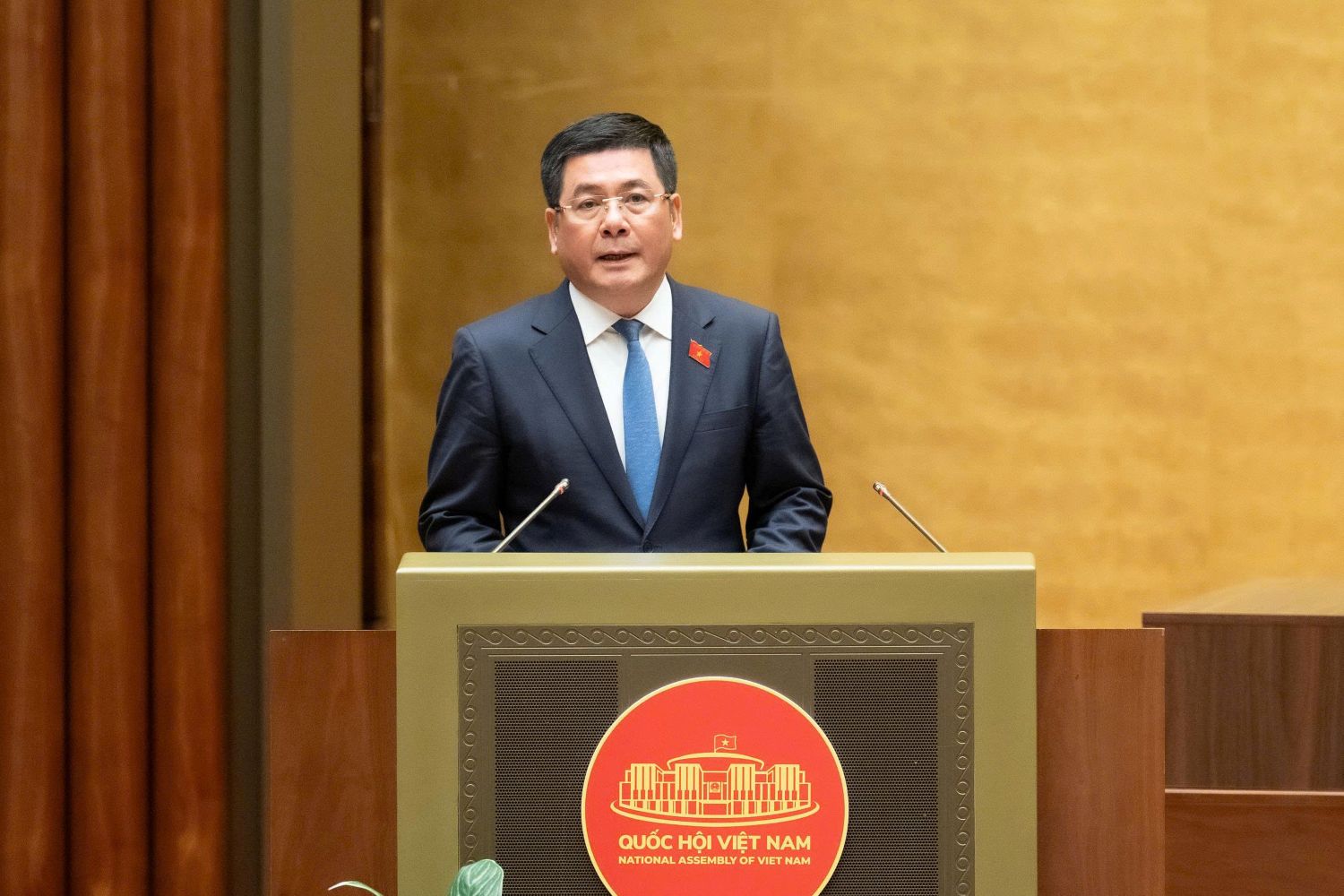
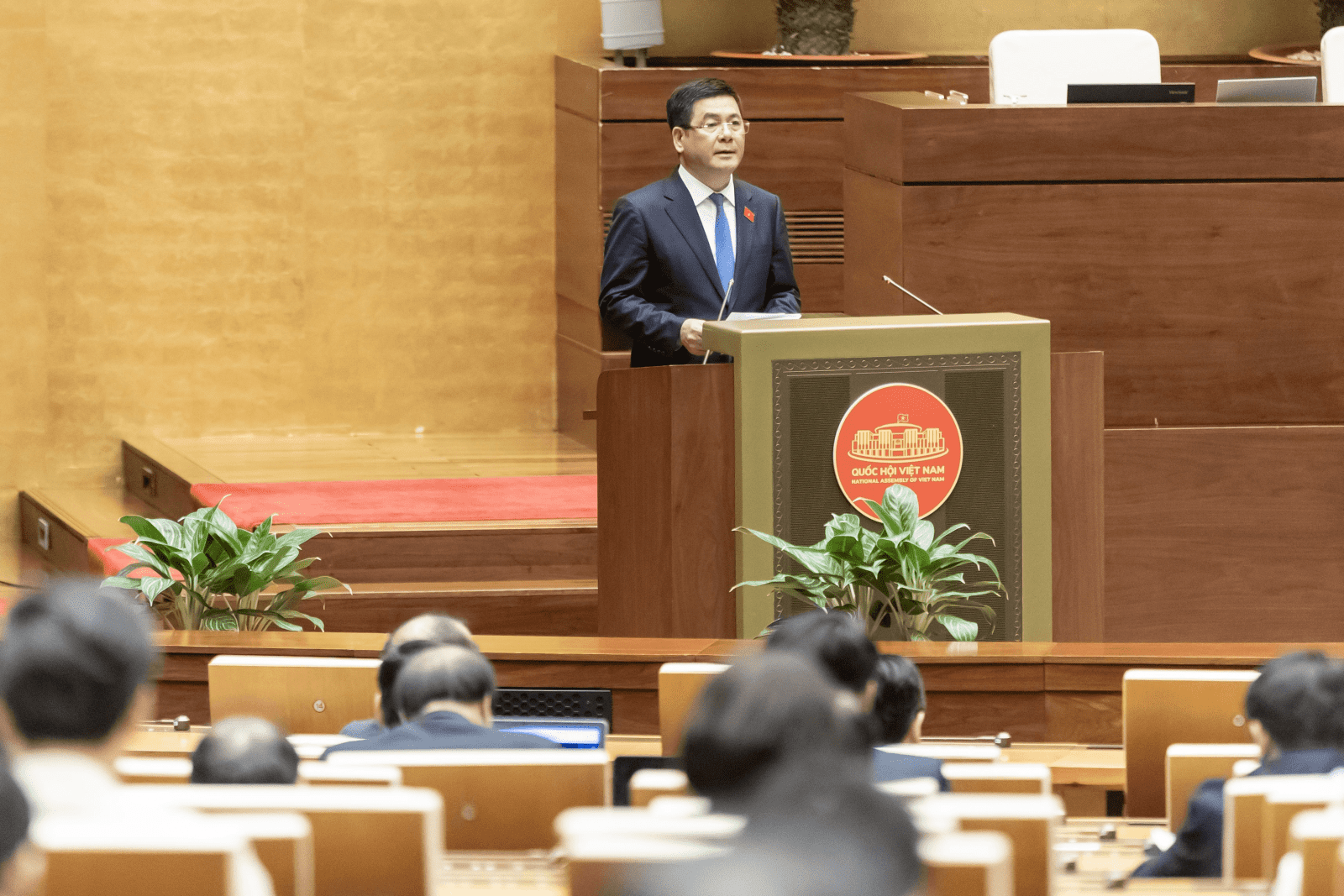
Continuing the agenda of the 10th session of the 15th National Assembly, on the afternoon of 4 December, Minister of Industry and Trade Nguyen Hong Dien, authorized by the Prime Minister, presented a summary of the Government’s submission and the key policy components outlined in the draft Resolution of the National Assembly on mechanisms and policies for national energy development for the 2026-2030 period.
According to the Minister, on 3 December 2025, the Government issued Submission No. 1144 and the dossier for the draft Resolution of the National Assembly on mechanisms and policies for national energy development in line with the spirit of Resolution No. 70 of the Politburo. The Government requested permission to apply streamlined procedures and to supplement the draft Resolution into the 2025 legislative programme (10th session).
Reporting to the National Assembly, Minister Nguyen Hong Dien noted that the preparation of the Resolution dossier had been carried out in full compliance with procedural requirements. The draft Resolution had undergone thorough review by the Committee for Economic and Financial Affairs and other relevant bodies of the National Assembly, while the Standing Committee of the National Assembly had also discussed and provided feedback.
In response to recommendations from the Standing Committee and relevant reviewing bodies, the draft Resolution has been structured into eight chapters with 24 articles, as follows:
Chapter I (three articles) defines the scope of regulation, subjects of application, and interpretation of key terms.
Chapter II (two articles) sets out principles, bases, procedures, and authority for flexibly adjusting planning to remove bottlenecks arising from the inability to adjust various project components, such as timelines, voltage levels, connection plans, or emerging load demands, which have affected implementation progress and the synchronisation between power sources and the grid.
Chapter III (five articles) governs:
Investment in power projects, removing the requirement for investment policy approval for grid projects after incorporating feedback from the National Assembly’s committees. Based on proposals from wholly state-owned enterprises or their wholly owned subsidiaries, provincial People’s Committees may approve these enterprises as investors of transmission grid projects listed in the national power development plan or provincial power network plans.
Exemptions from operational duration requirements and financial reporting history for projects borrowing ODA loans through on-lending mechanisms; and prioritising the allocation of State budget funds to increase charter capital for the National Electric System and Power Market Operation Company (NSMO) to implement infrastructure projects serving system and market operations.
Specific provisions on bid-winning electricity prices in investor-selection bidding for power projects, given that protracted negotiations over power purchase agreements have delayed project implementation.
Additional provisions allowing both state-owned and private enterprises to engage in research and investment in small modular nuclear reactors.
Chapter IV (five articles) introduces several regulations related to offshore wind power, including: mechanisms for handling costs incurred by wholly state-owned enterprises; authority for provincial People’s Committees to approve investment policy and select investors based on designated power aggregation points; and mechanisms for assigning large-scale offshore wind development tasks to reputable and competent enterprises, ensuring alignment with national defence, security, and maritime sovereignty.
Chapter V (one article) stipulates measures to promote the effective implementation of the direct power purchase agreement (DPPA) mechanism in accordance with Resolution 70-NQ/TW. It expands eligibility to include electricity retailers in industrial parks, economic zones, and export-processing zones; clarifies that DPPA electricity prices are negotiated freely between parties outside the standard electricity pricing framework; and assigns clearer responsibilities to the Ministry of Industry and Trade regarding criteria for large electricity consumers participating in DPPA.
Chapter VI (two articles) provides that investment projects classified as important and urgent national projects in the oil, gas, and coal sectors are exempt from investment policy approval procedures, except for those using public investment capital. It also assigns wholly state-owned enterprises or their wholly owned subsidiaries to implement important and urgent national projects, particularly those located in areas sensitive to national defence and security.
Chapter VII (two articles) outlines mechanisms and policies addressing obstacles in the Law on National Reserves related to petroleum reserves. The aim is to enhance the effectiveness of national petroleum reserve management while introducing a swap mechanism to convert fuel types in alignment with practical needs and to provide greater flexibility for State management of petroleum reserves.
Chapter VIII (four articles, Articles 21-24) prescribes implementation provisions concerning delayed power investment projects, mechanisms for inspection and supervision, and responsibilities of relevant agencies.
Presenting the review report, Chairman of the Committee for Economic and Financial Affairs Phan Van Mai stated that the Committee and relevant National Assembly bodies agreed on the necessity of adopting the Resolution on mechanisms and policies for national energy development for the 2026-2030 period.
Although the draft Resolution dossier has been cross-checked against existing legal documents, many of its provisions overlap with laws and resolutions currently under revision, including the Law on Planning, the Law on Investment, and the Law on National Reserves. Therefore, the reviewing committee recommended that the Government conduct a more thorough review and transfer appropriate policies to draft laws and resolutions already being considered at the 10th session. Policies that are not urgent, lack thorough impact assessment, or contain potential risks should be included in the 2026 legislative programme to ensure consistency and avoid duplication or conflict during implementation.
The reviewing committee also recommended that the Resolution should focus strictly on principles falling within the authority of the National Assembly and avoid regulating matters that fall under the authority of the Government, ministries, agencies, or local authorities.

