


Ministry of Industry and Trade holds June review meeting on tasks for first half of 2026, sets priorities for second half
The Ministry of Industry and Trade (MoIT) on the morning of July 2 held its June review meeting to assess the implementation of tasks in the first six months of 2026 and outline key priorities for the second half of the year. Party Committee Secretary and Minister of Industry and Trade Le Manh Hung chaired the meeting.
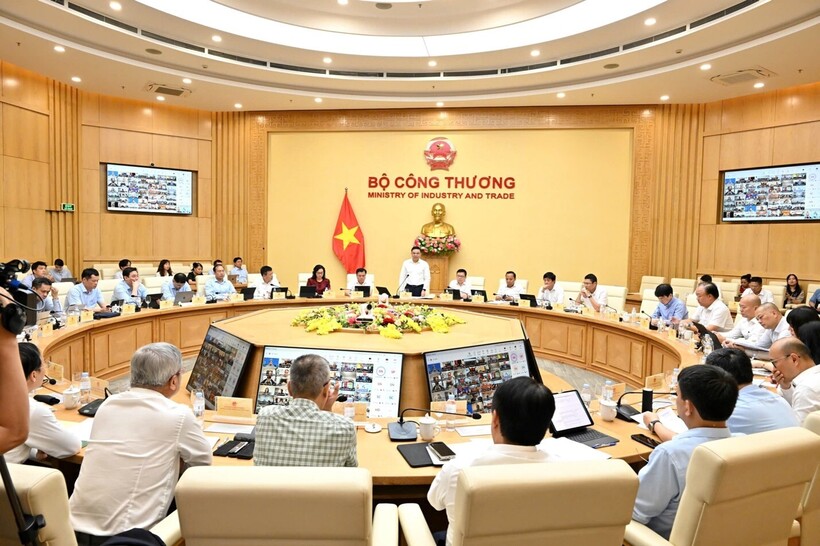
Minister of Industry and Trade Le Manh Hung chairs the review meeting. Photo: Can Dung
Also attending the meeting were Deputy Ministers Truong Thanh Hoai, Nguyen Sinh Nhat Tan, Phan Thi Thang and Nguyen Hoang Long, together with representatives of units under the ministry. The meeting was held in both in-person and online formats, connecting with localities nationwide.
Reporting at the meeting, Director of the Department of Planning, Finance and Enterprise Management Bui Huy Son said that during the first six months of 2026, the ministry had basically fulfilled the targets set out in the Government's Resolution No. 01/NQ-CP. Industrial production, domestic trade and import-export activities maintained positive growth, while supplies of essential commodities were ensured, contributing to economic growth and market stability.
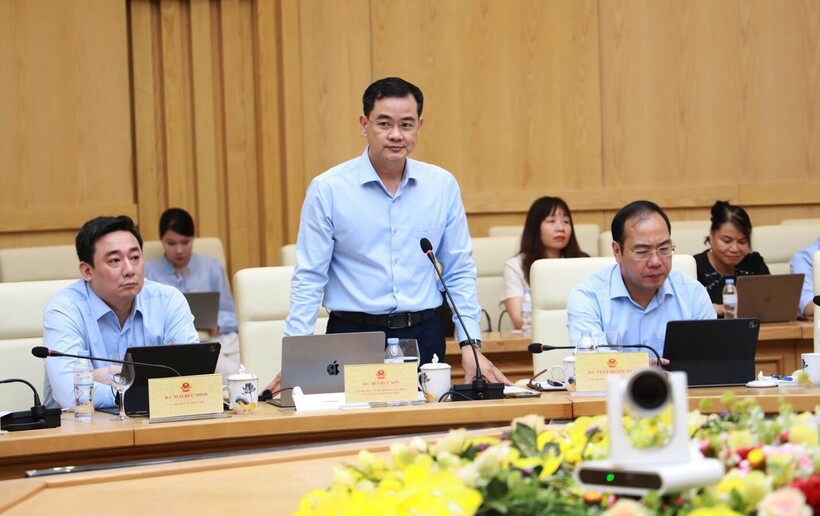
Director of the Department of Planning, Finance and Enterprise Management Bui Huy Son delivers a report at the meeting. Photo: Can Dung
Regarding institutional development, Director of the Department of Legal Affairs Ngo Duc Minh said the ministry had stepped up the drafting and issuance of legal normative documents while implementing tasks under the Politburo's Resolution No. 66-NQ/TW and the Government's work programme. At the same time, it continued to reform business conditions and administrative procedures, while strengthening the review, inspection and systematisation of legal normative documents.
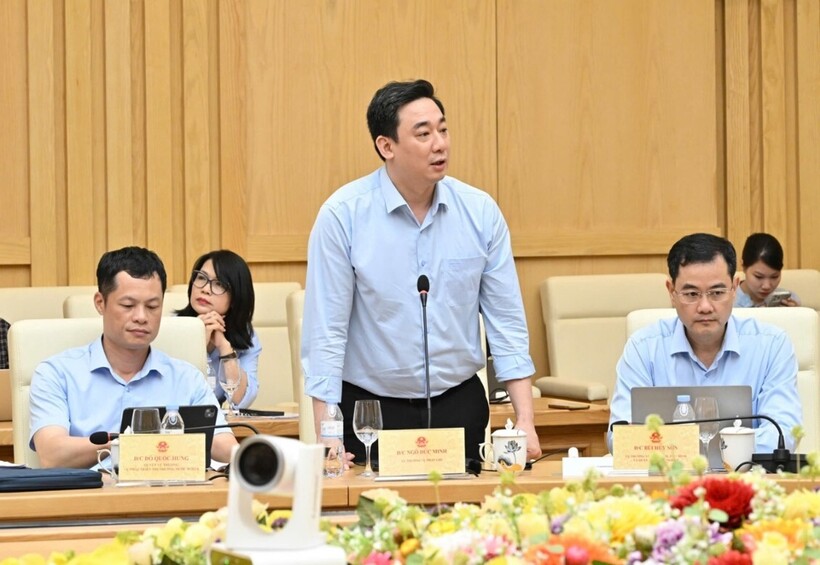
Director of the Department of Legal Affairs Ngo Duc Minh delivers a report at the meeting. Photo: Can Dung
At the meeting, Deputy Minister Phan Thi Thang chaired the discussion session, which focused on four key areas: industrial production, energy security, import-export activities and the domestic market.
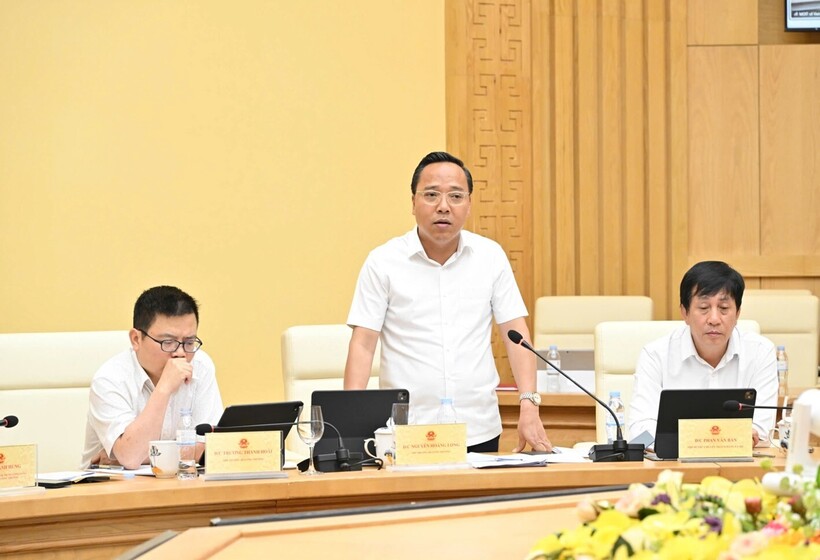
Deputy Minister Nguyen Hoang Long delivers remarks at the meeting. Photo: Can Dung.
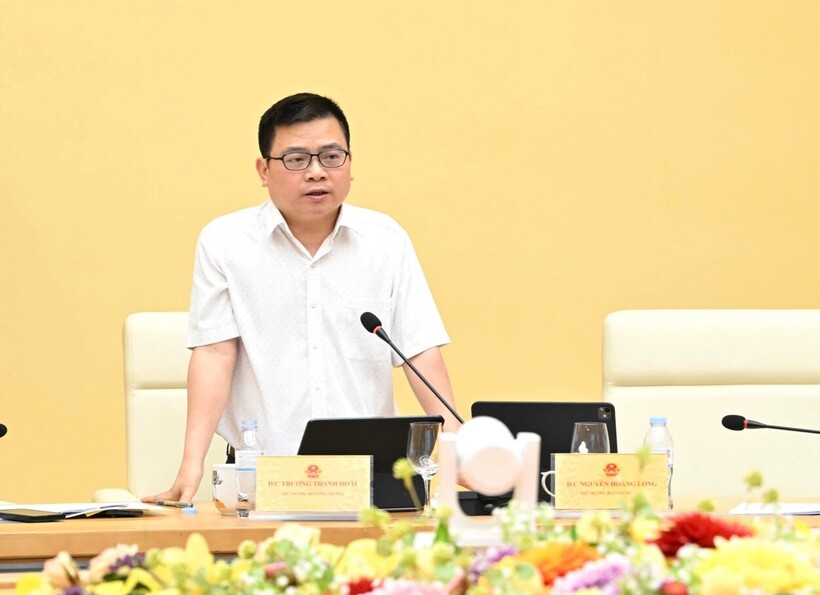
Deputy Minister Truong Thanh Hoai delivers remarks at the meeting. Photo: Can Dung.
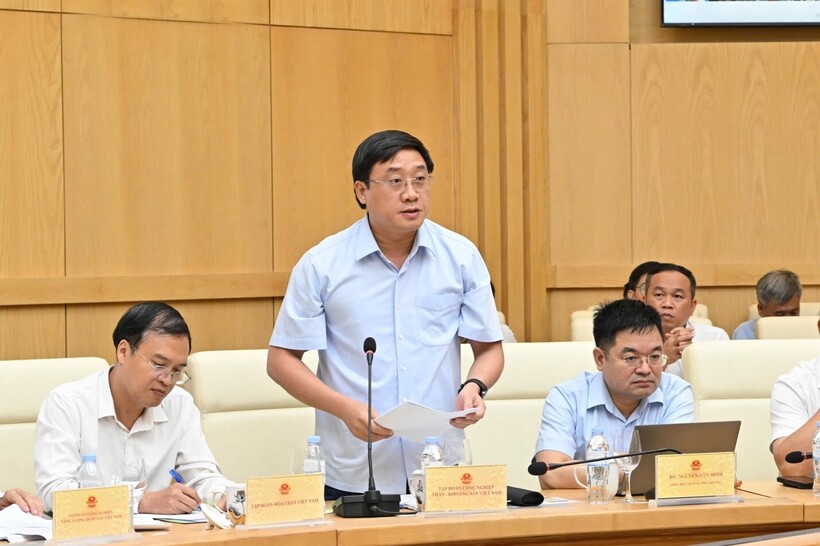
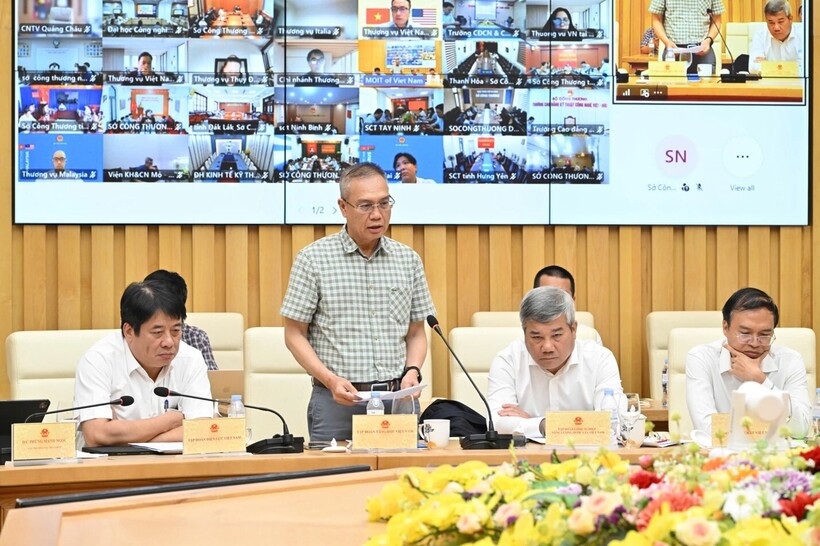
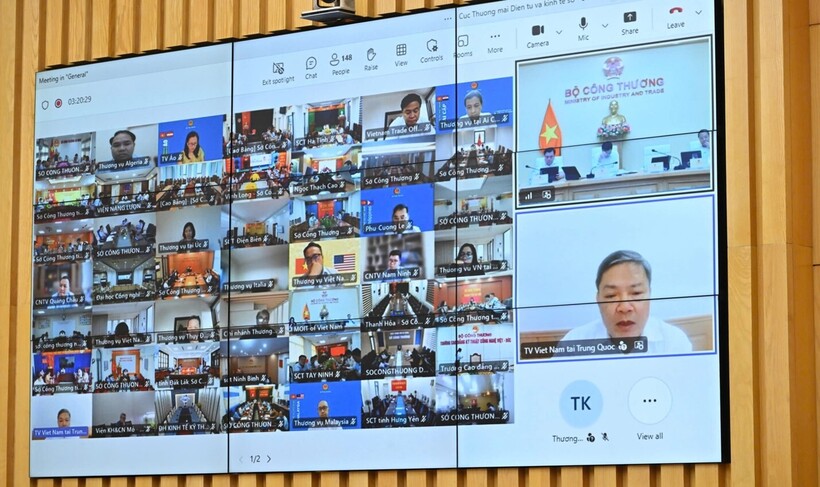
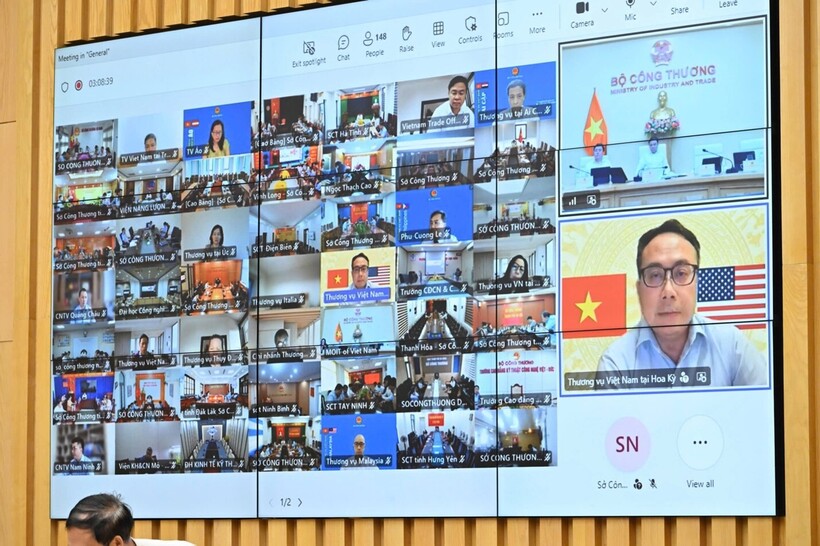
Representatives of units under the Ministry of Industry and Trade share their views at the meeting, held in both in-person and online formats. Photo: Can Dung
Working in a serious and efficient manner, Minister Le Manh Hung listened to reports, discussions and recommendations from representatives of ministry-affiliated units, Departments of Industry and Trade, enterprises under the ministry, and Vietnam Trade Offices abroad.
Concluding the meeting, Minister Le Manh Hung acknowledged and highly appreciated the efforts made by localities, the business community and units under the ministry during the first half of the year, helping the industry and trade sector achieve many positive results.
According to the minister, three outstanding achievements were recorded. These included accelerating institutional development and improvement through the issuance and implementation of many important legal documents; maintaining strong sectoral growth, particularly in the processing and manufacturing industries; and ensuring energy security by maintaining stable petroleum supplies, guaranteeing sufficient electricity for the economy and effectively managing the energy market.
Highlighting key priorities for the second half of 2026, the minister instructed the entire industry and trade sector to concentrate efforts on fulfilling the targets assigned by the Government while vigorously implementing solutions to remove bottlenecks and improve the effectiveness of state management. He assigned the ministry's units to focus on completing several key tasks.
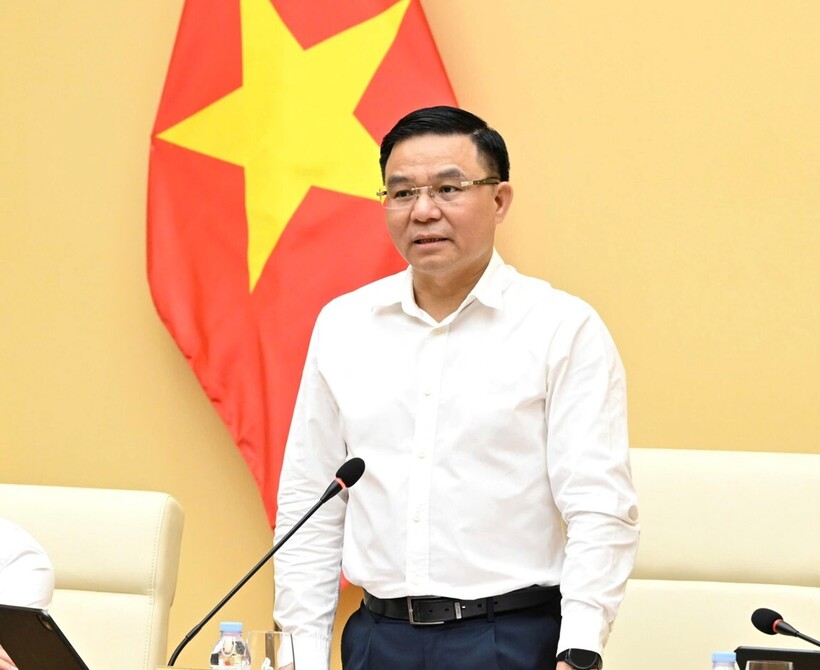
Minister Le Manh Hung delivers concluding remarks at the meeting. Photo: Can Dung
Regarding institutional improvement, decentralisation and administrative reform, the minister called on the entire sector to strive to fulfil the objectives set out in the Government's Resolutions No. 01/NQ-CP and No. 02/NQ-CP for 2026. He also requested stronger coordination, guidance and information sharing with local authorities, Departments of Industry and Trade, and businesses to ensure the consistent and effective implementation of policies.
At the same time, the minister assigned the Department of Legal Affairs to promptly disseminate the strategic orientation for improving the legal and institutional framework of the industry and trade sector to ministry units and localities, thereby promoting greater initiative and consistency during implementation.
Regarding governance, the Department of Personnel and Organisation was tasked with coordinating with the Department of Planning, Finance and Enterprise Management and the Department of Legal Affairs to promptly complete the allocation of key performance indicators (KPIs) to each unit and sector based on tasks assigned by the Government and the ministry, providing a basis for evaluating performance.
In terms of digital transformation, the Vietnam E-commerce and Digital Economy Agency was instructed to review the sector's digital platforms and shared databases, while strengthening coordination with local Departments of Industry and Trade in data sharing and implementing major projects and strategic technology products to promote synchronised digital transformation across the sector.
With the Law on E-commerce taking effect on July 1, the minister instructed the Vietnam E-commerce and Digital Economy Agency to coordinate with local Departments of Industry and Trade to effectively implement the law. The agency was also tasked with reviewing and assessing market developments, identifying emerging challenges and proposing solutions to support domestic enterprises while promoting the sustainable development of e-commerce.
In the industrial sector, the Vietnam Industry Agency was assigned to coordinate with relevant units and localities to promptly review and address bottlenecks affecting key industries and major industrial projects, particularly in areas with strong development potential and growth momentum.
Regarding the energy sector, the Electricity Authority of Vietnam was tasked with coordinating with the Oil, Gas and Coal Department, together with major energy groups, to review and update the energy supply situation for the remaining months of the year. It was also instructed to proactively prepare plans to ensure energy security and the safe operation of the power system, reservoirs, dams and transmission grid, while advising on solutions to institutional and planning issues and guiding localities in implementing new policies.
In the fields of trade and import-export, the Agency of Foreign Trade was assigned to take the lead, in coordination with the Trade Promotion Agency, the Department of Foreign Market Development and the Trade Remedies Authority of Vietnam, in strengthening market analysis, forecasting and early warning activities. The agencies were also instructed to work closely with localities and industry associations to implement measures aimed at achieving import-export growth targets while effectively controlling the trade deficit.
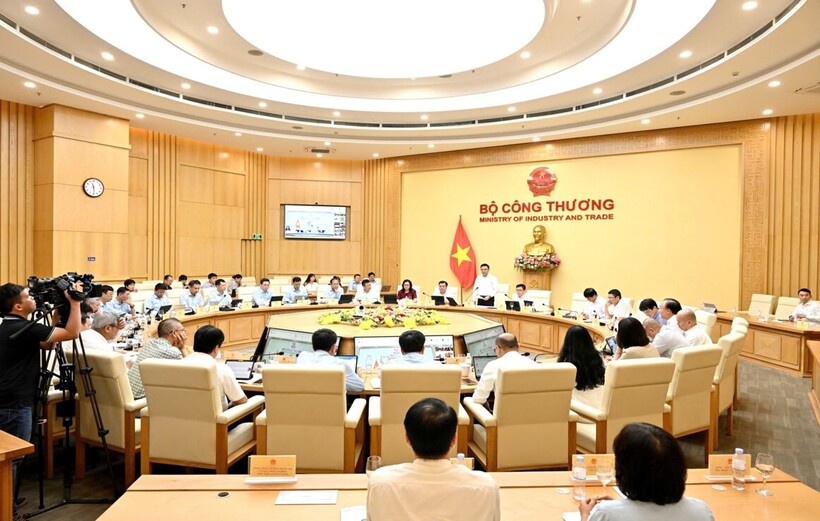
Overview of the meeting. Photo: Can Dung.
Regarding the domestic market, the minister assigned the Agency for Domestic Market Surveillance and Development to coordinate with relevant units to ensure adequate supplies of petroleum and essential goods. The agency was also tasked with promoting measures to stimulate consumer demand, develop the domestic market and improve the regulatory framework governing petroleum trading in line with the Government's directives.
Minister Le Manh Hung called on all ministry units to continue renewing their thinking and management approaches, stay closely connected with realities in localities and businesses, and promptly identify and remove bottlenecks, particularly those related to institutions and regulations, thereby creating momentum to successfully achieve the the targets and tasks assigned by the Government.

