


Ministry of Industry and Trade holds Q2 2026 Domestic Market Steering Group meeting
On the morning of July 7 in Ha Noi, the Domestic Market Steering Group convened its regular meeting for the second quarter of 2026. The meeting was chaired by Phan Van Chinh, Deputy Director of the Agency for Domestic Market Management and Development. Participants included representatives from the Ministry of Finance, the Ministry of Agriculture and Environment, the State Bank of Vietnam, provincial Departments of Industry and Trade and industry associations.
Commodity market remains stable
Opening the meeting, Phan Van Chinh, Deputy Director of the Agency for Domestic Market Management and Development said the session aimed to continue discussions and conduct a comprehensive assessment of market developments and price movements amid an increasingly volatile economic environment, while gathering feedback from relevant agencies to support policy recommendations for the Government's Steering Committee for Price Management.
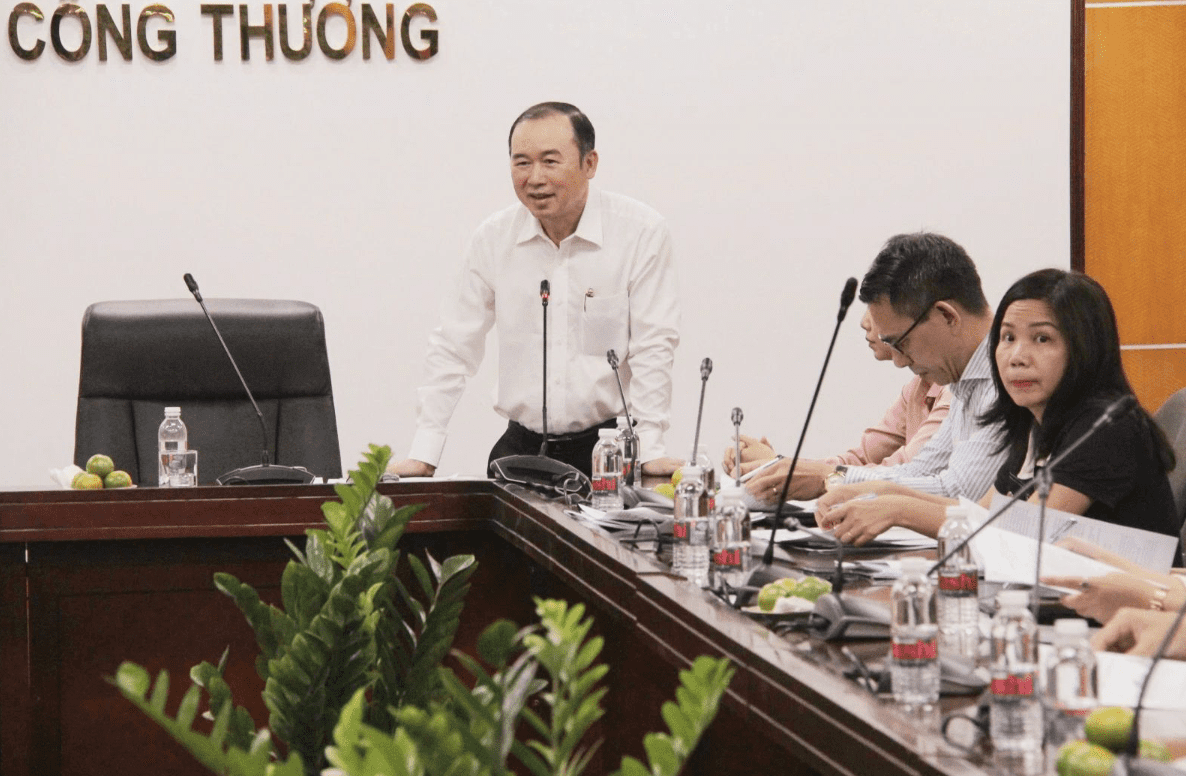
Phan Van Chinh, Deputy Director of the Agency for Domestic Market Management and Development speaks at the meeting. Photo: Bao Ngoc
According to a report presented at the meeting, global commodity markets remained highly volatile during the six months of 2026 as multiple uncertainties emerged simultaneously, including the military conflict involving Iran and rising global oil prices. Despite significant turbulence in international markets, Vietnam's domestic commodity market maintained relative stability throughout the first half of the year.
Total retail sales of goods and consumer service revenue were estimated at VND 3,888 trillion, up 12.89% compared with the same period in 2025. Excluding price factors, real growth reached 7.2%, indicating that consumer demand remained resilient. Meanwhile, the average Consumer Price Index (CPI) for the first six months rose 4.38%, approaching but remaining within the National Assembly's inflation target of below 4.5% for 2026.
Nguyen Thi Thu Huyen, a representative of the General Statistics Office under the Ministry of Finance, noted that CPI developments indicated inflationary pressures remained under control. In June 2026 alone, the CPI fell 0.39% from the previous month, mainly due to lower domestic fuel prices following the easing of global energy prices.
For the second quarter of 2026, the CPI increased by 5.25% year-on-year. Most major consumer categories recorded price increases, including transportation, up 9.57%; housing, utilities, fuel and construction materials, up 7.77%; food and catering services, up 5.04%; education, up 3.38%; culture, entertainment and tourism, up 2.98%; and pharmaceuticals and healthcare services, up 1.17%. Overall, average CPI growth for the first half of the year stood at 4.38% compared with the same period in 2025, remaining within the Government's inflation control target.
Vu Huong Tra, a representative of the Price Management Department under the Ministry of Finance, said the first six months of the year posed significant challenges for price management, particularly from late March through April when global energy prices surged sharply.
Against that backdrop, the Ministry of Finance, as the standing agency of the Government's Steering Committee for Price Management, worked closely with ministries and agencies, particularly the Ministry of Industry and Trade, to implement a broad range of coordinated measures aimed at containing inflation and stabilising prices.
According to Vu Huong Tra, fiscal policy measures proved effective, especially the flexible use of state budget instruments combined with fuel price management mechanisms.
"Although global oil prices fluctuated sharply, domestic fuel prices were adjusted in line with international market developments, thereby minimising price shocks to the economy. While Vietnam could not completely decouple itself from rising global prices, the domestic market avoided abnormal fluctuations or any price surge," she said.
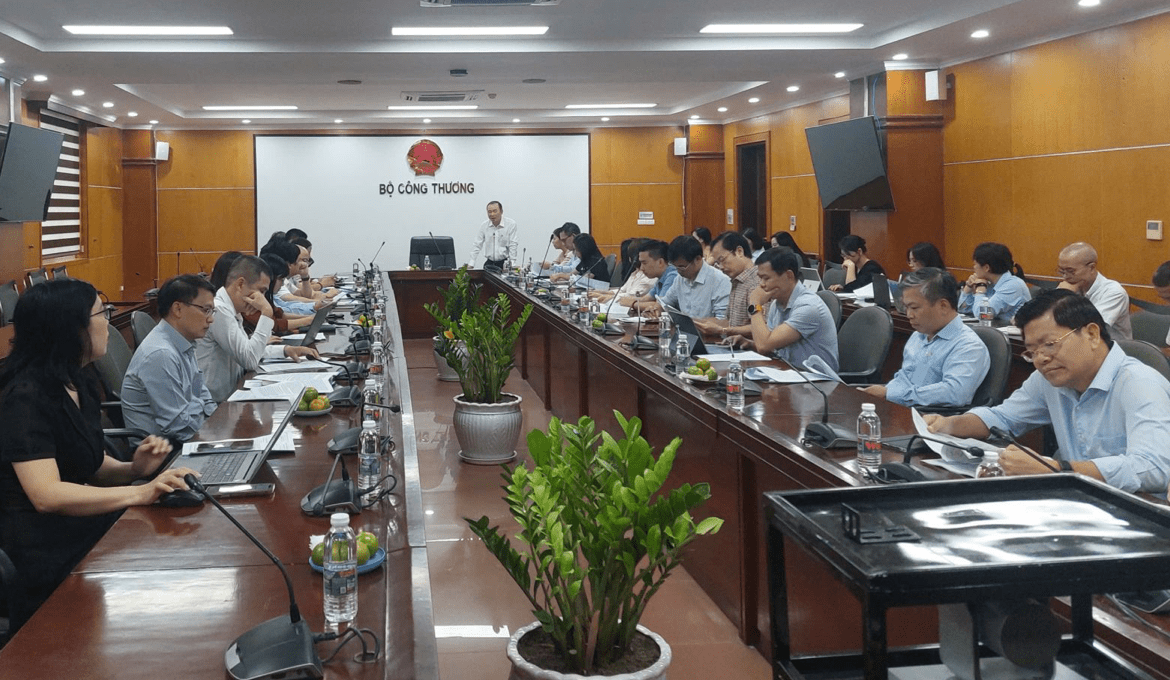
Overview of the meeting. Photo: Bao Ngoc
Regarding petroleum products, a representative of Vietnam National Petroleum Group (Petrolimex) said the first half of 2026 witnessed the most severe oil price volatility in years, particularly during the Middle East conflict involving the US, Israel and Iran. Oil prices rose dramatically within a very short period, far exceeding normal market fluctuations. Beyond crude prices, shipping rates, surcharges and logistics costs also climbed to unprecedented levels.
These developments placed considerable pressure on fuel suppliers in securing adequate supplies. Import planning, supply chain management and business operations all became significantly more difficult as prices changed rapidly within a short timeframe.
"Despite these challenges, under the direction of the Government, the Ministry of Industry and Trade and relevant ministries and agencies, the domestic petroleum market was managed in a highly flexible and timely manner. The overarching objective was to ensure uninterrupted fuel supplies nationwide, preventing any disruption from sourcing through to distribution. At the same time, key fuel importers and distributors across the country were instructed to proactively maintain stable supplies to meet production, business and consumer demand," the Petrolimex representative said.
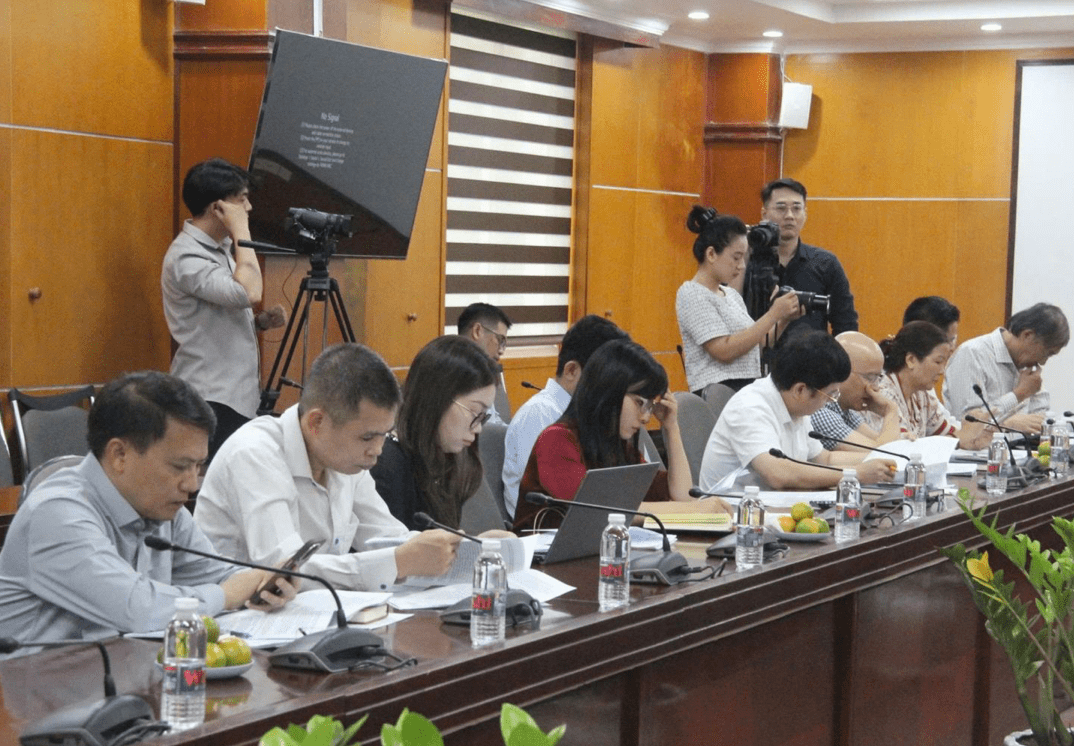
Delegates attend the meeting. Photo: Bao Ngoc
Focus shifts to year-end targets
During the meeting, representatives from ministries, industry associations and businesses proposed a range of measures to support production, develop the domestic market, stabilise prices and improve market management during the second half of the year. The Domestic Market Steering Group listened to the recommendations and addressed issues within the Ministry of Industry and Trade's regulatory authority. For proposals beyond the ministry's jurisdiction, the ministry said it would review them and forward them to the relevant authorities, with the goal of successfully fulfilling the objectives set for the remainder of the year.
Phan Van Chinh stressed that substantial efforts would be required during the final six months of the year to meet and surpass the growth targets established at the beginning of 2026.
"Based on my observations, after the first half of the year, many sectors typically complete only around 43 - 45% of their annual targets, while the remaining 55 - 57% of the workload is concentrated in the final months. As such, expectations for the second half of the year are particularly high. I hope our policy scenarios will be developed with a positive outlook while retaining sufficient flexibility to respond to potential risks, especially fluctuations in oil prices and other essential commodities. Only by proactively addressing these factors can we achieve our growth objectives and move towards double-digit economic growth," he said.
For the remainder of the year, the Domestic Market Steering Group recommended that ministries, agencies and local authorities continue implementing coordinated measures under the Government's direction, closely aligning with the target of GDP growth of 10% or higher, while maintaining macroeconomic stability, keeping inflation under control and safeguarding major economic balances.
Industry associations also put forward a number of measures to support businesses. The Vietnam Association of Retailers called for policies to improve businesses' access to affordable financing, accelerate digital transformation, strengthen logistics development and expand distribution networks, while enhancing connectivity between manufacturers and modern retail systems.

