


New opportunities for Vietnamese businesses as FTA Vietnam - EFTA negotiations conclude
The conclusion of negotiations on the Free Trade Agreement (FTA) Vietnam - EFTA opens up new opportunities for Vietnamese businesses while also placing greater demands on standards compliance and sustainable development.
According to the European Free Trade Association (EFTA), on July 2, 2026, EFTA and Vietnam officially announced the conclusion of negotiations on a comprehensive Free Trade Agreement following technical discussions in Reykjavík and the EFTA Ministerial Conference held in Iceland on June 22, 2026. The agreement covers a broad range of areas, including trade in goods and services, rules of origin, sanitary and phytosanitary (SPS) measures, technical barriers to trade (TBT), investment, intellectual property, trade remedies, government procurement, trade and sustainable development, small and medium-sized enterprises (SMEs), as well as cooperation and capacity building.
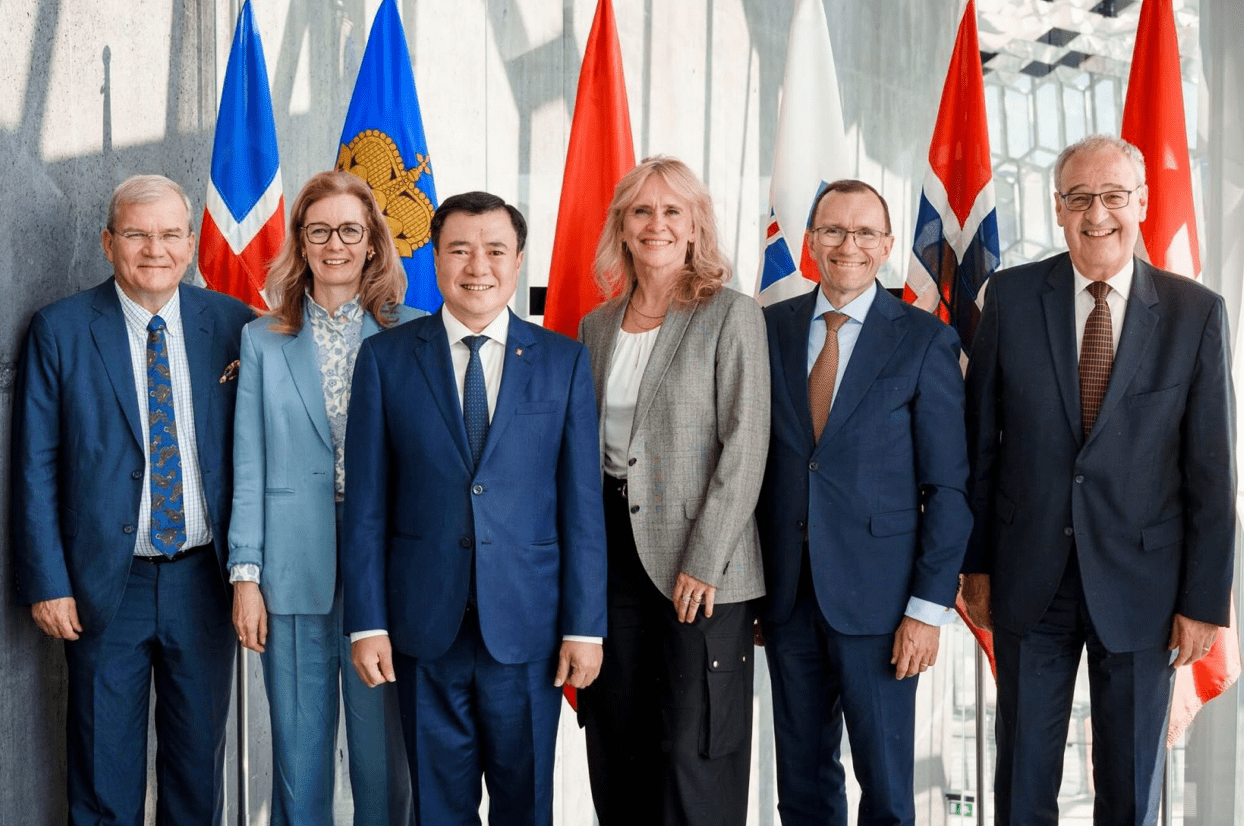
To gain deeper insight into the significance of this milestone and the new opportunities and requirements it presents for Vietnamese businesses, Newspaper of Industry and Trade spoke with Nguyen Thi Hoang Thuy, Trade Counsellor of Vietnam in Sweden, concurrently accredited to Denmark, Norway, Iceland and Latvia.
Opening the door to the Nordic market
- Against the backdrop of growing uncertainty in global trade, what does the conclusion of the FTA Vietnam - EFTA negotiations mean?
Nguyen Thi Hoang Thuy: The conclusion of the negotiations represents far more than a conventional tariff-cutting agreement. It sends a strong signal that Vietnam remains firmly committed to deep international economic integration, market diversification, diversified economic partnerships, and the upgrading of trade relations with advanced economies.
Comprising Switzerland, Norway, Iceland and Liechtenstein, EFTA may have a relatively small population, but its member states rank among the world's most developed economies, with strong purchasing power, advanced technological capabilities, sophisticated financial systems, high levels of innovation, efficient supply chain governance and some of the world's highest standards for sustainable development.
According to EFTA, two-way trade between the two sides reached EUR4.8 billion in 2025, excluding Switzerland's gold trade, with Vietnam recording a trade surplus of EUR2.5 billion. This provides a solid foundation for future growth, as significant untapped potential remains on both sides.
At a time when the global economy continues to face geopolitical tensions, logistics disruptions, rising protectionism and increasingly stringent green standards, a comprehensive FTA with EFTA offers Vietnam an additional gateway to a stable, transparent and highly predictable market.
For businesses, the key is not to view the agreement merely as a source of tariff preferences. Rather, it should be regarded as a framework for strengthening competitiveness improving product quality, enhancing traceability, strengthening compliance management and building stronger brands.

- From the perspective of the Nordic region, particularly Norway and Iceland, where do you see the greatest opportunities for Vietnamese businesses?
Nguyen Thi Hoang Thuy: Norway and Iceland are highly distinctive markets. Both enjoy high-income economies with relatively small populations, yet strong purchasing power, demanding consumer standards and a pronounced emphasis on quality, safety, environmental responsibility and ethical business practices.
As a result, opportunities for Vietnamese businesses do not lie in pursuing volume at any cost. Instead, success will depend on their ability to ensure stable supply, meet rigorous standards and build long-term trust with customers. In Norway, promising sectors include textiles and garments, footwear, furniture, processed seafood, food products, coffee, consumer goods, supporting industries, electrical and electronic equipment, as well as products serving the green economy.
Norway also possesses considerable strengths in energy, maritime industries, fisheries, environmental technologies and green finance areas where Vietnam is seeking stronger international cooperation to enhance manufacturing capacity, accelerate the energy transition and promote sustainable development.
For Iceland, opportunities may emerge in highly complementary sectors such as fisheries, seafood processing technologies, cold-chain preservation, geothermal energy, sustainable tourism, premium food products and cold logistics.
Although Iceland is a relatively small market, it possesses deep expertise in sectors where Vietnam is eager to learn, particularly fisheries resource management, value-added seafood processing and technology-driven value chain development.
It is also important to note that both Norway and Iceland are members of the European Economic Area (EEA) through the EEA - EFTA framework, giving them a high level of integration with the broader European market. Consequently, if Vietnamese businesses can successfully meet the standards required in Norway and Iceland, these markets could serve as strategic stepping stones for expansion into the wider Nordic and European markets.
The key to succeeding in the EFTA market
- The agreement has been described as comprehensive and modern. What new requirements does this place on Vietnamese businesses?
Nguyen Thi Hoang Thuy: A comprehensive and modern trade agreement means businesses can no longer focus solely on import tariffs. Provisions on rules of origin, technical standards, sanitary and phytosanitary measures, intellectual property, government procurement, trade in services, investment, sustainable development and support for small and medium-sized enterprises all have a direct bearing on a company's ability to fully benefit from the agreement.
First and foremost, businesses must have a thorough understanding of the rules of origin. Tariff preferences only have value if products satisfy origin requirements and are supported by complete documentation.
For industries that rely heavily on imported inputs, such as textiles and garments, footwear, electronics and mechanical engineering companies need to reassess their supply chains, localisation rates, sourcing strategies and their ability to comply with rules of origin from the very beginning of the production process.
Secondly, businesses need to shift from a sales-oriented mindset to a market-compliance mindset. These requirements are increasingly becoming prerequisites for market access rather than optional value-added attributes.
Thirdly, businesses must pay greater attention to protecting intellectual property and strengthening their brands. When entering developed markets, trademarks, product designs, packaging, labelling standards, intellectual property rights and quality commitments all need to be managed systematically.
Vietnamese businesses should not remain confined to contract manufacturing. Instead, they should gradually develop their own brands, proprietary products and stronger negotiating capabilities.
A message to Vietnamese businesses
- How should Vietnamese businesses prepare to take advantage of the agreement instead of waiting until it officially enters into force?
Nguyen Thi Hoang Thuy: Businesses should begin preparing immediately. The period between the conclusion of negotiations and the agreement's signing, ratification and implementation is a crucial window for reviewing internal capabilities. Companies that prepare early will enjoy a significant competitive advantage once the agreement comes into effect.
The first step is to classify markets and products. Businesses need to identify which products are likely to benefit most from the Vietnam - EFTA FTA, which products continue to face tariff barriers, which are constrained by technical requirements, which require additional certifications, and which offer greater value-added potential if they can meet green, clean and sustainable standards.
The second step is to establish a robust compliance dossier. For Nordic partners, even an excellent product may struggle to gain market access if supporting documentation is incomplete.
Businesses should prepare comprehensive documentation covering certificates of origin, quality certifications, safety certifications, environmental certifications, raw material records, chemical testing reports, traceability systems, labour commitments and corporate social responsibility standards. These elements provide the foundation for earning the confidence of importers, retailers and market regulators alike.
The third step is to proactively identify partners that match the appropriate market segment. Norway and Iceland are not markets where businesses can compete solely on low prices. Instead, companies should seek importers, distributors, retail chains and technology partners that focus on premium-quality, sustainable and specialised products or products with a compelling brand story.
For agricultural products, food and seafood, particular attention should be paid to food safety standards, cold-chain management, packaging, labelling and maintaining consistent quality across every shipment. Businesses should also closely monitor the implementation roadmap.
While the conclusion of negotiations marks a major milestone, companies need to continue tracking the detailed commitments once the agreement's legal text is published, particularly tariff schedules, rules of origin, origin certification mechanisms, commitments on services and investment, as well as transitional provisions.
- What message would you like to send to Vietnamese businesses as they prepare to seize the opportunities created by the Vietnam - EFTA FTA?
Nguyen Thi Hoang Thuy: The most important message is that Vietnamese businesses should view the Vietnam - EFTA Free Trade Agreement as an opportunity to upgrade themselves not simply as an opportunity to sell more products.
EFTA markets demand exceptionally high standards. Yet this is precisely why they are well aligned with Vietnam's new development strategy: increasing value addition, improving the quality of economic growth, integrating more deeply into sustainable global supply chains and strengthening the national brand as a trusted supplier of responsibly produced goods.
In my view, there are three words that every business should keep firmly in mind: standardisation, transparency and perseverance. Standardisation means standardising products, production processes, documentation and contractual practices. Transparency means being transparent about product origin, raw materials, production standards, carbon emissions, labour practices and corporate social responsibility.
Perseverance means recognising that the Nordic market is not one where businesses should expect rapid growth within a few months. Success requires building long-term relationships, earning lasting trust and consistently demonstrating the ability to meet demanding standards over time.
The greatest opportunity offered by the agreement does not lie solely in lower tariffs. Rather, it lies in enabling Vietnamese businesses to compete in a market governed by some of the world's highest standards.
Once companies can satisfy the requirements of EFTA markets, particularly demanding destinations such as Norway and Iceland, they will have compelling proof of their capabilities, making it easier to expand into other developed markets.
That is the strategic value of the agreement.
Thank you very much for your insights.
| “From the perspective of the Vietnam Trade Office, we encourage businesses to take a proactive approach by studying market conditions, keeping abreast of the agreement's commitments, reviewing their compliance capabilities, engaging early with import partners and continuously investing in quality, innovation and the green transition. In the next phase of global trade, businesses that move first on standards will be the ones that move first into new markets”, Trade Counsellor Nguyen Thi Hoang Thuy said. |

