


Prime Minister Le Minh Hung chairs working session with the Ministry of Industry and Trade
On the morning of April 22, at the Government Headquarters, Prime Minister Le Minh Hung chaired a working session with the Ministry of Industry and Trade on the implementation of assigned tasks for 2026.
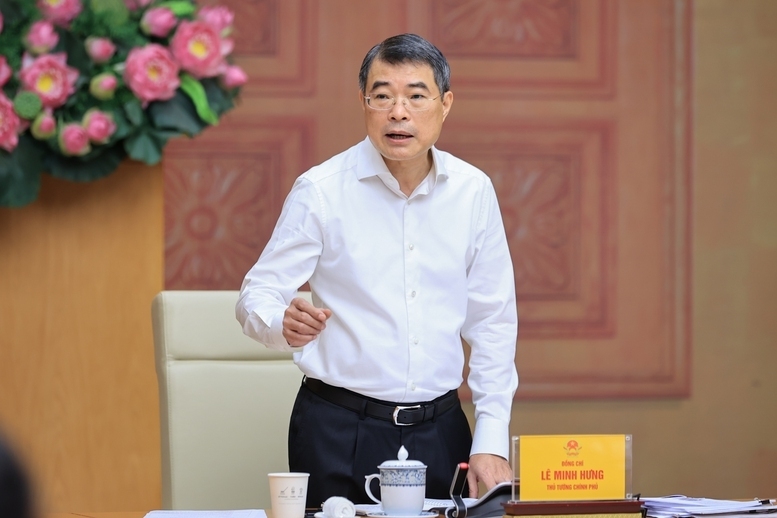
Prime Minister Le Minh Hung chairs a working session with the Ministry of Industry and Trade on the implementation of assigned tasks for 2026. Photo: VGP
Also attending were Permanent Deputy Prime Minister Pham Gia Tuc; Deputy Prime Minister Nguyen Van Thang; Minister of Industry and Trade Le Manh Hung; Minister and Chairman of the Government Office Dang Xuan Phong; along with leaders from several ministries, agencies, and state-owned economic groups.
According to reports and opinions presented at the meeting, the Ministry of Industry and Trade has achieved significant results in recent times in institutional development and improvement, enhancing the effectiveness and efficiency of state management, and promoting the development of its three key pillars: industry, energy, and markets (exports and domestic consumption).
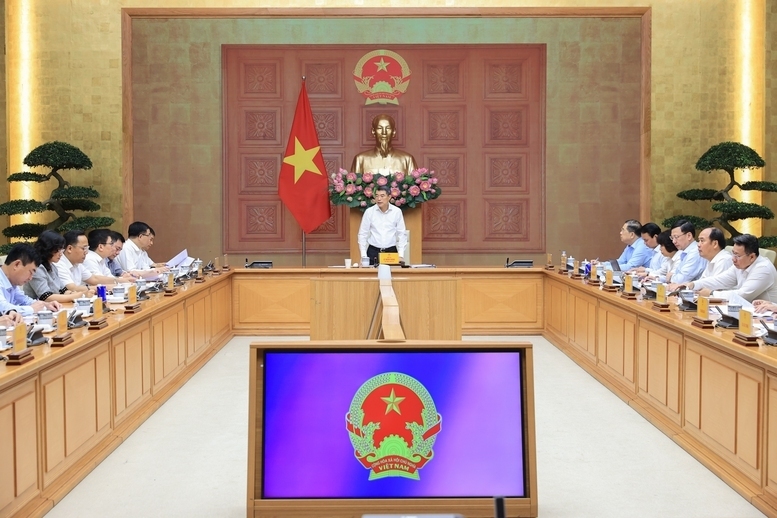
Prime Minister Le Minh Hung instructs the Industry and Trade sector to ensure no shortages of electricity and petroleum under any circumstances. Photo: VGP
After hearing reports from the Ministry and comments from leaders of ministries, agencies, and corporations, Prime Minister Le Minh Hung, in his concluding remarks, emphasized that the Ministry of Industry and Trade is entrusted with managing multiple sectors and fields, including strategic and foundational areas. He acknowledged and highly appreciated the Ministry’s efforts in overcoming numerous difficulties and challenges to achieve important results, particularly in submitting breakthrough policy decisions related to petroleum in a challenging context, thereby contributing positively to the country’s overall achievements.
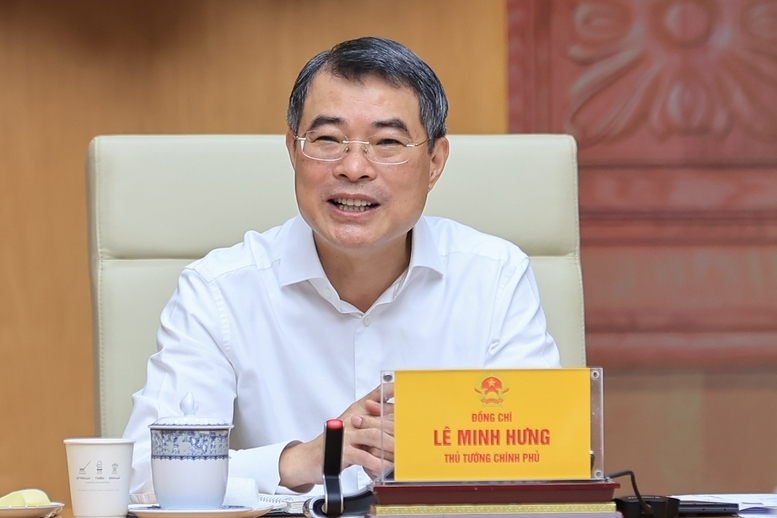
Prime Minister Le Minh Hung chairs a working session with the Ministry of Industry and Trade on the implementation of assigned tasks for 2026. Photo: VGP
Highlighting that the key objective of the meeting was to unify approaches and methods to address existing issues, the Prime Minister stressed the need for heightened focus to fulfill tasks under the Government’s Action Program to implement the 14th National Congress Resolution and Conclusion No. 18-KL/TW, aiming for double-digit economic growth. He also shared the sector’s difficulties, noting that the Government has recently taken urgent and decisive actions, reporting and proposing solutions to competent authorities to remove obstacles across various fields, including industry and trade.
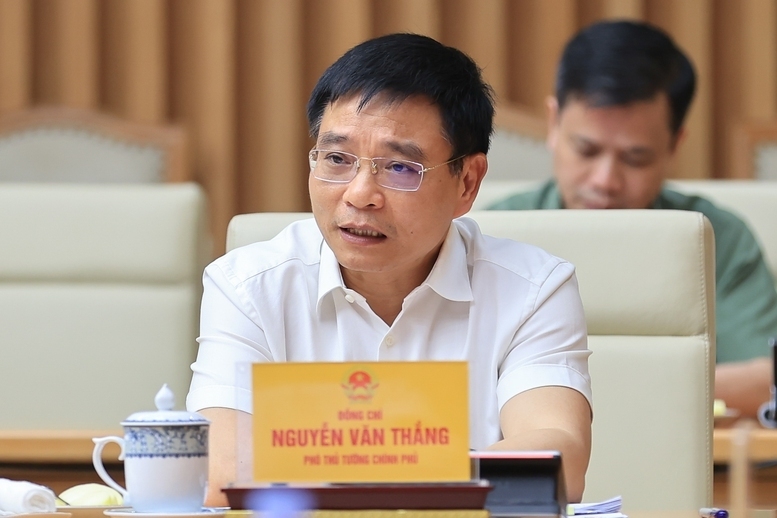
Deputy Prime Minister Nguyen Van Thang speaks at the working session. Photo: VGP
According to the Prime Minister, global and regional developments are expected to remain fast-changing, complex, and unpredictable, directly affecting socio-economic development goals and the sector’s tasks. The Ministry faces multiple challenges, including the risk of slowing global economic growth, increasing technical barriers and trade remedies imposed by other countries, global geopolitical tensions, domestic constraints in production capacity, requirements to ensure national energy security, and institutional and administrative bottlenecks.
Meanwhile, development requirements in the new phase are clear, but the responsibility for implementation is substantial and demanding, particularly in ensuring sustainable double-digit growth. “The achievement of the set targets, including double-digit growth, depends significantly on the quality and effectiveness of the sector’s performance. The Ministry of Industry and Trade must take on core responsibilities, take the lead in addressing bottlenecks, and promote production and business activities to meet the targets,” the Prime Minister stressed.
Regarding key tasks ahead, the Prime Minister underscored that the Ministry must urgently translate and effectively implement the Government’s Action Program for the 14th National Congress Resolution and Conclusion No. 18, covering all areas under its management, including energy, petroleum, science and technology, innovation, exports, and the domestic market. Specific targets, tasks, and deadlines must be assigned to each ministry leader, affiliated unit, state-owned economic group, and locality.
At the same time, attention should be paid to building a clean, strong, and united Party organization within the Ministry, alongside developing a capable workforce of officials, civil servants, and employees, with a firm stance on promptly replacing those who fail to meet requirements.
The Prime Minister also emphasized the need to focus on institutional development and improvement, accelerating the submission and issuance of guiding documents without delays or backlogs. Priority should be given to completing draft laws for submission to the second session of the 16th National Assembly, including the revised Petroleum Law; amendments and supplements to several laws related to trade; amendments to the Electricity Law; and the Law on Commodity Derivatives Trading.
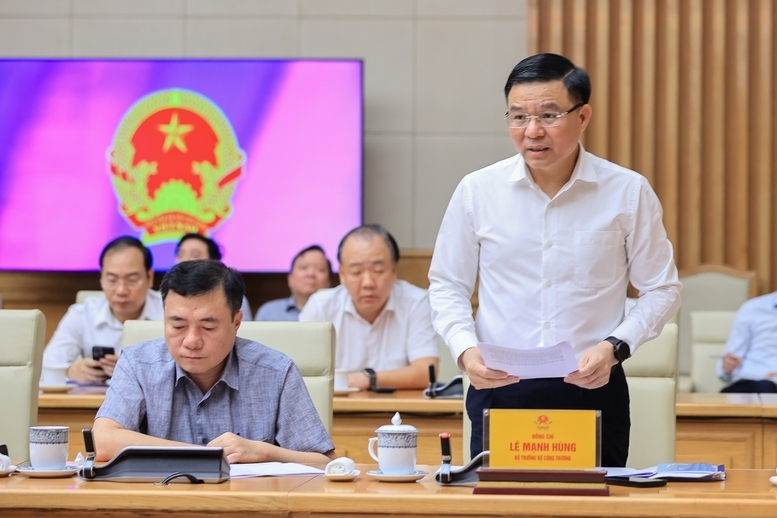
Minister of Industry and Trade Le Manh Hung delivers a report at the meeting. Photo: VGP
He noted that the Government has issued Resolution No. 82/NQ-CP approving the policy for the Law on Key Industries, urging the Ministry to promptly finalize the draft for submission to the National Assembly at its second session.
The Ministry was instructed to coordinate with relevant agencies to review and refine regulations on its functions and responsibilities, ensuring clear delineation of authority among ministries and agencies, avoiding overlaps in line with Conclusion No. 18, and adhering to the principle of “one task - one lead agency responsible,” particularly in managing mineral resources, industrial parks, export processing zones, and state-owned enterprises in the sector.
The Ministry must also continue to strictly and effectively implement directives from the Government leadership on decentralization, and the reduction and simplification of administrative procedures and business conditions, to be completed within April. Substantive decentralization to localities should be strengthened, alongside ongoing efforts to streamline the organizational apparatus.
The Prime Minister stressed the importance of ensuring energy security and a fair energy transition, assigning the Ministry full responsibility for preventing shortages of electricity and petroleum under any circumstances. This includes urgently reviewing, updating, and supplementing the Power Development Plan VIII, adding baseload power projects using new technologies, accelerating the progress of power projects, and closely coordinating with the Ministry of Agriculture and Environment to optimize the operation of hydropower reservoirs.
He also called for the prompt development of plans to review and restructure the petroleum distribution system to reduce intermediaries and costs, accelerate the construction of national petroleum reserves, and promote the use of E10 gasoline.
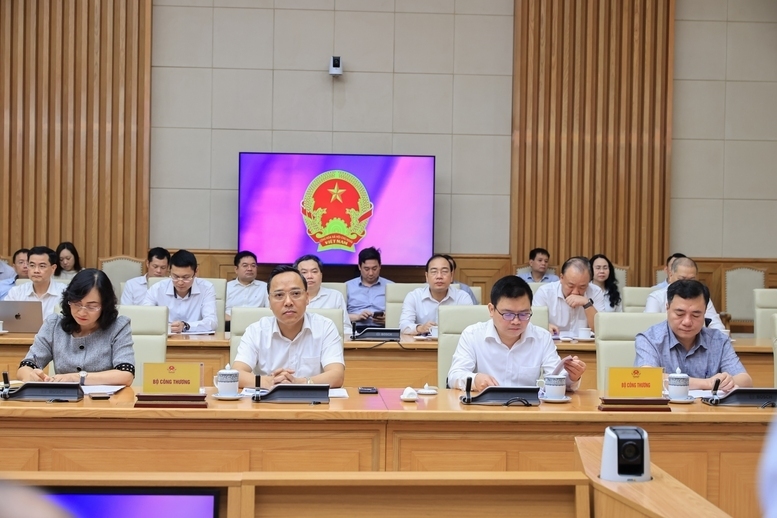
Delegates attend the working session. Photo: VGP
In addition, the Ministry should accelerate the restructuring of industrial and supply chains, promote deep industrial production, enhance domestic production self-reliance, and contribute to establishing a new growth model. The implementation of large-scale industrial projects must be expedited, while linkages between domestic and FDI enterprises should be strengthened to enable Vietnamese companies to participate more deeply in strategic global supply chains.
At the same time, efforts must be made to improve the efficiency of import-export activities and diversify export markets. The Ministry should thoroughly prepare negotiation strategies for reciprocal tariffs with the United States, optimize and effectively utilize existing free trade agreements, pursue new FTAs, and review and reform the operations of Vietnam’s trade missions abroad to ensure tangible contributions and outcomes.
Finally, the Prime Minister emphasized the need to digitalize and modernize the domestic distribution system, stimulate domestic consumption in line with Plan No. 02 of the Central Steering Committee for science and technology development, innovation, and digital transformation, and Conclusion No. 18. The Ministry should complete its sectoral database and integrate it with the national database, while restructuring administrative procedures toward data reuse. Efforts to develop the domestic market must be strengthened, alongside enhanced market management and strict enforcement against violations.

