


Ministry of Industry and Trade holds Q1 2026 Review Conference, sets tasks for coming quarters
On the morning of March 31, at its headquarters, the Ministry of Industry and Trade (MoIT) convened a conference to review performance in the first quarter of 2026 and outline key tasks for the remaining quarters of the year. Acting Minister of Industry and Trade Le Manh Hung chaired the event.
Attending the conference were Deputy Ministers Phan Thi Thang, Nguyen Sinh Nhat Tan, and Truong Thanh Hoai, along with leaders of departments, agencies, and functional units under the Ministry, as well as executives from major groups, corporations, and enterprises in the industry and trade sector. The conference was held in a hybrid format, combining in-person participation with virtual connections to provincial Departments of Industry and Trade and Vietnam’s trade offices abroad.
In his opening remarks, Acting Minister Le Manh Hung noted that despite significant global volatility, the industry and trade sector had achieved notable results, though it continues to face major challenges. To ensure the meeting remained focused and effective, he called for in-depth analysis of underlying causes and the identification of bottlenecks, particularly in mechanisms and policies, in order to develop solutions that would support growth in the second quarter and throughout the year.
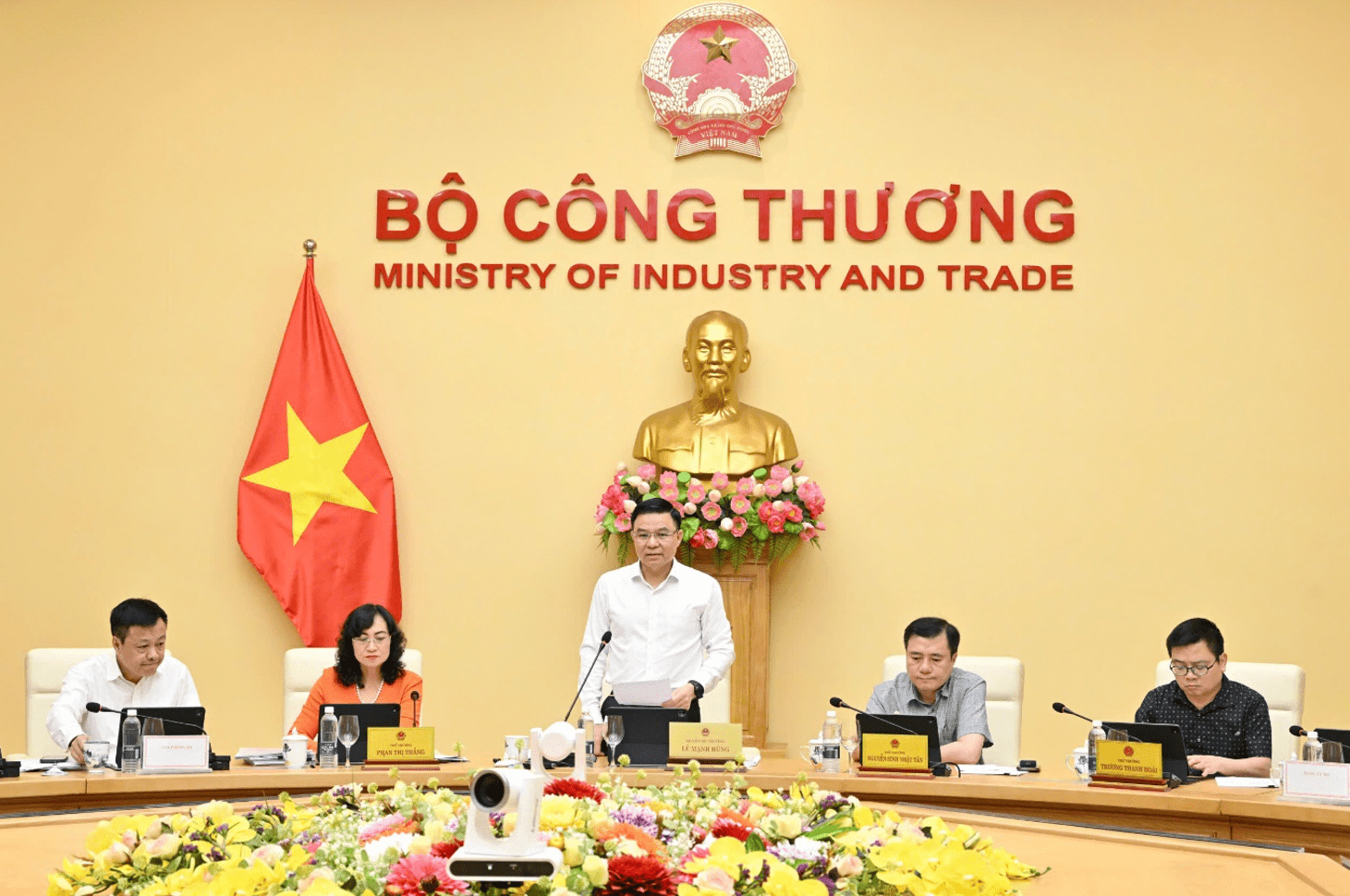
Acting Minister of Industry and Trade Le Manh Hung delivers the opening remarks at the conference.
At the conference, Bui Huy Son, Director General of the Department of Planning, Finance and Enterprise Management, presented a report on the sector’s performance in the first quarter and outlined implementation plans for the coming quarters.
According to the report, the first quarter of 2026 unfolded amid complex and unpredictable global and regional developments. Domestically, stable socio-political conditions and macroeconomic fundamentals provided a favorable foundation for production and business activities. The year 2026 carries particular significance as the first year of implementing the Resolution of the 14th National Party Congress and the 2026-2030 five-year socio-economic development plan. However, since March 2026, the economy has come under pressure from surging global fuel prices, which have driven up production and domestic transportation costs.
Highlighting key outcomes, Bui Huy Son said that industrial production in the first three months of 2026 saw the overall industrial production index rise by an estimated 10.1% year-on-year. Total import-export turnover was estimated at USD 248.5 billion, up 22.5% compared to the same period last year. Meanwhile, total retail sales of goods and consumer service revenue were estimated at VND 1,865 trillion, marking an increase of around 9%.
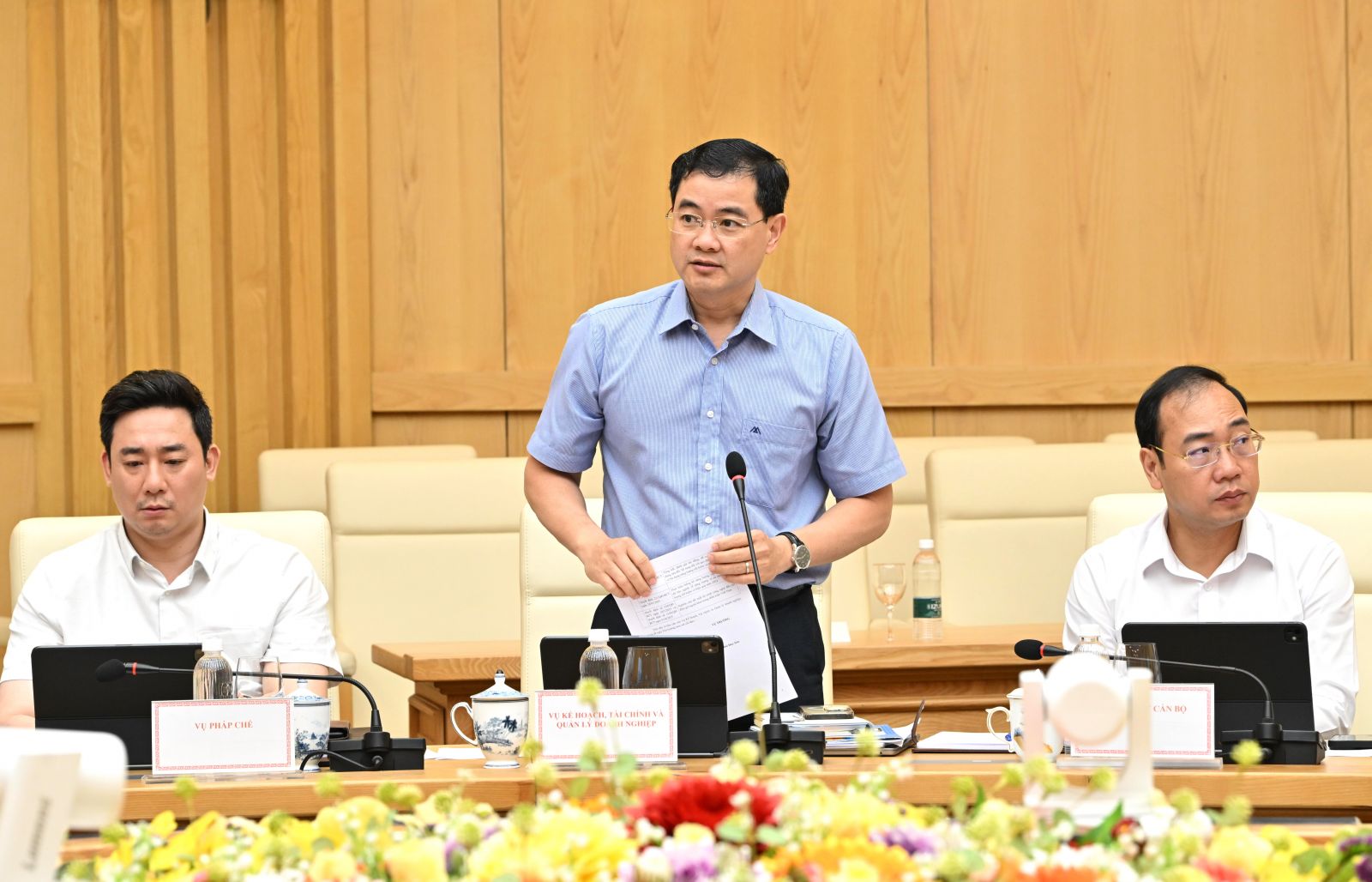
Bui Huy Son, Director General of the Department of Planning, Finance and Enterprise Management, presents a report at the conference.
State management across sectors and fields was implemented in a coordinated and timely manner, contributing positively to overall sector performance. Energy security was maintained, with decisive management of petroleum prices and electricity supply ensuring sufficient energy for production and daily life despite global oil price fluctuations of 30-40%. Total power generation reached 63.6 billion kWh, up 6.1% year-on-year, with the system operating safely and meeting both production and consumption demand.
During the conference, participating units discussed implementation progress and proposed key tasks for the next quarter, clarifying achievements as well as existing challenges and difficulties. Based on these discussions, a range of priority tasks and solutions were put forward to improve governance efficiency and ensure progress in implementing sectoral programs.
Participants emphasized the need to closely follow directives from the Government, the Prime Minister, and the Ministry’s leadership, proactively respond to fluctuations in both domestic and international markets, strengthen inter-agency coordination, accelerate administrative reform, promote industrial production and trade, and maintain balance in energy supply and demand while stabilizing the market.
In his concluding remarks, Acting Minister Le Manh Hung acknowledged that despite significant challenges and unforeseen fluctuations, the industry and trade sector had delivered strong results in the first quarter. Industrial production growth exceeded 10%, while total import-export turnover rose by more than 22.5%. Notably, energy security was ensured, with stable supplies of petroleum, electricity, gas, and other energy sources supporting production, business activities, and daily life.
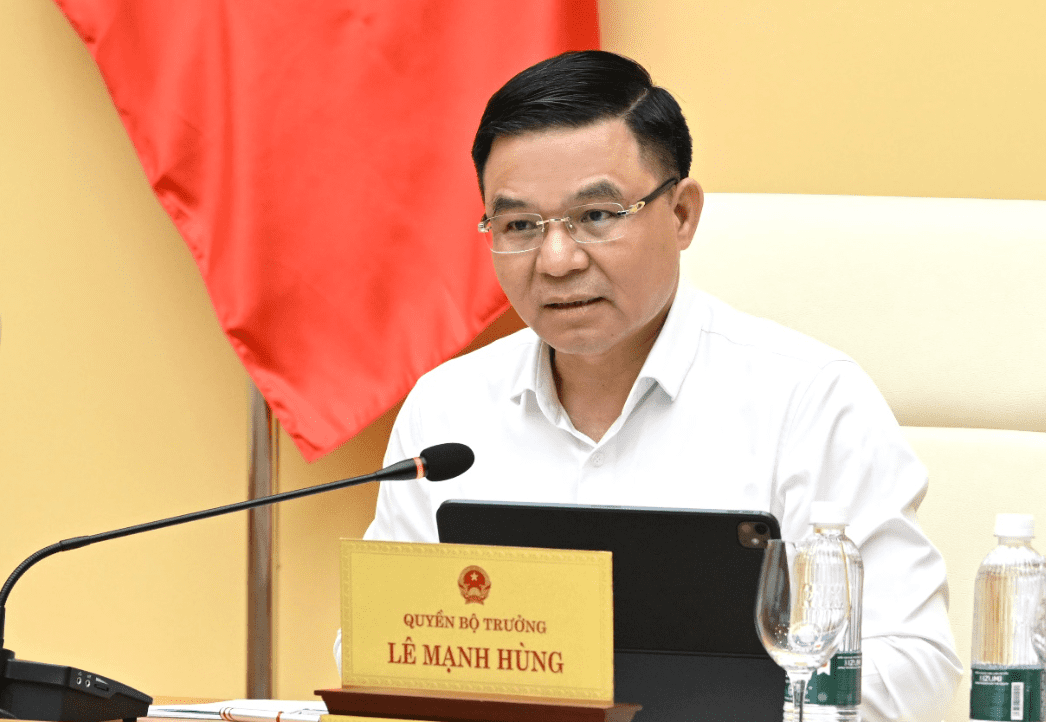
Acting Minister of Industry and Trade Le Manh Hung delivers directives at the conference
On behalf of the Ministry’s leadership, the Acting Minister expressed appreciation for the efforts of the entire sector, particularly local authorities, enterprises, and all officials and employees. However, he also pointed out that certain shortcomings remain and require focused attention in the period ahead.
First, 2026 is identified as a year of transformation, beginning with the standardization of the sector’s governance system. This process must be implemented in a synchronized manner, covering strategic objectives, mechanisms, legal frameworks, and operational procedures, thereby ensuring consistency and continuity toward achieving set goals. This foundation will enable the sector to elevate its capacity and meet practical demands while creating new growth momentum.
Second, regarding specific targets for the second quarter and the remainder of 2026, the Acting Minister stressed that with industrial production growth at 10.1% in the first quarter, the sector must achieve at least 12.5% growth from the second quarter onward to meet the annual target. For domestic consumption and services, which grew 8.5% in the first quarter, growth must reach at least 15.5% in subsequent quarters. For trade, to secure a trade surplus of over USD 20 billion for the year, the sector should aim for an average quarterly surplus exceeding USD 8 billion from the second quarter onward.
The Acting Minister also outlined key solution groups for the period ahead. These include overarching solutions focused on improving legal frameworks and developing additional mechanisms and policies to proactively manage risks, alongside refining sectoral development strategies and planning in a synchronized and interconnected manner to generate synergies across industries.
Specific solutions in the energy sector include ensuring energy security, enhancing forecasting and electricity load management, strengthening power market operations, and proactively handling contingencies to prevent power shortages.
Priority sectoral solutions will focus on ensuring supply and improving management efficiency for petroleum and gas, while promoting industrial development, particularly in foundational industries such as chemicals and fertilizers, thereby strengthening self-reliance and contributing to growth.
Finally, the Acting Minister called for a review and improvement of the organization of quarterly review meetings to ensure alignment with key objectives and priorities, strengthen accountability based on concrete plans and solutions, and provide more time for units and provincial Departments of Industry and Trade to engage in more substantive and effective discussions.

