


Standing Deputy Prime Minister chairs meeting with Ministry of Industry and Trade on draft decree governing petroleum trading
According to the Government News Portal, on the afternoon of June 24, Politburo Member and Standing Deputy Prime Minister Pham Gia Tuc chaired a meeting with the Ministry of Industry and Trade and relevant ministries and agencies to review the completion of the draft Decree replacing Decree No. 83/2014/ND-CP and its subsequent amendments governing petroleum trading.
Completing the legal framework for petroleum trading
Addressing the meeting, Standing Deputy Prime Minister Pham Gia Tuc emphasized that petroleum trading is a sector of strategic importance, directly affecting business operations as well as the daily lives of the public.
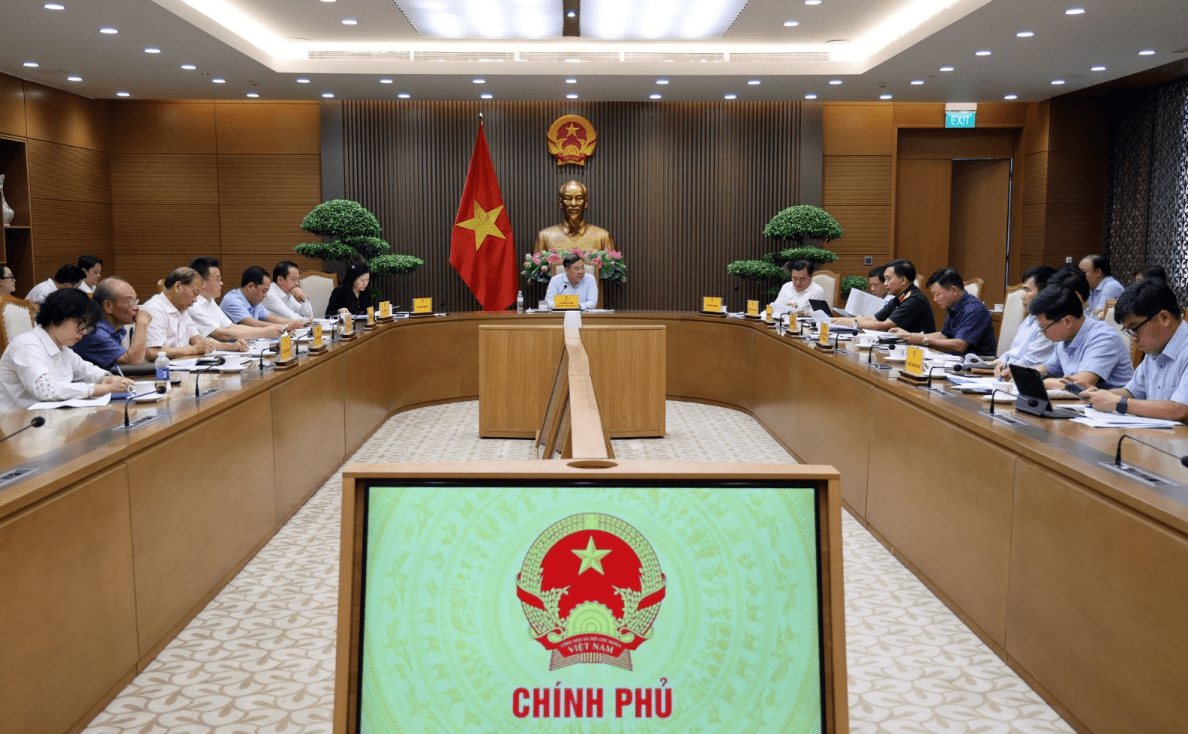
Overview of the meeting. Photo: VGP
Reviewing the Government's management of the petroleum market, the Standing Deputy Prime Minister noted that the Government and the Prime Minister have provided close and decisive direction over the past period. At the same time, ministries and agencies, particularly the Ministry of Industry and Trade, have made significant efforts to coordinate and promptly address emerging issues, thereby helping ensure adequate petroleum supplies for the economy and people's livelihoods.
He pointed out that Decree No. 83/2014/ND-CP on petroleum trading was issued many years ago and that a number of its provisions have not been updated to reflect current market conditions. Therefore, revising and strengthening the legal framework governing petroleum trading has become a necessary requirement.
Given that petroleum trading is a conditional business sector, the Standing Deputy Prime Minister stressed that petroleum wholesalers, distributors and all enterprises participating in the market must fully comply with the conditions prescribed by law.
Against this backdrop, he said that consolidating the petroleum distribution system, restructuring petroleum wholesalers and distributors, and minimizing intermediary layers should be institutionalized in the draft Decree in accordance with the directions of the Government and the Prime Minister.
Alongside improvements to the legal framework, the Standing Deputy Prime Minister also called for continued research into measures to enhance national petroleum reserves, expand cooperation with regional partners, and develop appropriate stockpiling strategies to strengthen Vietnam's long-term energy security.
Draft introduces multiple new policy mechanisms
Reporting at the meeting, Deputy Minister of Industry and Trade Nguyen Sinh Nhat Tan said the draft Decree has been refined based on directives from the Government and the Prime Minister, comments from relevant ministries and agencies, and newly emerging requirements arising from the conflict in the Middle East, as well as the objective of significantly reducing intermediary layers within the petroleum distribution system.
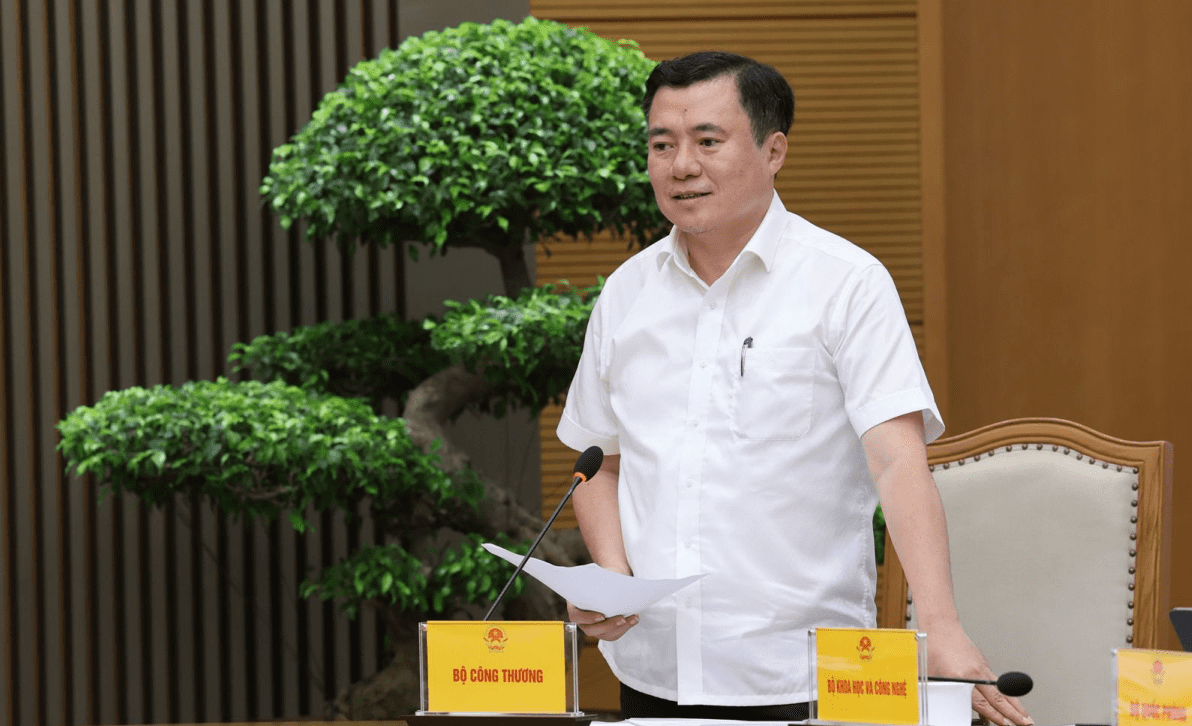
Deputy Minister of Industry and Trade Nguyen Sinh Nhat Tan presents the report at the meeting. Photo: VGP
A notable proposal is the introduction of a mechanism allowing the Vietnam National Industry - Energy Group (Petrovietnam) to engage in the export, import and merchant trading of crude oil and feedstock. According to the Ministry of Industry and Trade, this provision would enable Petrovietnam to participate more actively in the international crude oil market, proactively secure feedstock supplies for domestic refineries, and reduce supply risks amid volatility in the global energy market. In addition, petroleum wholesalers would be authorized to supply specialized petroleum products for national defence and security purposes.
The draft Decree also clarifies the role of the Petroleum Price Stabilization Fund, emphasizing that it is not the sole instrument for market stabilization but one of several tools available under the Price Law. In the event of sharp fluctuations in global petroleum prices, regulators may simultaneously deploy other policy measures, including adjustments to taxes and fees, fiscal and monetary policies, budgetary support, and supply-demand balancing measures to stabilize the domestic market.
Regarding the Petroleum Price Stabilization Fund, the Ministry of Industry and Trade has also proposed refining transitional provisions to ensure consistency with the current management mechanism and the transfer of responsibility for managing the fund among relevant authorities.
As part of administrative reform efforts, the draft Decree introduces additional options for submitting applications by post or in person for certain procedures related to the registration and adjustment of production, import and petroleum distribution plans. It also refines procedures governing the revocation of certificates and licences required for petroleum trading activities.
Importantly, the Ministry continues to propose restructuring the petroleum distribution system by substantially reducing intermediary tiers. Under the proposed model, the distribution network would comprise only two principal levels: the supply-generating group, consisting of petroleum producers, petroleum product off-takers and petroleum wholesalers and petroleum distributors.
Streamlining the distribution system is expected to reduce intermediary costs, improve the effectiveness of state management, and enhance transparency and oversight of fuel supplies across the market.
The draft Decree also maintains the orientation of transitioning toward a market-based pricing mechanism. Under this approach, enterprises would be granted greater autonomy in setting retail prices, subject to mandatory price declarations and oversight by competent state authorities.
To safeguard social welfare and consumer interests, the draft stipulates that retail fuel prices in areas located far from ports, primary storage facilities or production plants must not exceed the maximum retail price announced by the petroleum wholesaler for the same locality at the same point in time.
Building a transparent and sustainable petroleum market
After hearing comments from representatives of relevant ministries and agencies, Standing Deputy Prime Minister Pham Gia Tuc concluded that the draft Decree replacing Decree No. 83/2014/ND-CP and related petroleum trading regulations has undergone a lengthy drafting process, including multiple rounds of consultation among Government members, reflecting the complexity and sensitivity of the issue and its direct impact on production, consumption and people's livelihoods.
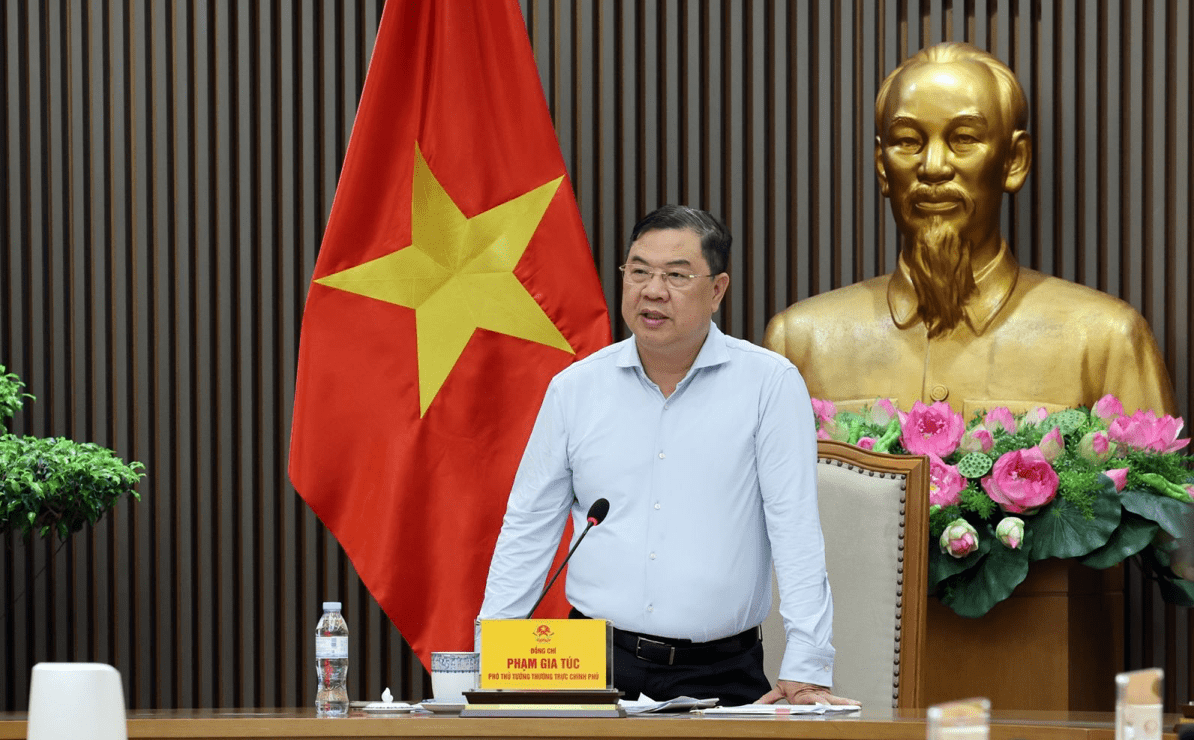
Standing Deputy Prime Minister Pham Gia Tuc delivers concluding remarks at the meeting. Photo: VGP
The Standing Deputy Prime Minister stressed that if the current petroleum market model is no longer appropriate, it must be adjusted. While reforms may present short-term challenges, they are necessary to establish a transparent, healthy and sustainable market environment that aligns more closely with international practices while remaining suitable for Vietnam's stage of development. The ultimate objective is to ensure stable petroleum supplies, reasonable prices and prevent fuel shortages under any circumstances.
He emphasized that restructuring should reduce the number of petroleum wholesalers and distributors while cutting administrative procedures and compliance costs. At the same time, appropriate regulatory requirements must be maintained to ensure market stability and safeguard national energy security.
Regarding digital transformation, the Standing Deputy Prime Minister instructed that the draft Decree should require the digitalization of data throughout the entire petroleum supply chain from wholesalers and distributors to retail outlets, to enable real-time monitoring of imports, inventories and sales volumes. This would help prevent stockpiling during periods of price volatility, demonstrate innovation in market governance, and ensure that the reduction in the number of petroleum wholesalers and distributors follows a reasonable roadmap with appropriate transitional arrangements, thereby avoiding abrupt policy shifts.
Based on the comments made during the meeting, the Standing Deputy Prime Minister assigned the Ministry of Industry and Trade to promptly finalize the draft Decree in accordance with the Prime Minister's directives. The Ministry was instructed to review the draft to ensure it aligns with the policy direction of restructuring petroleum wholesalers in a manner appropriate to the economy, improving efficiency, avoiding fragmentation, minimizing intermediary layers and strengthening oversight, particularly during periods of crisis. The Ministry was also tasked with continuing to solicit public feedback through the Government News Portal, the Ministry of Industry and Trade's online portal, and relevant business associations and enterprises.
The Standing Deputy Prime Minister also called on ministries, agencies and industry associations to actively contribute practical feedback to the draft Decree. He emphasized that consensus on restructuring the petroleum trading system is essential to improving market efficiency, curbing unfair competition and ensuring the State's ability to regulate the market effectively under all circumstances.

