


Viet Nam Halal: Identifying supply capacity, market demand and coordination mechanisms to promote exports
On September 23, the Viet Nam Trade Promotion Agency (VIETRADE) under the Ministry of Industry and Trade held its September 2026 trade promotion coordination conference with the system of Vietnamese Trade Offices abroad, themed “Viet Nam Halal: Identifying supply capacity, market demand and coordination mechanisms to promote exports.”
The Halal market expands as standardization requirements grow
The conference was held in both in-person and online formats, with the participation of representatives from ministries, sectors and agencies under the Ministry of Industry and Trade, the system of Vietnamese Trade Offices abroad, particularly Trade Offices in key Halal markets worldwide, as well as businesses and industry associations.

Director of the Viet Nam Trade Promotion Agency Vu Ba Phu delivers opening remarks at the conference.
At the conference, Director of the Viet Nam Trade Promotion Agency Vu Ba Phu said there are currently around 2 billion Muslims living in 112 countries worldwide, including 57 member states of the Organisation of Islamic Cooperation, accounting for around 25% of the world's population. Notably, Muslims make up the majority of the population in Asia and the Middle East.
According to Vu Ba Phu, the global Halal market is experiencing strong growth and has enormous potential. Notably, the market is no longer limited to food products meeting Halal standards but has expanded into a range of sectors, including cosmetics, tourism, finance and logistics.
At the same time, Halal-compliant consumption is attracting growing interest among consumers outside the Muslim community, as it is associated with requirements for transparency and safety throughout the supply chain. This indicates that the potential of the Halal market lies not only within the Muslim community but can also extend to other groups of consumers.
“Amid global economic uncertainties, the Halal market can create a new growth driver. Viet Nam currently has export strengths across a wide range of products, including agricultural produce and conventional food products. Developing the Halal industry will open up new avenues for exports,” Vu Ba Phu said.
In addition to targeting overseas markets, the development of Halal-compliant products and services could also create additional momentum for the domestic market, thereby contributing to the goal of maintaining double-digit economic growth in the coming period.
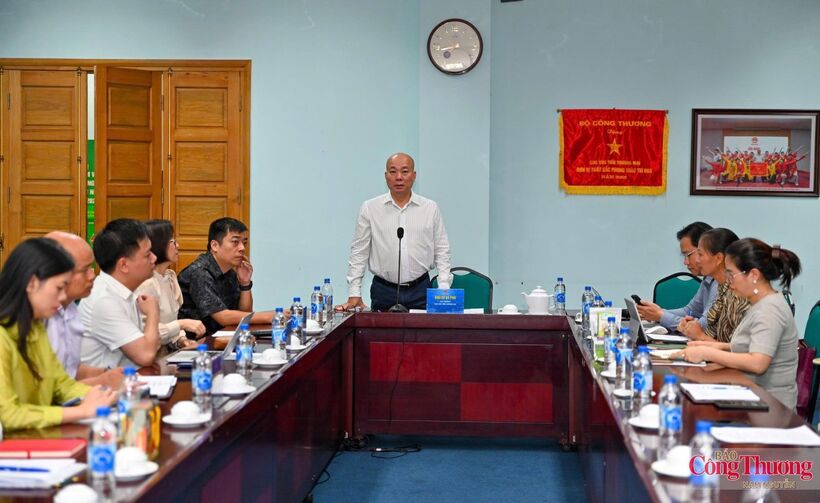
The September 2026 trade promotion coordination conference with the system of Vietnamese Trade Offices abroad, themed “Viet Nam Halal: Identifying supply capacity, market demand and coordination mechanisms to promote exports.”
At the conference, experts also provided useful updates on the Halal market. Nguyen Tuan Anh, Acting Director of the Centre for Conformity Certification (QUACERT) under the National Standards, Metrology and Quality Commission, said that for exports to Halal markets, requirements for standards and certification are increasingly becoming important conditions. Halal certification is regarded as a “passport” for trade, while also serving as evidence that a product, production facility or service meets the corresponding requirements.
However, Halal compliance is not simply a matter of adding another certificate to an export dossier. According to Nguyen Tuan Anh, standards for goods focus on raw materials, production processes, storage, transportation, labelling and traceability. The aim is to ensure Halal compliance, prevent cross-contamination and maintain product integrity throughout the supply chain.
He also stressed the need to “get it right from the outset”, as trust is particularly important for Halal products. If a product violates Halal principles, the impact will not be limited to a single shipment or business but could also affect brand reputation.
Nguyen Tuan Anh also noted that one of the major challenges facing Vietnamese Halal products is the differences between markets. There is currently no globally unified and widely adopted Halal standards system comparable to some ISO standards familiar to businesses. Markets may apply requirements based on standards established by Malaysia, the Gulf region, the Organisation of Islamic Cooperation or Indonesia.
“Viet Nam is continuing to develop its Halal standards system, which already includes standards related to Halal food, good agricultural practices for Halal-recognised organisations, animal feed, food and Muslim-friendly services. Going forward, the standards system will continue to be developed for gelatin, additives, product hygiene, products using animal bones, hides and hair, chemicals, as well as cosmetics, pharmaceuticals and medical devices,” Nguyen Tuan Anh said.

Nguyen Tuan Anh, Acting Director of the Centre for Conformity Certification (QUACERT) under the National Standards, Metrology and Quality Commission.
Expanding the standards system is important because the potential of the Halal market goes beyond food. As Halal requirements attract increasing attention across various sectors, the ability to meet such standards will become part of the competitiveness of businesses and industries.
Trade promotion needs to closely follow individual Halal markets
However, standardization also needs to be accompanied by an approach tailored to individual markets. Drawing on the experience of her organisation, Vu Thi Thanh Huyen, General Director of Nha Xanh Toan Cau Cooperative, proposed that trade promotion activities should take a deeper approach to individual markets. “For example, when a business wants to enter Indonesia, it needs to clearly understand what the market requires, to what extent its products meet those requirements, whether quality is consistent, and whether its supply capacity can be guaranteed,” Vu Thi Thanh Huyen said.
This is also an area in which businesses expect a greater role from Vietnamese Trade Offices abroad. Rather than simply providing general information, businesses need support in identifying actual demand, technical requirements, differences in regulations, accepted certifications and suitable partners.

Vu Thi Thanh Huyen, General Director of Nha Xanh Toan Cau Cooperative
Another approach proposed by businesses is to focus support on a number of key products, businesses and markets instead of launching too many products at the same time. When a product succeeds, experience in standards, certification, markets, customers and production organisation can become lessons for subsequent businesses and products.
This approach allows export support activities to begin with specific cases, thereby building experience and procedures that can be replicated. It is also suited to the specific characteristics of the Halal market, where “compliance with standards” is not merely a matter of paperwork but must be maintained throughout the entire production and supply process.
Looking at Halal products from the perspective of the domestic market, Ba Thi Nguyet Thu, Director of the HalalViet Promotion and Experience Centre, said that developing Halal products is not only about serving exports. Domestic demand is becoming more apparent among hotels, restaurants and tourist destinations serving international Muslim visitors. Establishing a supply of compliant products in Viet Nam can therefore serve the domestic market while also creating a foundation for exports.
“For small and medium-sized enterprises, linking up with existing product systems can provide a viable way to enter this market. If we work together to build an ecosystem, it will certainly bring about significant changes,” Ba Thi Nguyet Thu proposed.

Ba Thi Nguyet Thu, Director of the HalalViet Promotion and Experience Centre.
Concluding the conference, Vu Ba Phu stressed that, in order to enable the Vietnamese Halal industry to develop strongly and realise the goal of bringing Vietnamese agricultural produce, food and goods deeper into the global Halal value chain, thereby contributing to the goal of double-digit export growth, Vietnamese Trade Offices and Trade Promotion Offices abroad should proactively monitor, update and provide early warnings on changes in policies, technical barriers, standards, quality requirements and Halal labelling regulations in their respective markets.
They should also step up efforts to seek and connect Vietnamese businesses with major supermarket and hypermarket chains such as Lulu and KGF, retail chains in ASEAN and the Middle East, as well as Halal e-commerce and international B2B platforms. They should coordinate with state management agencies, certification organisations and other relevant bodies to organise training courses on Islamic culture and Halal technical standards tailored to individual markets.
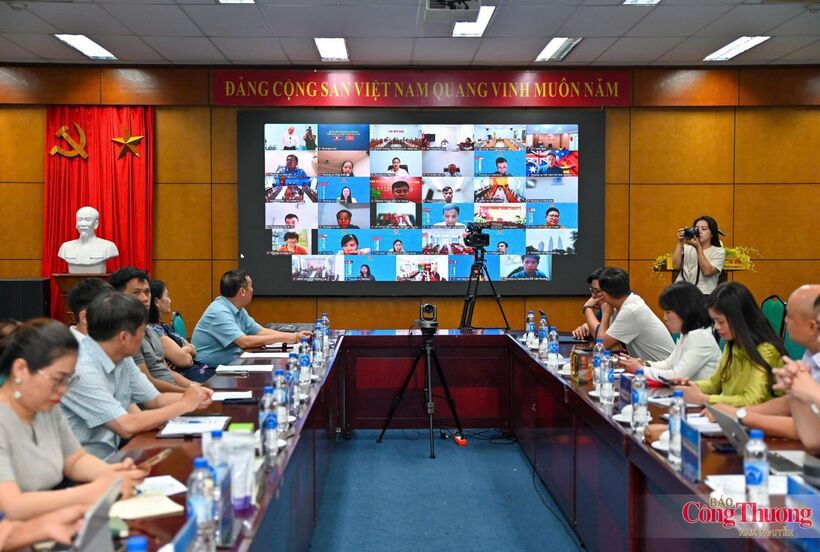

Vietnamese Trade Offices abroad, localities and several organisations attend the conference online.
For the business and cooperative community, the Director of the Viet Nam Trade Promotion Agency said businesses need to change their approach by pursuing a systematic, long-term strategy for the Halal market and viewing Halal certification as a strategic passport rather than a procedure to be dealt with merely in the short term.
Businesses need to clearly identify their target markets from the outset and, in particular, maintain credibility, seriously invest in standardising processes, accelerate the restructuring of their product portfolios, and boldly pilot models based on cooperation and linkages among businesses leading the supply chain. |

