


Conference reviews 2025 performance and sets tasks for 2026 of the Department of Domestic market Management and Development
On the afternoon of December 31, 2025, in Hanoi, the Department of Domestic Market Management and Development held a conference to review its work in 2025 and outline tasks for 2026. Acting Minister of Industry and Trade Le Manh Hung attended the conference. Also present were Deputy Minister of Industry and Trade Nguyen Sinh Nhat Tan, leaders of units under the Ministry, and all civil servants and employees of the Department of Domestic Market Management and Development.
Maintaining market stability, improving institutions and enhancing management effectiveness
The Department of Domestic Market Management and Development was established on the basis of the merger between the former General Department of Market Surveillance and the Domestic Market Department, effective from March 1, 2025. Its functions include advising on policy formulation, implementing solutions to develop the domestic market, carrying out state management of market surveillance, and directly inspecting and sanctioning administrative violations.
Speaking at the conference, Tran Huu Linh, Director General of the Department of Domestic Market Management and Development, said that immediately after its establishment, the Department quickly stabilized its organizational structure, exercised decisive and flexible leadership and direction, and successfully fulfilled assigned targets and tasks. A key priority was restructuring and consolidating the organization under the new model. The Department completed the transfer of 63 provincial Market Surveillance Departments to local authorities, while reviewing and reassessing functions and tasks to build a streamlined structure with six functional divisions and 166 civil servants, ensuring smooth operations and meeting new requirements.
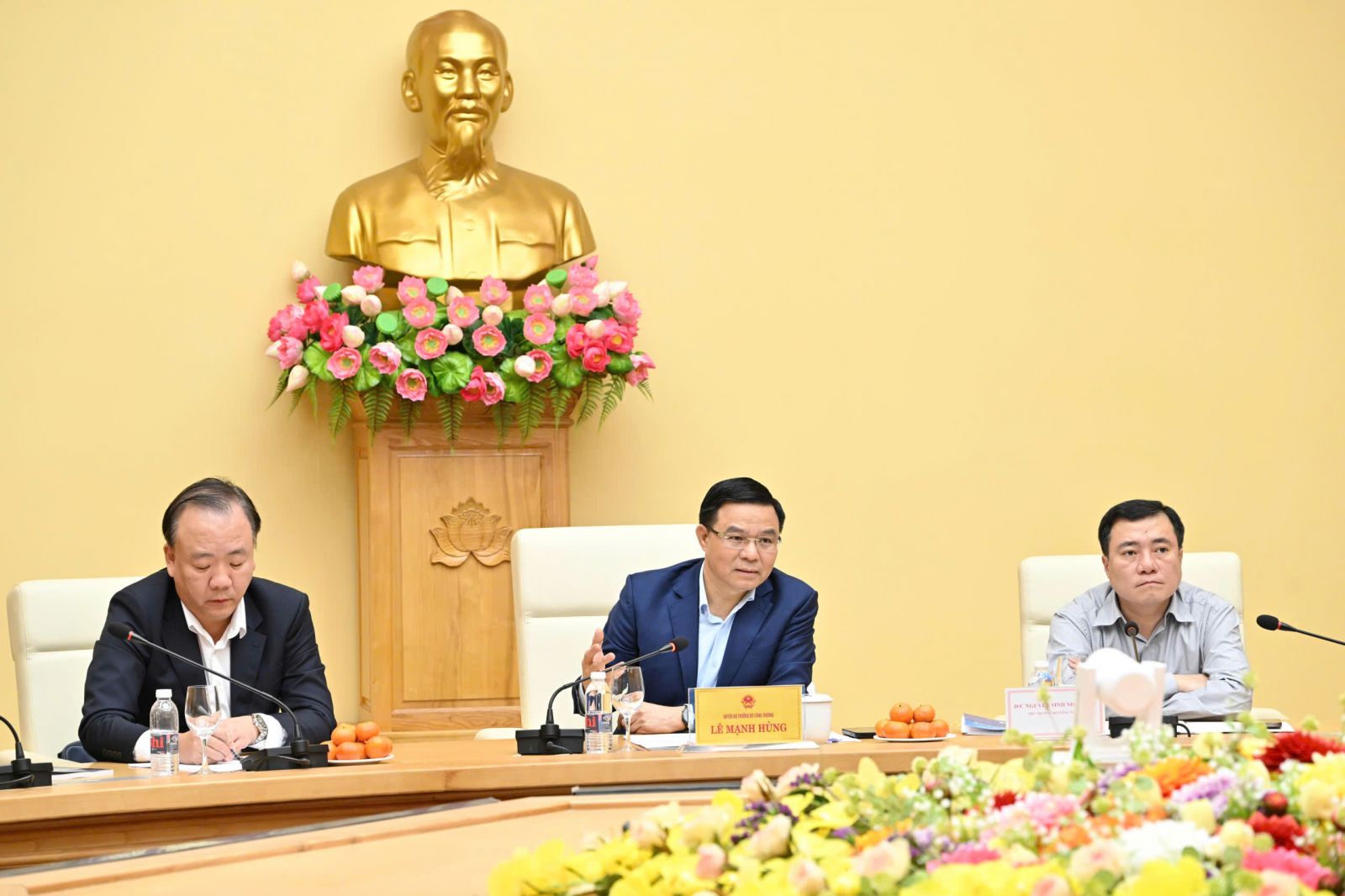
Acting Minister of Industry and Trade Le Manh Hung and Deputy Minister of Industry and Trade Nguyen Sinh Nhat Tan attend the conference.
Law-making was identified as a foundational task and top priority, and emerged as a major highlight in 2025. During the year, the Department was one of the Ministry’s core units in institutional development, taking the lead in drafting nine decrees and three circulars. These decrees comprehensively covered key areas such as commercial infrastructure; management of conditional business sectors including petroleum, gas and alcohol; as well as market monitoring, inspection and administrative sanctions.
Notably, Decree No. 330 regulating commodity exchanges within the international financial center, issued by the Government on December 18, 2025, was drafted and submitted within a short timeframe to meet overall progress requirements. Circulars on product traceability, market surveillance, and guidance on implementing the petroleum decree were also prepared to be issued in sync with the decrees’ effective dates.
Alongside institutional improvements, the Department effectively implemented mechanisms, policies, programs and projects for domestic market development. Key initiatives included projects linking domestic market development with the campaign “Vietnamese People Give Priority to Using Vietnamese Goods,” innovation in business models and agricultural product distribution, development of border trade infrastructure, and national target programs.
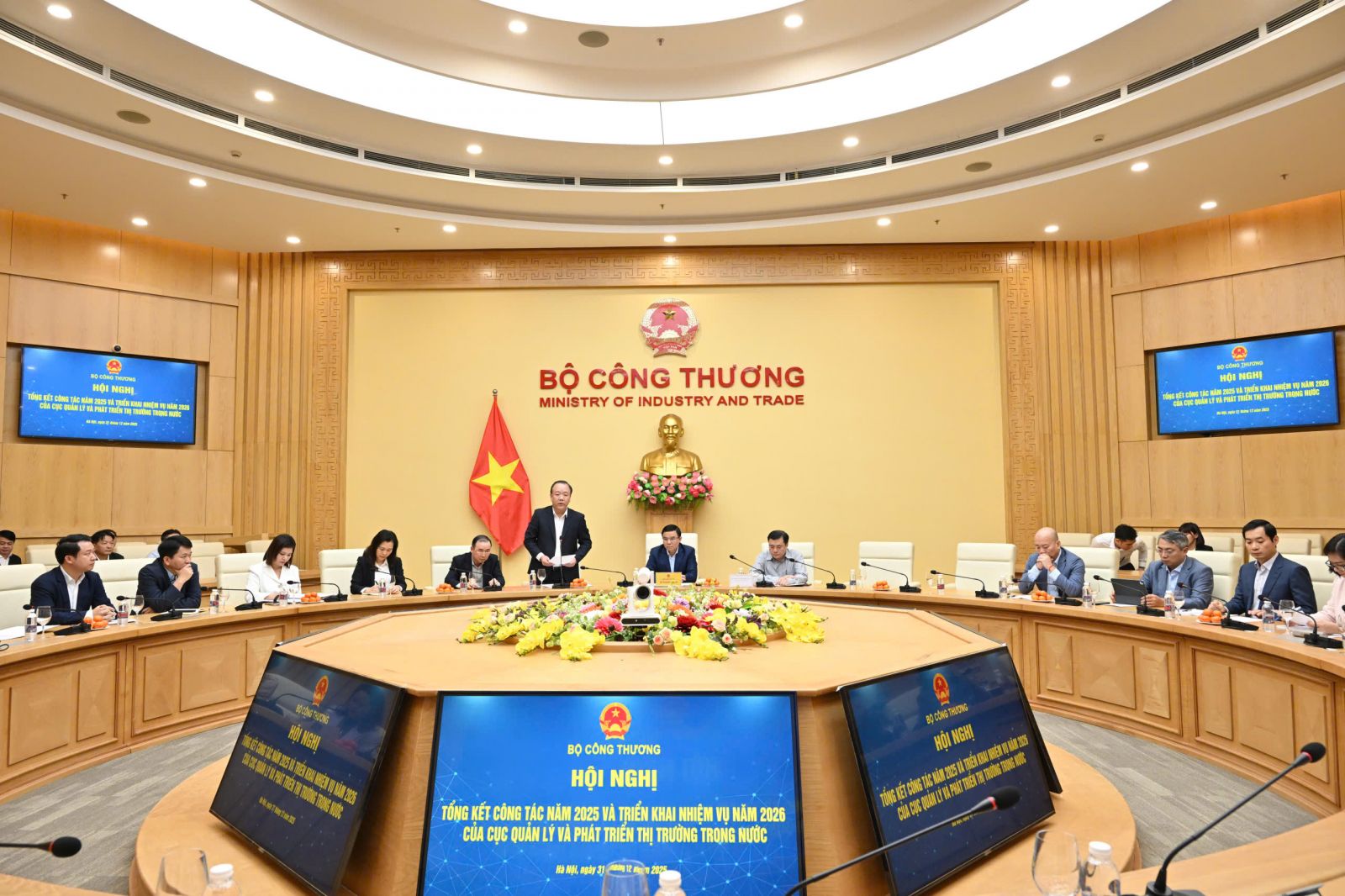
Conference Reviews 2025 Performance and outlines tasks for 2026 of the Department of Domestic Market Management and Development
Many creative trade promotion activities closely tied to local realities were implemented, such as Vietnam Agricultural Products Week 2025, support for Duong Yen Cooperative in auctioning the largest sturgeon in Lai Chau, livestream sales sessions that sold more than six tons of ST25 rice in just two hours, and activities connecting consumption of products from ethnic minority and mountainous areas. These initiatives helped stimulate domestic consumption and improve livelihoods, especially in rural, mountainous and border areas.
Ensuring adequate supply of essential goods continued to be a key focus, particularly for petroleum products. In 2025, total petroleum supply was estimated at 25.25 million tons, fully meeting market demand. Petroleum price management was conducted in accordance with regulations, with 49 pricing cycles and 50 price adjustments for major petroleum products. As the standing body of the Domestic Market Management Task Force, the Department closely monitored supply-demand dynamics and price movements, promptly advising on management solutions to help stabilize the market, especially during holidays, the Lunar New Year, and periods of natural disasters.
In market surveillance, inspection and administrative enforcement remained core tasks. In 2025, the nationwide market surveillance force detected and handled more than 27,000 violations, contributing over VND 371 billion to the state budget. The Department’s Market Surveillance Operations Division alone led inspections and handled 92 complex, inter-regional cases, imposing administrative fines totaling VND 12 billion, with many major cases transferred to investigative agencies. Inspection activities were expanded to e-commerce, social networks and livestream sales, alongside the issuance of multiple directives to strictly control key areas such as food safety, product origin, counterfeit medicines and milk, and essential goods during holidays and the Lunar New Year.
Digital transformation continued to be promoted in depth. Information technology systems and professional software such as the INS system, data analysis and market price forecasting systems were upgraded. In particular, the Ministry of Industry and Trade’s Product Traceability System was officially launched on December 23, 2025, contributing to improved market management efficiency and consumer protection. Communication activities were strengthened, with more than 1,100 news articles published on the Department’s website in 2025, along with exhibitions and outreach activities to raise awareness of safe and high-quality goods consumption.
Alongside these achievements, the Department candidly acknowledged existing shortcomings, including uneven commercial infrastructure, fragmented traditional distribution channels, and difficulties in managing cross-border e-commerce due to the lack of appropriate tools and regulations aligned with practical realities.
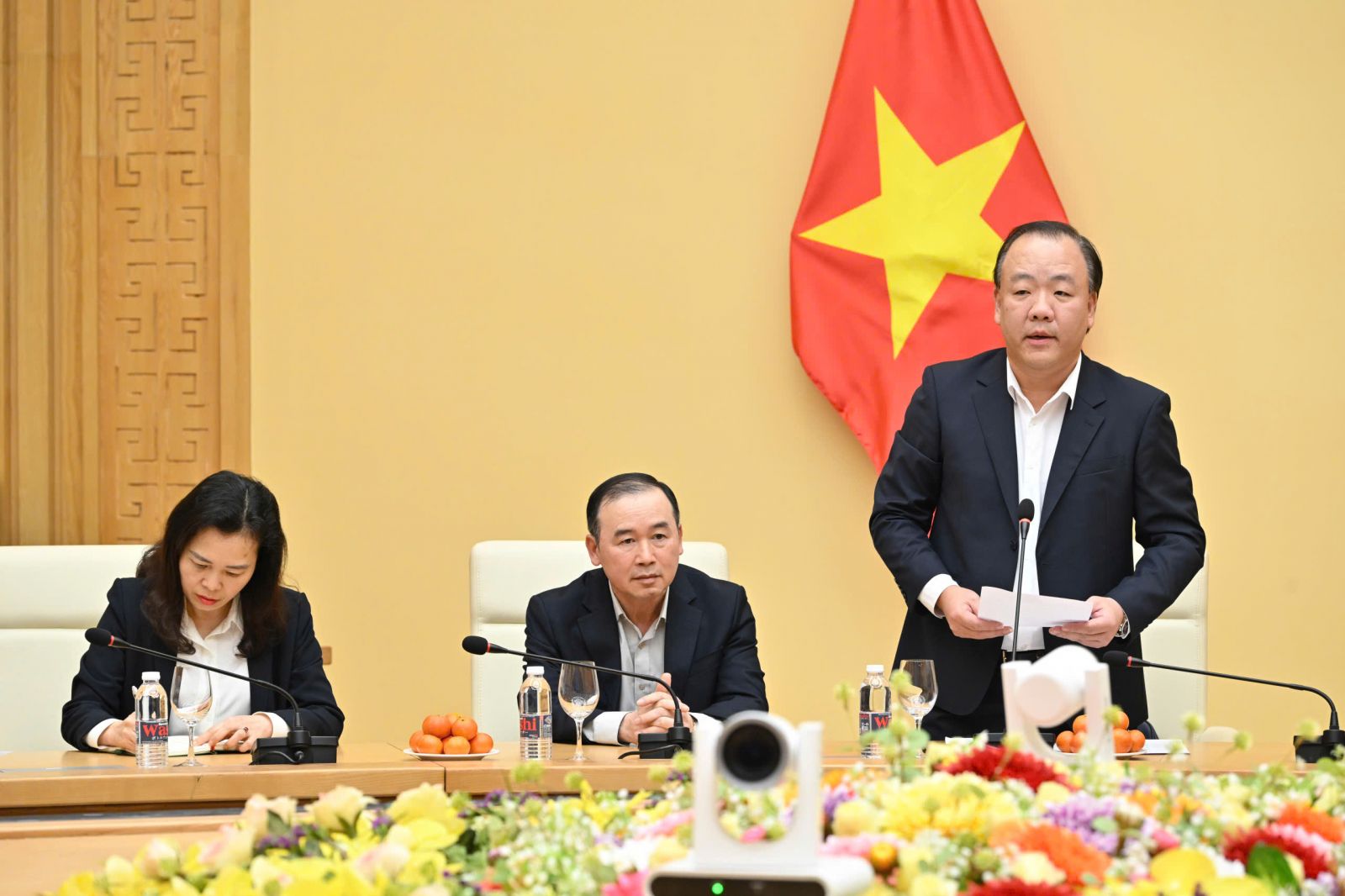
Tran Huu Linh delivers remarks at the conference.
2026: Institutional improvement and digital transformation as pillars of development
Entering 2026, as the domestic market continues to affirm its role as a key pillar of the economy, the Department of Domestic Market Management and Development has set a target for total retail sales of goods and service revenue at approximately VND 7,882 trillion, an increase of about 11% compared to 2025.
To achieve this goal, the Department will focus on key task groups, prioritizing institutional improvement, including leading the drafting of the Law on Market Management and the Law on Commodity Derivatives Trading for submission to the National Assembly in 2026. Other priorities include boosting consumer demand, supporting product consumption—particularly Vietnamese brands—strengthening monitoring, forecasting and regulation of supply and demand, developing commercial infrastructure, and further improving the effectiveness of market surveillance.
Digital transformation has been identified as a cross-cutting pillar throughout 2026. Systems such as the INS administrative sanctioning system, the product traceability system, the national petroleum management system and commercial platforms will continue to be operated and connected with the national database. From January 1, 2026, the Department will deploy the BASE platform in management, administration, task assignment and performance evaluation, contributing to greater transparency and operational efficiency.
At the conference, representatives of departments and agencies under the Ministry presented papers on strengthening coordination to enhance the effectiveness of state management in the industry and trade sector in the coming period.
Speaking at the conference, Deputy Minister Nguyen Sinh Nhat Tan highly appreciated the achievements of the Department of Domestic Market Management and Development in 2025 in both market surveillance and domestic market development.
Entering 2026, the Deputy Minister called on the Department to maximize existing capacity and resources, while continuing to perform well in drafting state management regulations. At the same time, greater efforts should be made to promote the campaign “Vietnamese People Give Priority to Using Vietnamese Goods,” creating a solid foundation for domestic market development.
In parallel, coordination with local authorities should be strengthened to more forcefully combat counterfeit and fake goods. According to the Deputy Minister, organizing the market surveillance force under local authorities does not diminish its management role; on the contrary, it enhances the role and responsibility of local governments—an advantage that should be further leveraged in the time ahead.
In addition, the Department should promote the role of each individual while mobilizing collective strength, viewing this as a key factor in fulfilling assigned tasks. Greater attention should be paid to training and capacity building for staff, fostering proactive innovation and flexible adaptation, while steadfastly leveraging existing strengths and expertise, contributing to the goal of stable and sustainable domestic market development.

