


Electricity authority holds conference to review 2025 performance and roll out tasks for 2026
On the morning of December 26 in Hanoi, the Electricity Authority under the Ministry of Industry and Trade (MoIT) held a conference to review its performance in 2025 and outline tasks for 2026. Acting Minister of Industry and Trade Le Manh Hung attended and delivered a keynote address. Also present were Deputy Minister of Industry and Trade Nguyen Hoang Long, representatives of MoIT-affiliated units, energy and power corporations and general corporations, along with all officials, civil servants, public employees and workers of the Electricity Authority.
Building a solid foundation for 2026
Presenting the 2025 performance review and the 2026 task plan, Director General of the Electricity Authority Pham Nguyen Hung said that 2025 marked the first year the Authority officially operated under its new organizational model, following its establishment under Government Decree No. 04/2025/ND-CP, based on the merger of the former Electricity and Renewable Energy Department with the Electricity Regulatory Authority.
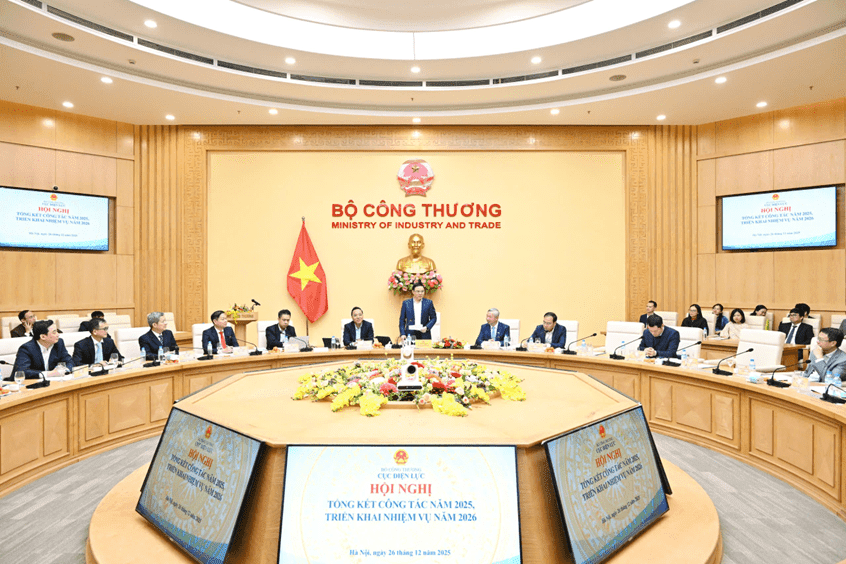
One of the most notable highlights in 2025 was institutional development and improvement. The Electricity Authority advised on the issuance of seven Government decrees, two decisions by the Prime Minister, and 25 circulars by the Minister of Industry and Trade, creating a comprehensive legal framework to bring the Electricity Law into practice. These documents covered power development planning, investment in power projects, development of renewable and new energy, licensing of electricity activities, power purchase and sale, electricity supply security, mechanisms for retail electricity price adjustment, and decentralization and delegation of authority in the power sector. Notably, the Authority advised the submission to the National Assembly of Resolution No. 189/2025/QH15 on special mechanisms and policies for investment in the Ninh Thuan nuclear power project, and Resolution No. 253/2025/QH15 on national energy development for the 2026–2030 period, featuring breakthrough policies and providing an important legal foundation for the next phase.
In terms of strategy and planning, the Authority participated in drafting and submitting for issuance Resolution No. 70-NQ/TW of the Politburo on ensuring national energy security; developing the Strategy for Vietnam’s power sector development to 2030 with a vision to 2045; and submitting for approval the adjustment of Power Development Plan VIII and its implementation plan.
At the conference, participants agreed with the reports presented and highly appreciated the Electricity Authority’s performance. On that basis, discussions focused on clarifying professional issues and proposing solutions to enhance the effectiveness of management, operation and development of the power system in the coming period.
Commending the Authority’s achievements in 2025, Deputy Minister Nguyen Hoang Long acknowledged the strong sense of responsibility, deep expertise and proactive approach of its staff. He stressed the need to elevate strategic thinking, work decisively and in detail, and report in a timely manner amid new tasks in 2026, in order to ensure safe and stable electricity supply to meet the economy’s growth requirements.
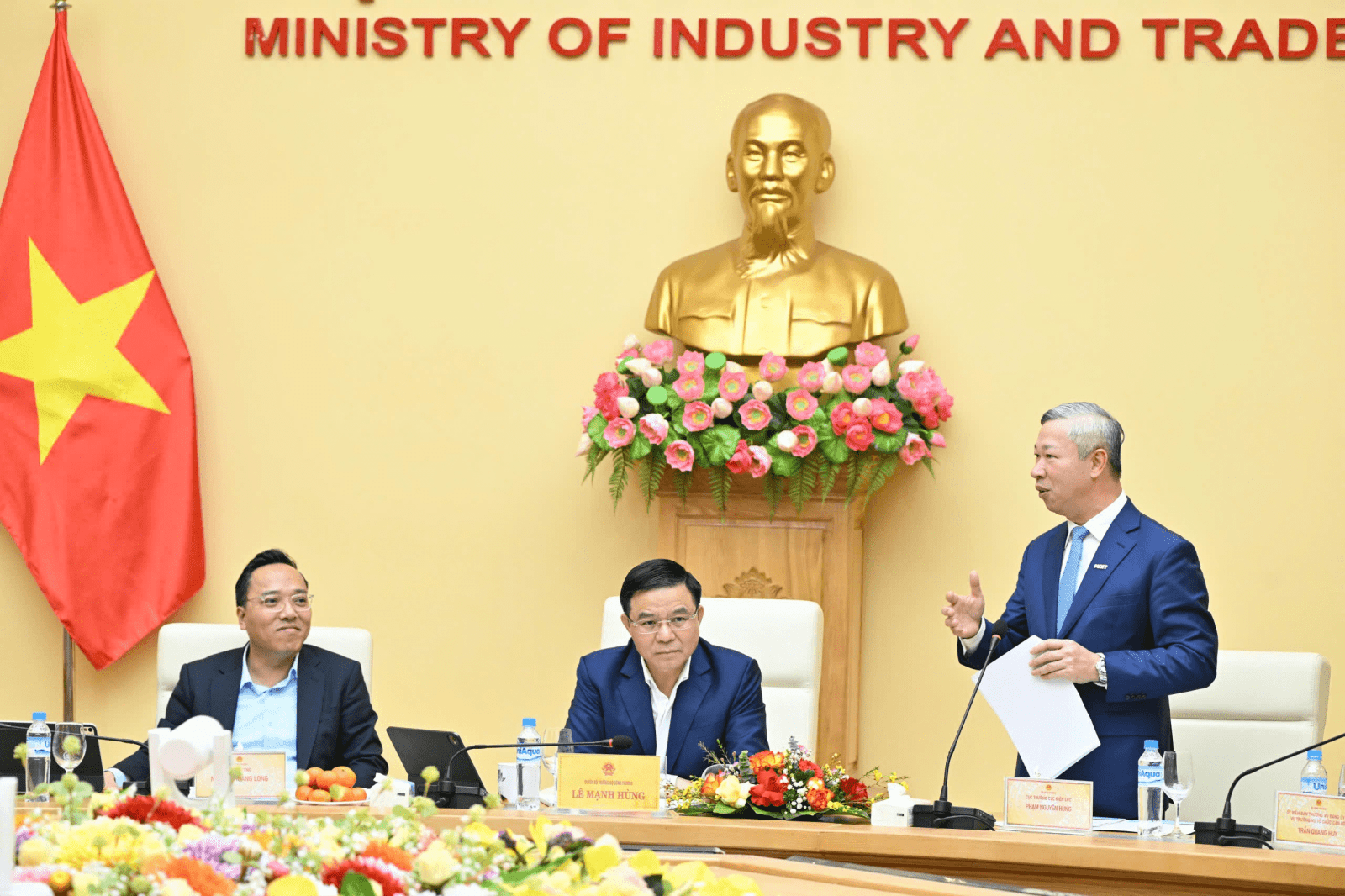
Director General of the Electricity Authority Pham Nguyen Hung presents a report at the conference
Stabilizing and Developing the Power System
After listening to reports and discussions, Acting Minister Le Manh Hung praised and highly valued the strong sense of responsibility and significant efforts of all officials, civil servants, public employees and workers of the Authority.
Highlighting key achievements in 2025, Acting Minister Le Manh Hung emphasized several points. First, institutional building and state management in the power sector were carried out with a heavy workload, marked by a clear shift toward faster and more decisive work practices. Second, electricity supply security and system operation were ensured despite many challenges, maintaining energy security, meeting demand without disruption, and managing electricity prices appropriately. Third, although Power Development Plan VIII was adjusted, its implementation was carried out swiftly and in a timely manner, with the Electricity Authority also advising MoIT leadership to conduct inspections and strengthen discipline in plan implementation. Fourth, issues related to the electricity market and pricing mechanisms, highly sensitive and directly affecting the interests of most segments of society, were handled relatively effectively. Fifth, organizational streamlining was implemented quickly and stably, with the Authority maintaining smooth operations without work disruption.
Enhancing Power System Governance Efficiency
At the conference, the Acting Minister addressed proposals and recommendations based on reports and presentations. MoIT leadership called for continued attention and stronger coordination among relevant units, further decentralization and delegation of authority tied to accountability of specialized units, enabling greater proactivity in policy advisory work, sectoral management and timely handling of practical issues. At the same time, attention should be paid to allocating resources for policy research, development and digital transformation in power sector management.
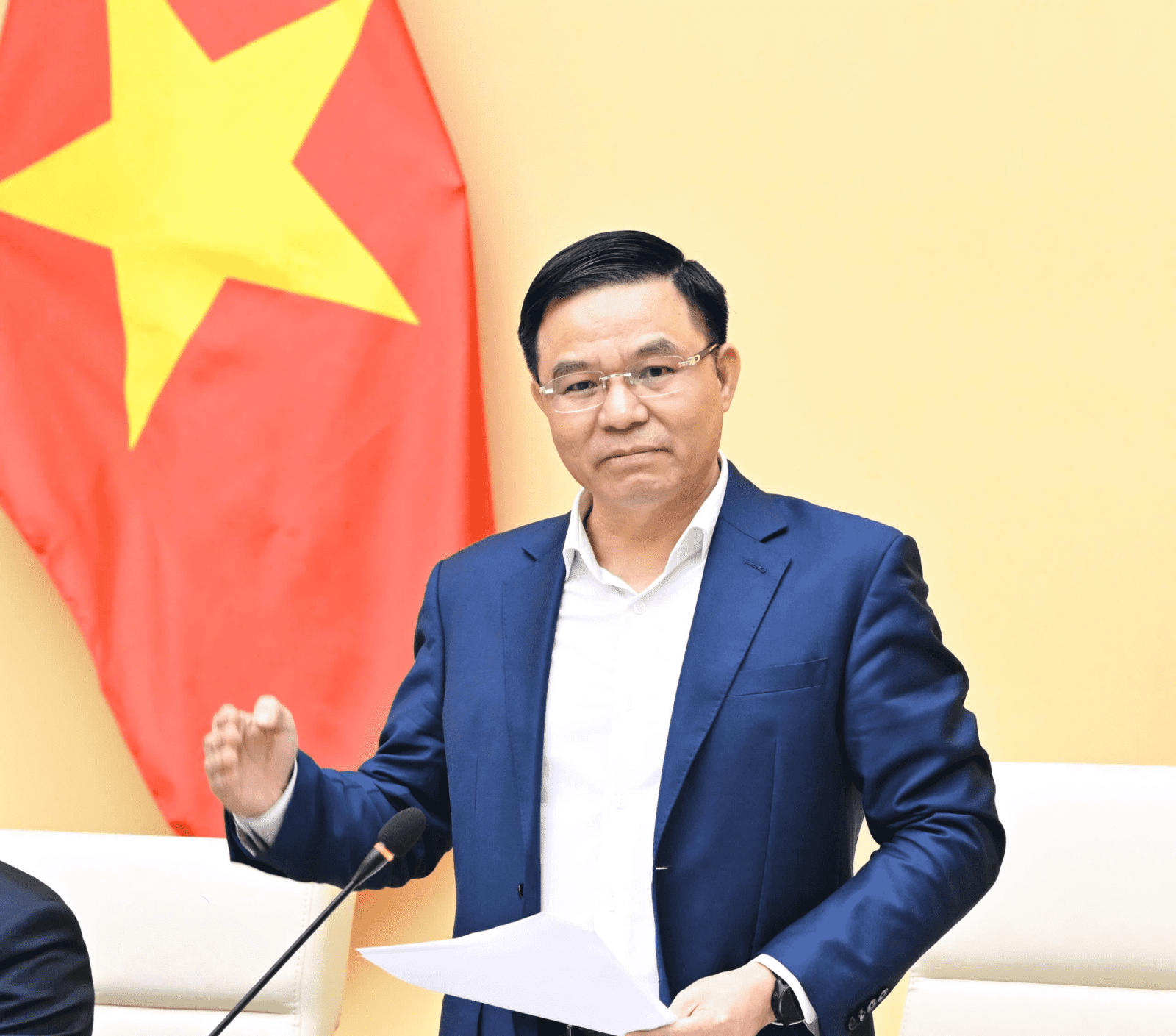
Acting Minister of Industry and Trade Le Manh Hung delivers a directive address at the conference
The Acting Minister also highlighted several key points. First, it is necessary to review and, based on growth scenarios and growth structure for 2026, develop specific plans to coordinate with enterprises in managing set targets. Second, Vietnam’s installed capacity is currently among the largest in Southeast Asia and ranks around 20th–22nd globally, while nominal GDP ranks only about 32nd–34th. This requires clarifying shortcomings in the power source structure, particularly the share of renewable energy and the lack of synchronization between power sources and the transmission grid, in order to improve system governance and operation efficiency. Third, the Electricity Authority should strengthen coordination with MoIT units to clearly identify and accurately assess, in very concrete terms, existing problems, limitations and difficulties in the power system, between generation and load, and between generation and transmission, to develop appropriate solutions. Fourth, MoIT leadership welcomed the Authority’s advisory role in 2025 in developing Resolution No. 70-NQ/TW on ensuring national energy security to 2030 with a vision to 2045, which serves both as a guiding framework and a set of solutions for achieving goals through 2030 and beyond. Fifth, despite having clear objectives and plans, power system operation still requires tight management under multiple adverse scenarios that may occur simultaneously. Therefore, calculations must be made from the planning stage, maintenance schedules arranged appropriately, and power enterprises and plant owners required to proactively prepare operating plans to avoid force majeure situations.
Emphasizing the Electricity Authority’s responsibility in carrying the core mission of the energy sector in ensuring national energy security, the Acting Minister expressed his confidence that, with its tradition of solidarity, spirit of innovation and collective intelligence, the Electricity Authority will continue to successfully fulfill its assigned tasks, making worthy contributions to the sustainable development of the industry and the country.

