


Deputy Minister Phan Thi Thang outlines the core role of industry and trade in economic growth and energy security.
On the occasion of the 14th National Congress of the Party, Deputy Minister of Industry and Trade Phan Thi Thang clarifies the core, pillar role of Vietnam’s industry and trade sector in national economic development and national energy security, as well as key tasks and solutions for 2026 and the period ahead
Key drivers of growth
Looking back at the 2021 - 2025 period, especially 2025, a pivotal year ahead of the 14th National Congress of the Party, how do you assess the outstanding achievements of the industry and trade sector in promoting its core and pillar role in national economic development?

Deputy Minister of Industry and Trade Phan Thi Thang: It can be affirmed that during the past term, the industry and trade sector made highly important, comprehensive and foundational contributions to the country’s socio-economic development. The sector proactively advised on the formulation of numerous strategic mechanisms and policies to promote economic, industrial, trade and investment development, while addressing major bottlenecks, thereby enabling the Party Central Committee, the National Assembly and competent authorities to issue a series of important resolutions and conclusions that have strongly driven socio-economic development, such as Resolution No. 59-NQ/TW on international integration in the new context; Resolution No. 70-NQ/TW on ensuring national energy security to 2030 with a vision to 2045; Resolution No. 57-NQ/TW on breakthroughs in science and technology development, innovation and national digital transformation; and the National Assembly’s resolution on mechanisms and policies for national energy development in the 2026 - 2030 period.
With its role as a strategic core and pillar, the Ministry of Industry and Trade (MoIT) has continued to be one of the key drivers of growth, contributing to the realisation of development goals oriented towards autonomy, modernisation, green transition, digital transformation and deep, effective international integration.
First, industrial production has recovered clearly and maintained a fairly strong growth momentum, with an average growth rate of 6.1% per year. Notably, the manufacturing and processing industry, the central engine of growth, recorded an average growth rate of 6.9% per year, while the overall scale of the sector expanded nearly 1.5 times compared to the beginning of the term. The localisation rate has continued to improve, and a number of key industries such as electronics, textiles and garments, footwear, and agro-processing have successfully integrated into global value chains, gradually affirming Vietnam’s position in the global production network.
In the energy sector, the national energy system has expanded strongly, with the power system scale ranking among the top 20 countries worldwide and leading in Southeast Asia. National energy security has been basically ensured, meeting the requirements of socio-economic development and people’s livelihoods. The energy structure has been shifting towards a greener and more sustainable orientation, in line with global trends.
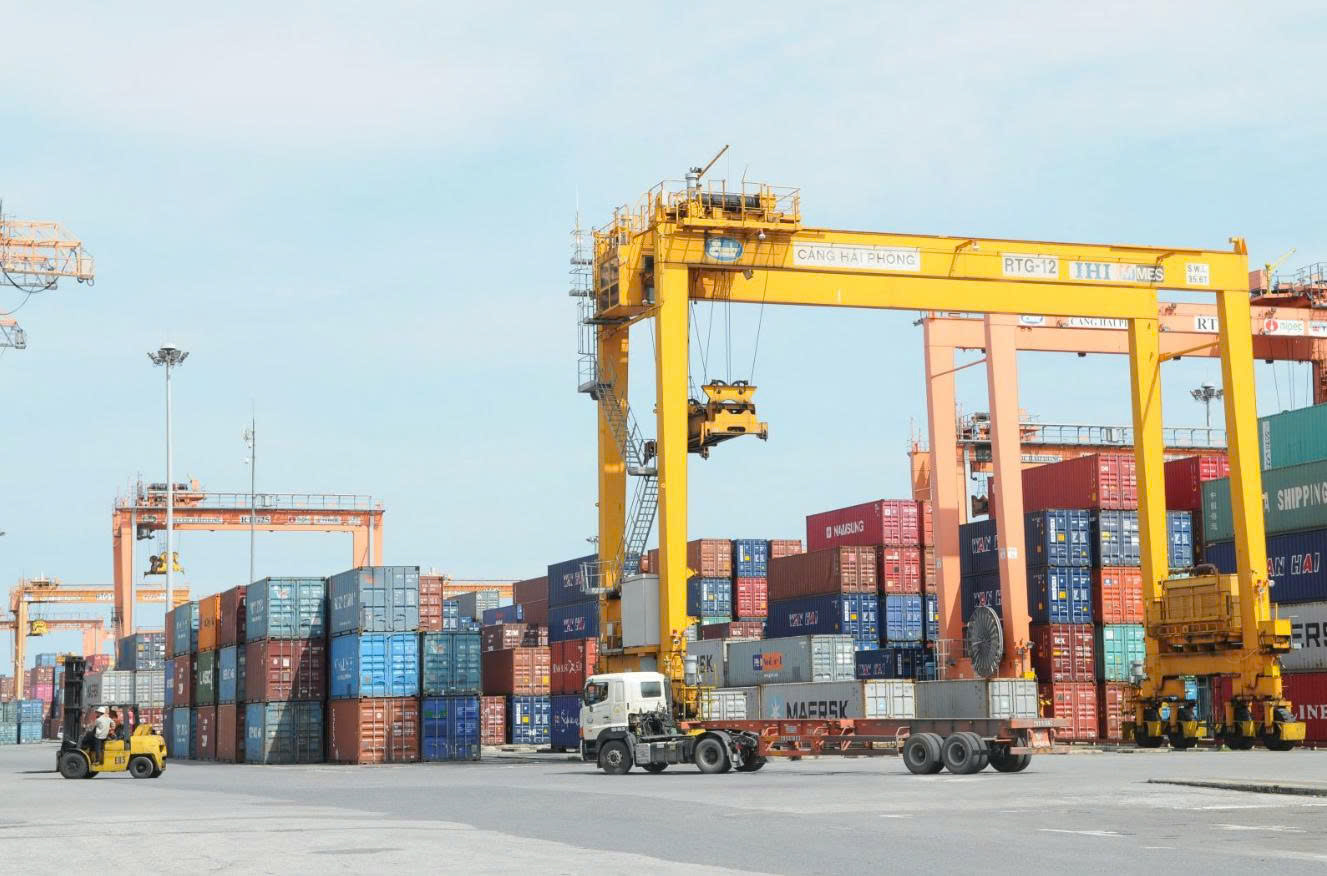
Import - export activities remain a bright spot of the economy, with an average growth rate of 10.9% per year.
Import-export activities have remained a bright spot of the economy, with an average growth rate of 10.9% per year. Total import-export turnover has continuously set new records, reaching over USD 930 billion in 2025 alone, double that of the beginning of the term. Many key export commodities have maintained high rankings in global markets. The trade surplus has been sustained at a high level, making positive contributions to macroeconomic balance, supplementing foreign exchange reserves and reinforcing market confidence.
The domestic market has continued to develop steadily, with an average growth rate of 7.7% per year, truly becoming an important pillar of the economy. Ensuring adequate supply of raw materials, fuels and essential goods has enabled the domestic market to act as a “shock absorber”, helping the economy remain resilient and recover rapidly from external shocks, particularly during the Covid-19 pandemic. Alongside this, e-commerce has grown by over 20% per year, placing Vietnam among the world’s top 10 fastest-growing e-commerce markets and creating a significant driving force for the digital economy and enterprise digital transformation.
International economic integration has been implemented in a synchronous, substantive and increasingly effective manner. Participation in 17 free trade agreements has opened up a market space of nearly six billion consumers, contributing to export market diversification, attraction of foreign investment, enhancement of national competitiveness and promotion of economic restructuring towards a modern and sustainable direction.
Energy: The lifeblood of development
Among these overall achievements, how has the role of the industry and trade sector in ensuring national energy security been demonstrated?
Deputy Minister of Industry and Trade Phan Thi Thang: National energy security is one of the key pillars underpinning macroeconomic stability and sustainable national development, closely linked with national security, defence and the livelihoods of the people. Resolution No. 70-NQ/TW of the Politburo on ensuring national energy security to 2030 with a vision to 2045 has once again set out the objective of firmly safeguarding national energy security, while affirming that energy must move one step ahead to fully meet the demands of socio-economic development, national defence and security, and improvement of people’s living standards.
Implementing the guidelines of the Party and the State, as well as the direction of the Government and the Prime Minister, the industry and trade sector has, in recent years, focused on synchronously rolling out a wide range of solutions in the energy field. These include diversifying energy sources, harmoniously combining traditional energy with renewable energy, enhancing the efficiency of exploitation and use of domestic fossil fuels such as coal and oil, promoting new energy sources, and stepping up energy efficiency and conservation. At the same time, efforts have been made to accelerate the completion of institutions and policies to develop a competitive and transparent energy market, thereby attracting strong participation from social resources in energy investment, including the revision of the Electricity Law and the Petroleum Law.
MoIT has attached high priority to leading and directing the completion of institutions and policies, as well as accelerating the implementation of key projects to develop a synchronous and comprehensive energy policy framework and infrastructure system. The ministry has advised on the formulation and completion of the Electricity Law 2024 and its guiding decrees and circulars; researched and proposed mechanisms and policies to implement resolutions of the Politburo and the National Assembly, including the National Assembly’s resolution on mechanisms and policies for national energy development in the 2026 - 2030 period; and submitted to the Prime Minister for approval the adjusted Power Development Plan VIII.
The ministry has also implemented the Government’s policy on consolidating the national power system operation mechanism, including the reception and organisation of the National System and Market Operator (NSMO); organised the implementation of the national power development plan; and coordinated with ministries, sectors and localities to concretise it in provincial planning. It has urged the implementation of key power source and grid projects, especially 500 kV and 220 kV transmission works, contributing to the gradual completion of the power infrastructure. To date, Vietnam’s power generation and grid system has reached a scale among the leading ones in ASEAN.
National energy security is one of the key pillars ensuring macroeconomic stability.
Against the backdrop of rapid and complex developments in the global and regional economy, strong energy transition trends, increasingly urgent requirements for green development, emission reduction and climate change adaptation, and growing energy demand for economic growth, ensuring national energy security is a political task of paramount importance and a consistent priority of the industry and trade sector. It serves as a foundational condition for fast and sustainable economic development, social security and the maintenance of national independence and self-reliance.
In the coming period, to firmly safeguard national energy security, MoIT will focus on synchronously implementing comprehensive, fundamental and long-term solutions. The key priority is to continue completing the legal framework for energy in a synchronous and modern manner, ensuring consistency with laws on investment, planning, environment, land and construction. The contents of the national energy master plan and power development planning will be fully institutionalised, creating a stable and transparent foundation to strengthen investor confidence. Clear and feasible roadmaps will be developed for different levels of the electricity market, alongside improvements in electricity pricing mechanisms based on market principles under State regulation, ensuring a harmonious balance of interests among the State, enterprises and consumers.
In parallel, the ministry will prioritise innovation in investment, financial and credit mechanisms to encourage socialisation, promote public-private partnerships, develop green financial instruments and effectively mobilise domestic and international capital for strategic energy projects. On that basis, decentralisation and delegation of authority will be further strengthened alongside enhanced inspection and supervision; the capacity for policy formulation and implementation of management agencies will be improved; and digital transformation will be strongly applied in energy system management and operation, thereby enhancing efficiency and ensuring sustainable national energy security.
Paving the way for industrial and trade breakthroughs in a new era
As the country enters a new era marked by science, technology and innovation, green transition, digital transformation and deep international integration, what key tasks will the industry and trade sector focus on to further promote industrial and trade development, contributing to the successful and comprehensive implementation of the Resolution of the 14th National Congress of the Party?
Deputy Minister of Industry and Trade Phan Thi Thang: Vietnam is entering a new era of development, an era driven by science and technology, innovation, green transition, digital transformation and deep international integration. This phase presents major opportunities and favourable conditions, while also posing numerous intertwined challenges.
For the industry and trade sector, despite the achievements attained, industrial and trade development still faces a number of shortcomings that need to be addressed promptly. Industrial development has not yet achieved sufficient depth; value added remains low; there is a lack of foundational industries, materials industries and core technologies. Linkages between domestic enterprises and the foreign-invested sector are not yet tight; green and smart transformation remains slow. Energy infrastructure and institutions have not kept pace with development needs, and the power source structure remains imbalanced. Exports still rely heavily on the FDI sector and imported inputs, while markets and products lack diversity. Trade and logistics infrastructure remains insufficiently connected, with high costs. The effectiveness of international economic integration has yet to match its potential, and there remains a shortage of leading enterprises and industries with strong competitiveness at the regional and global levels.
Industrial production has shown a clear recovery and maintained solid growth momentum.
In this context, to continue promoting industrial and trade development and contribute to the successful and comprehensive implementation of the Resolution of the 14th National Congress of the Party, the industry and trade sector is determined to focus on the following key tasks:
First, to continue thoroughly grasping and promptly institutionalising the Party’s viewpoints, guidelines and resolutions on socio-economic development and the acceleration of industrialisation and modernisation into coherent and feasible mechanisms and policies. Priority will be given to institutional improvement in the spirit of Resolution No. 66-NQ/TW, with “dual transition”, green transition and digital transformation, identified as the breakthrough of breakthroughs, creating a favourable investment and business environment, removing bottlenecks, renewing traditional growth drivers and fostering new ones.
Second, to renew thinking and restructure industry and trade towards improving productivity, quality, value added and competitiveness, taking science and technology, innovation, digital transformation, green transition and private sector development as the main driving forces. Focus will be placed on developing foundational and strategic industries, gradually mastering technologies in certain emerging sectors, building mechanisms to foster national enterprises and large-scale enterprises, and attracting synchronous investment in energy, industrial, trade and logistics infrastructure in a modern, green and digitalised direction aligned with deep integration requirements.
Third, to upgrade and comprehensively develop production and supply chains to enhance economic autonomy and elevate Vietnam’s position in global value chains. Stronger policies will be adopted to support domestic enterprises in deeper participation in the supply chains of major corporations and FDI enterprises, increase localisation rates, promote technology transfer and management skills, and develop industrial clusters and closed-loop production chains.
Fourth, to promote international economic integration in tandem with economic restructuring and growth model innovation; effectively leverage free trade agreements; strengthen legitimate trade defence measures; diversify markets, sources of supply and supply chains to avoid overdependence on a limited number of partners; and innovate trade promotion, e-commerce development and the digital economy.
Fifth, to accelerate comprehensive digital transformation in industry and trade; intensify administrative reform; simplify procedures and business conditions expand online public services and integrated one-stop mechanisms, thereby reducing compliance costs for enterprises and the public.
Sixth, to place emphasis on developing high-quality human resources; strengthen policy communication to build social consensus; improve mechanisms to protect officials who dare to think and act; enhance discipline and accountability in public service; and shift decisively towards post-inspection associated with risk-based management and management by standards and norms, creating a transparent and favourable business environment.
The industry and trade sector also proposes continued leadership and direction to develop the sector towards autonomy, modernity, green transition, digital transformation and deep international integration. Manufacturing and processing industries, together with energy, will serve as the material foundation of an independent and self-reliant economy. The focus will be on renewing thinking in law-making and law enforcement towards a development-facilitating approach; completing a flexible policy space; and implementing controlled pilot mechanisms to remove bottlenecks, unlock and effectively mobilise resources for synchronous and modern investment in energy, industrial, logistics and trade infrastructure.
Thank you for your sharing!

