


Green transition paves the way for Vietnam’s sustainable growth model
In Hanoi, Lao Dong Newspaper, in coordination with the Ministry of Agriculture and Environment and the Hanoi People’s Committee, organized Green Transition Day 2026 under the theme “Green Transition - A Driver for Vietnam’s New Growth Model.”
The event continued the success of the 2025 Green Transition Day series, contributing to the spread of green action initiatives, promoting innovation, and creating momentum for the country’s sustainable growth. Green Transition Day 2026 was organized with the expectation of becoming a platform connecting policymakers, businesses, experts, and the wider community in the journey toward building a green economy, advancing sustainable development, and raising public awareness of environmental protection.
Speaking at the event, Nguyen Thi Lam Giang, Director of the Agency for Innovation, Green Transition and Industry Promotion under the Ministry of Industry and Trade, said that in recent years, the Party and the State had introduced a wide range of important policies and guidelines on green growth, the circular economy, energy efficiency, and sustainable production and consumption.
Most recently, in the field of energy efficiency, the Prime Minister issued Directive No. 09/CT-TTg dated March 19, 2026, which sets out specific requirements to strengthen energy conservation, accelerate the energy transition, and promote the development of electric transportation.
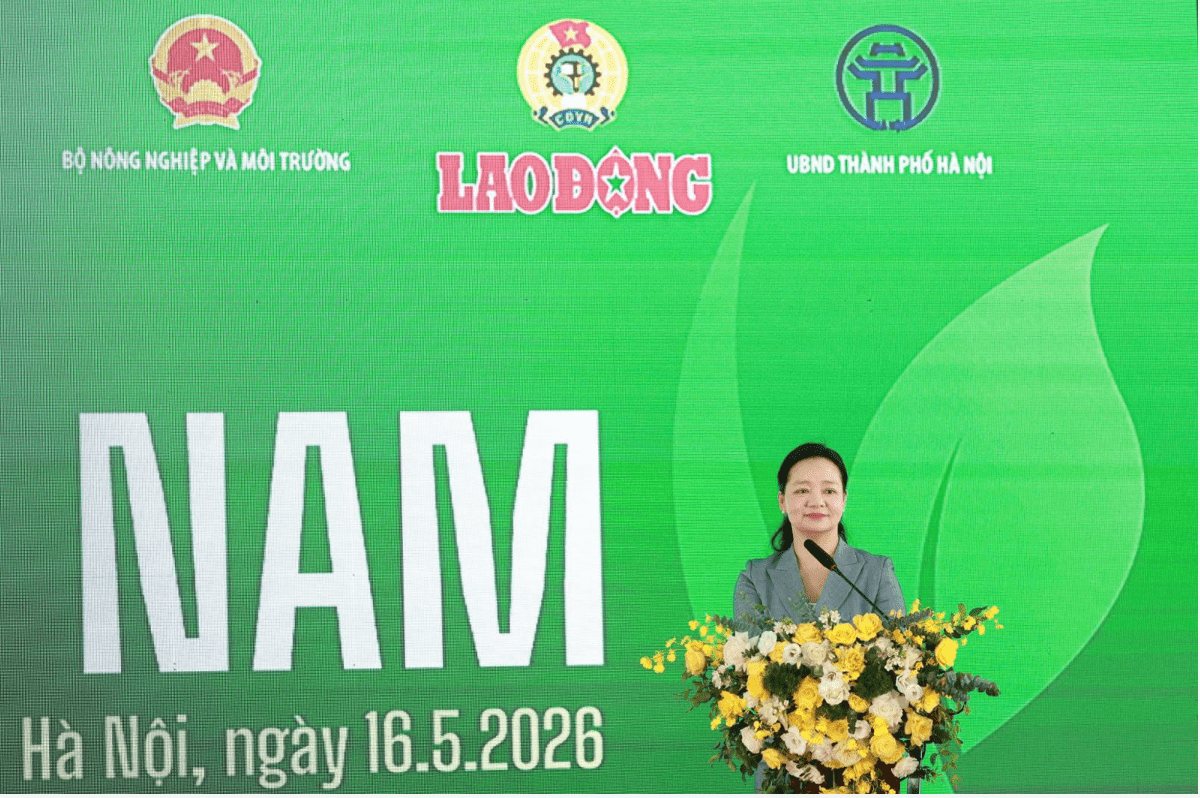
Nguyen Thi Lam Giang, Director of the Agency for Innovation, Green Transition and Industry Promotion, addresses the event.
“This is a timely directive with strong practical significance in the context of disruptions to global energy supply caused by geopolitical conflicts, while the economy’s energy demand continues to rise and the requirements for ensuring energy security, reducing emissions, and using energy resources more efficiently are becoming increasingly urgent,” Nguyen Thi Lam Giang emphasized.
According to her, the spirit of Directive 09 can be summarized into three key priorities.
First, promoting energy conservation and efficiency. This is both a long-term and continuous solution in production, business, and daily life aimed at reducing waste, cutting costs, and improving the operational efficiency of the economy. It is also a high-priority task during peak demand periods across different seasons, especially during extreme heatwaves.
Second, accelerating the energy transition on both the supply and demand sides, ranging from energy projects utilizing new, greener, and cleaner energy sources to energy consumption activities such as the use of biofuels instead of traditional fuels. This approach will gradually reduce dependence on fossil fuels, lower emissions, and create room for the development of new industries that can serve as fresh drivers of economic growth, including wind power, solar power, biomass, and green hydrogen.
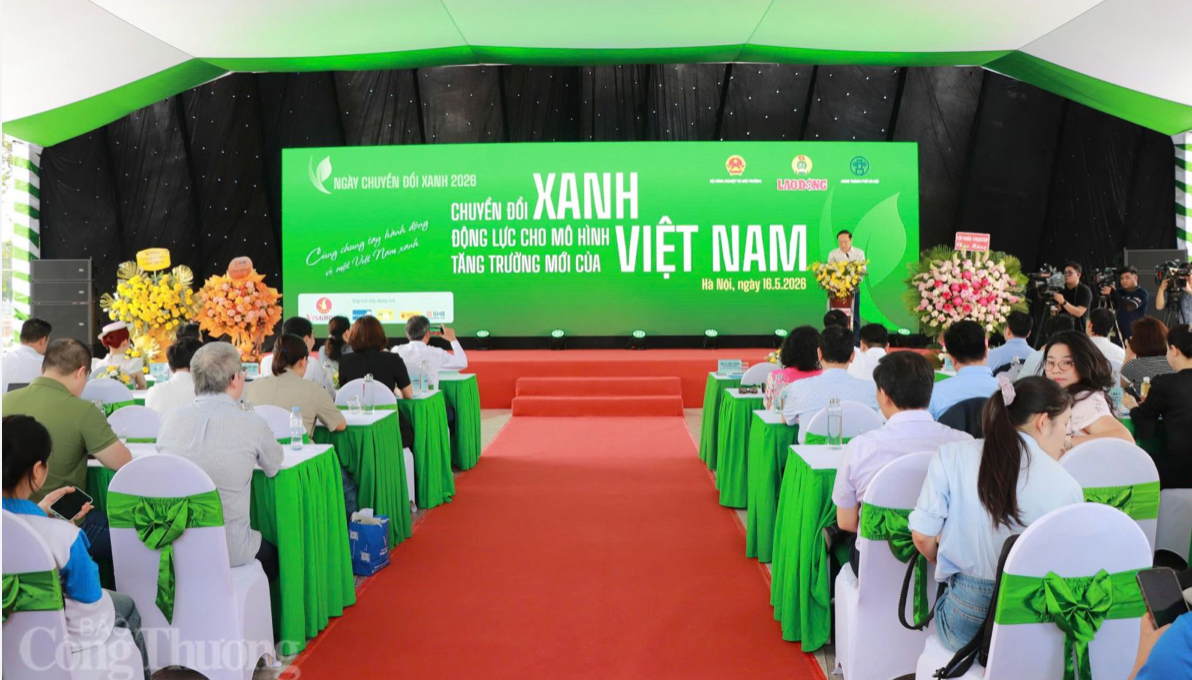
An overview of the event.
Third, developing green transportation by promoting the transition from gasoline- and diesel-powered vehicles to electric vehicles across state agencies, public transport systems, and private transportation. This is not only a solution to reduce fossil fuel consumption and air pollution, but also an opportunity to develop new industries and service models associated with EV batteries, energy storage systems, charging stations, electrical equipment, and green transport infrastructure.
From the contents of the directive, it is evident that the green transition process must be implemented comprehensively, from businesses innovating and applying new technologies to improve energy efficiency, to markets introducing more sustainable products and services, and to the daily choices made by citizens in consumption, transportation, and lifestyle.
“I highly appreciate the organization of today’s event, which is closely linked with exhibitions, electric vehicle experiences, and activities encouraging the transition toward green transportation. This is a practical and accessible approach that allows people to directly see, experience, and discuss the changes taking place in everyday life,” the Ministry of Industry and Trade representative stated.
The program’s design as a series of activities, including forums on energy transition, biofuels, green finance, and green growth models, also created additional opportunities for substantive exchanges among regulators, experts, businesses, and the media. These are all topics that need to be communicated in a practical and easy-to-understand manner so that awareness can gradually be transformed into concrete actions in production, business operations, and daily life.
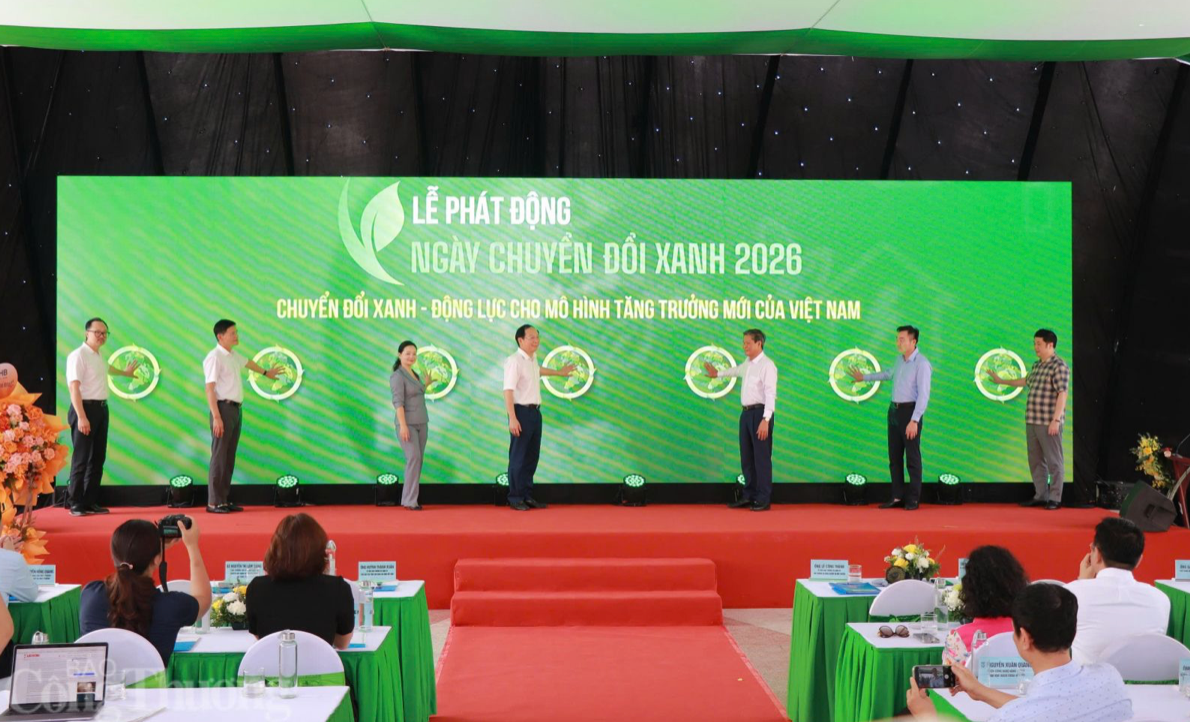
Delegates perform the ceremony launching the event.
Nguyen Thi Lam Giang also called on every citizen and every household to begin with simple yet meaningful actions: saving electricity and fuel, minimizing waste, prioritizing energy-efficient products, and choosing green transportation whenever conditions allow. Actions that may appear small, if maintained consistently and adopted widely, can ultimately create significant changes across society.
The green transition must be translated into concrete actions. From regulators and businesses to individual citizens, every stakeholder has a role to play. Every effort to conserve energy, every choice of cleaner fuels, and every adoption of greener means of transportation today will help build the foundation for sustainable development for both present and future generations.
“With that spirit, I firmly believe that activities such as Green Transition Day 2026 will continue to spread awareness, encourage action, and generate stronger momentum for the country’s faster, greener, and more sustainable development,” Nguyen Thi Lam Giang said.
| Through Green Transition Day 2026, the organizers hope to further raise public awareness of the role of green transition in socio-economic development, while encouraging the participation of all sectors of society in the journey toward a greener, more sustainable, and more prosperous Vietnam in the future. |

