


Minister of Industry and Trade Le Manh Hung works with Department of Planning, Finance and Enterprise Management
On the afternoon of May 15, Minister of Industry and Trade Le Manh Hung held a working session with the Department of Planning, Finance and Enterprise Management to review the implementation of tasks in the first four months of the year and deploy key tasks for the remaining months of 2026.
Reporting at the meeting, Bui Huy Son, Director of the Department of Planning, Finance and Enterprise Management, said that in the first four months of 2026, the department had taken the lead in developing and submitting a number of important mechanisms and policies to competent authorities for promulgation. These included the Go Global programme supporting enterprises in expanding into international markets; Circular No. 13/2026/TT-BCT on decentralisation of authority in financial, asset and investment management under the Ministry of Industry and Trade; and the draft decree replacing Decree No. 09/2018/ND-CP on trading activities of foreign-invested enterprises. The department also advised the Minister to issue an action programme implementing Resolution No. 79 of the Politburo on the development of the state economy.
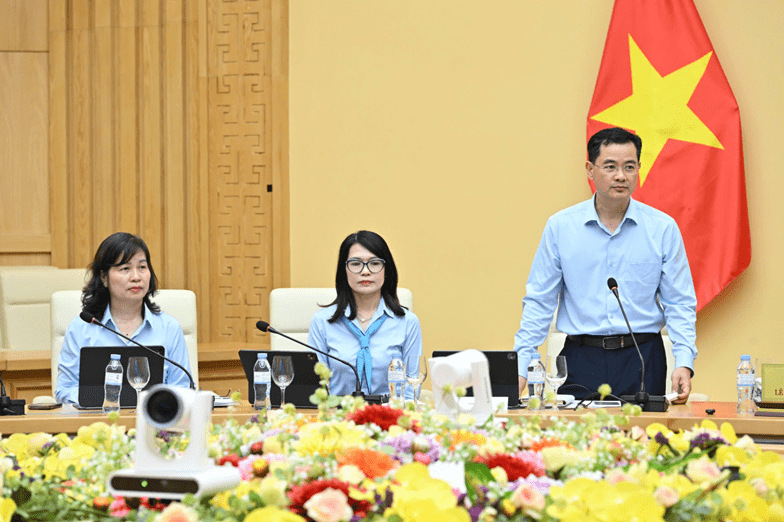
Amid complicated global developments since late February 2026 and the Government’s high growth requirements, the department took the lead in formulating monthly and quarterly growth scenarios for the industry to support monitoring, supervision and administration. On that basis, the Ministry of Industry and Trade issued Decision No. 648/QD-BCT dated April 6, 2026 on the sector’s growth scenario.
In the field of public investment, the department proactively advised the ministry’s leadership on accelerating the disbursement of public investment capital, aiming to achieve 100% of the 2026 plan. As of May 7, 2026, the disbursement rate of the Ministry of Industry and Trade reached 24.7%, higher than the national average of 15.2%. At the same time, the department continued reviewing, appraising and submitting projects to the ministry’s leadership for approval in accordance with regulations to prepare for the implementation of the 2026-2030 medium-term public investment plan once approved by competent authorities.

Regarding the management of foreign investment activities, the department implemented the decentralisation and delegation of 100% of administrative procedures under the authority of the Ministry of Industry and Trade in accordance with Decree No. 146/2025/ND-CP. It also proactively proposed a reduction of 42.85% in business investment conditions and 40% in administrative procedures, exceeding the Government’s targets for administrative reform in the 2025-2026 period.
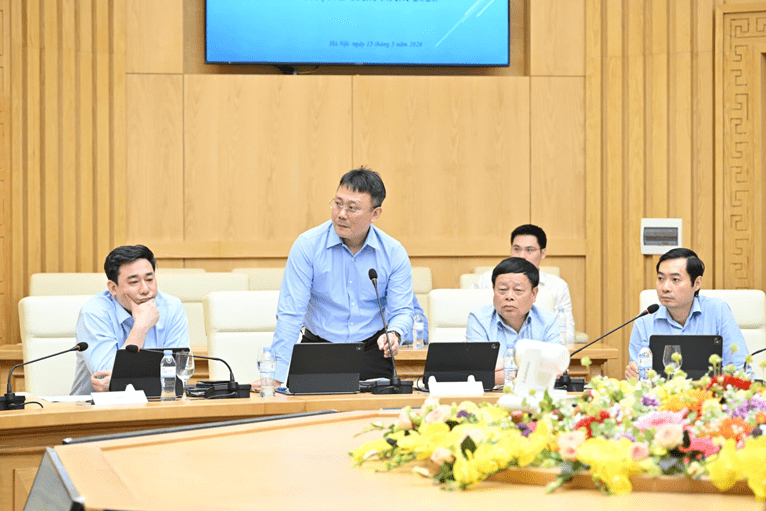
In the remaining months of 2026, the Department of Planning, Finance and Enterprise Management will continue focusing on institutional improvement, finalising dossiers and submitting Government decrees in line with the plan; closely monitoring the growth targets of the industry and trade sector in order to promptly report and advise the ministry’s leadership in management and administration; promoting public investment disbursement; strengthening financial and public asset management; managing the finances of enterprises under the ministry; and enhancing thrift practice and waste prevention.
At the meeting, delegates discussed and exchanged views on a number of issues related to the implementation of the department’s key tasks in the coming period. They also proposed various solutions and coordination mechanisms between the department and relevant units to improve work efficiency.
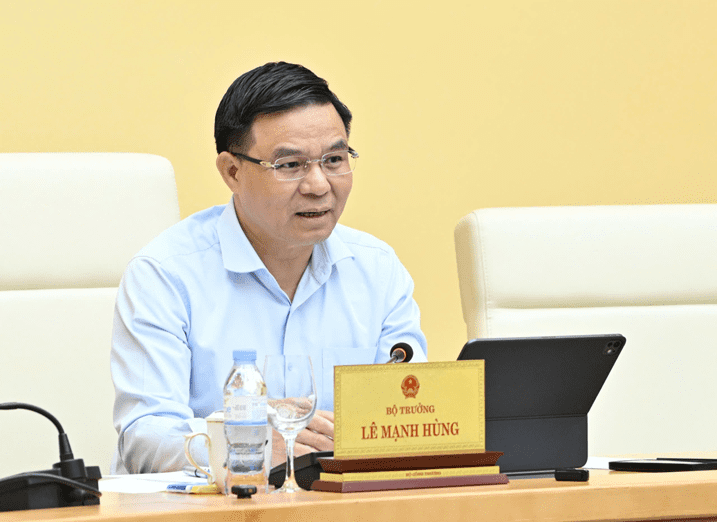
Concluding the meeting, Minister Le Manh Hung said that in recent times, officials of the Department of Planning, Finance and Enterprise Management had demonstrated strong efforts, responsibility and proactiveness in closely following assigned tasks, thereby making important contributions to the ministry’s overall management results.
The minister stressed that the Ministry of Industry and Trade comprises three main sectors, namely energy, industry and trade, while operating on six pillars: strategy-planning-science and technology; organisation-internal affairs-communications; energy; industry; domestic market; and foreign trade. Clearly identifying the ministry’s sectors and pillars is important for units to understand their positions and roles within the overall system, thereby enhancing coordination and connectivity in the implementation of tasks and creating overall and synchronous effectiveness in governance and administration.
Therefore, the minister requested the Department of Planning, Finance and Enterprise Management to continue reviewing and improving its functions, tasks and organisational structure. At the same time, it must coordinate closely with relevant units to review and clearly define the scope of work in order to avoid overlap and duplication of responsibilities.
The minister also assigned the department to take responsibility for monitoring, managing and organising the implementation of the ministry’s development strategy, while taking the lead in coordinating with other units in planning, assigning targets, monitoring and consolidating implementation results.
Another important task highlighted by the minister was the need to review the entire work processing system in a more streamlined and effective manner. He also underscored the need to accelerate digital transformation and develop
the ministry’s information and data management system. In this context, the Department of Planning, Finance and Enterprise Management was tasked with leading coordination with related units under the ministry to develop an integrated database system serving direction and operational management.
The minister noted that, as a strategic advisory body, the Department of Planning, Finance and Enterprise Management is involved across all stages of the ministry’s governance process, from planning and data aggregation to performance monitoring and assessment. He added that the growing volume of work in the period ahead would require personnel to further enhance governance capacity, improve operational effectiveness and streamline procedures in order to save time for businesses and citizens.

